India's real estate market has long been a preferred investment destination for Non-Resident Indians. From the tech corridors of Hyderabad and Bengaluru to the financial hubs of Mumbai and Gurgaon, and the cultural heartland of Chennai, NRIs collectively pour billions of dollars into Indian property every year. According to industry estimates, NRI investment in Indian real estate accounts for over 10% of total sector inflows — a figure that continues to climb as the diaspora grows and India's urban landscape matures.
Yet for all the financial motivation, the act of buying property from abroad remains one of the most stressful decisions an NRI family can make. The stakes are high, the distances are vast, and the traditional process — relying on agents, secondhand photographs, and rushed visits during annual trips home — has never been adequate for a decision of this magnitude. That is changing, rapidly, thanks to 3D visualization and digital walkthrough technology.
Why NRIs Face Unique Challenges When Buying in India
The challenges NRIs face when purchasing property in India are not simply logistical — they are deeply personal. A home purchase is rarely a solo decision. It involves spouses, parents, siblings, and sometimes extended family members spread across multiple countries and time zones. Each stakeholder has opinions, concerns, and emotional investments in the outcome.
The most common pain points NRIs report include:
- Inability to visit the site during the buying window, especially when projects are under construction
- Over-reliance on agents whose interests may not fully align with the buyer's
- Flat brochures and static images that fail to convey spatial reality
- Difficulty achieving family consensus when decision-makers are in different countries
- Fear of misrepresentation — that the finished property will not match what was promised
These are not abstract concerns. They represent real financial and emotional risk. A property purchased on the basis of a glossy brochure and an agent's assurances can turn out to be smaller than expected, poorly oriented, or surrounded by infrastructure that was never disclosed. For an NRI investing from thousands of kilometres away, the margin for error is essentially zero.
How 3D Visualization Bridges the Distance Gap
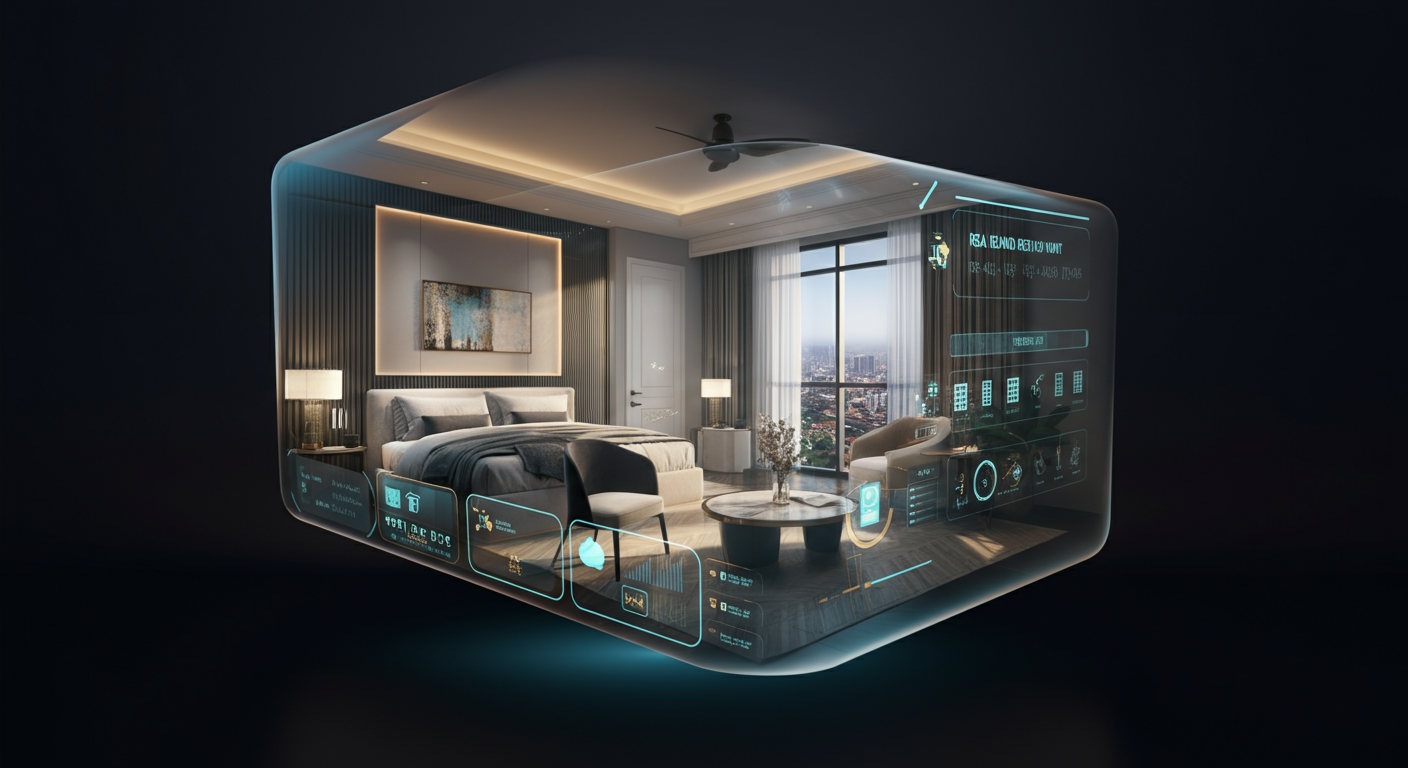
Three-dimensional visualization technology has matured to the point where it can replicate the experience of walking through a property with remarkable fidelity. Unlike static renders or floor plan PDFs, a digital walkthrough places the buyer inside the space — allowing them to move from room to room, look out of windows, assess ceiling heights, and understand how natural light enters at different times of day.
For NRIs, this is transformative. A well-constructed digital twin of a property does not just show what the apartment looks like — it communicates how it feels. The difference between a 1,200 sq ft apartment that feels spacious and one that feels cramped often comes down to ceiling height, window placement, and the flow between rooms. These are qualities that only become apparent when you experience the space in three dimensions.
Digital walkthroughs also allow buyers to explore properties at their own pace, on their own schedule — whether that is a Sunday morning in Dubai, a weekday evening in Toronto, or a lunch break in Singapore. There is no need to coordinate with an agent, no pressure to make quick decisions during a rushed site visit, and no reliance on someone else's interpretation of what matters.
What NRIs Can Evaluate Through a Digital Walkthrough
A high-quality 3D walkthrough gives NRI buyers the ability to assess a property across multiple dimensions that matter deeply to long-term satisfaction and investment value.
Sunlight and Ventilation
Orientation is one of the most important — and most frequently overlooked — aspects of apartment selection. A south-facing living room in Chennai behaves very differently from a north-facing one. Advanced 3D models can simulate sunlight at different times of day and across seasons, giving buyers a clear picture of how much natural light they can expect and where cross-ventilation will occur.
Room Proportions and Furniture Fit
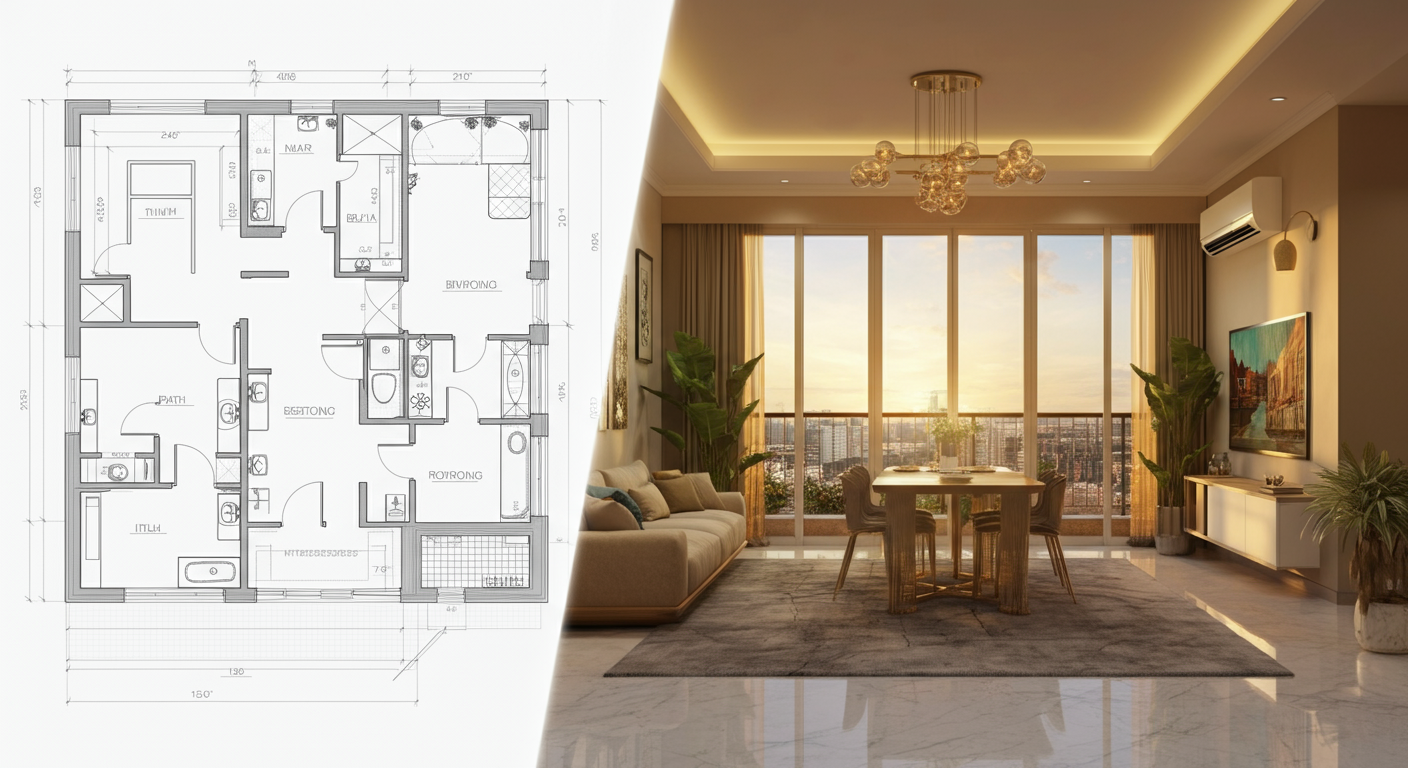
Floor plans are notoriously difficult to interpret without spatial experience. A 3D walkthrough with accurately scaled furniture allows buyers to immediately understand whether a bedroom can accommodate a king-sized bed with wardrobe space, whether the kitchen island leaves adequate circulation room, or whether the study can fit a desk and bookshelf without feeling claustrophobic.
Balcony Usability and Views
For many NRI buyers, a usable balcony is a non-negotiable — a space for morning tea, evening relaxation, or simply a connection to the outdoors. Digital walkthroughs can show the actual dimensions of a balcony, the view from it, and how it connects to the living space. Buyers can assess whether the balcony is a genuine extension of the home or merely a narrow ledge.
Common Areas and Amenities
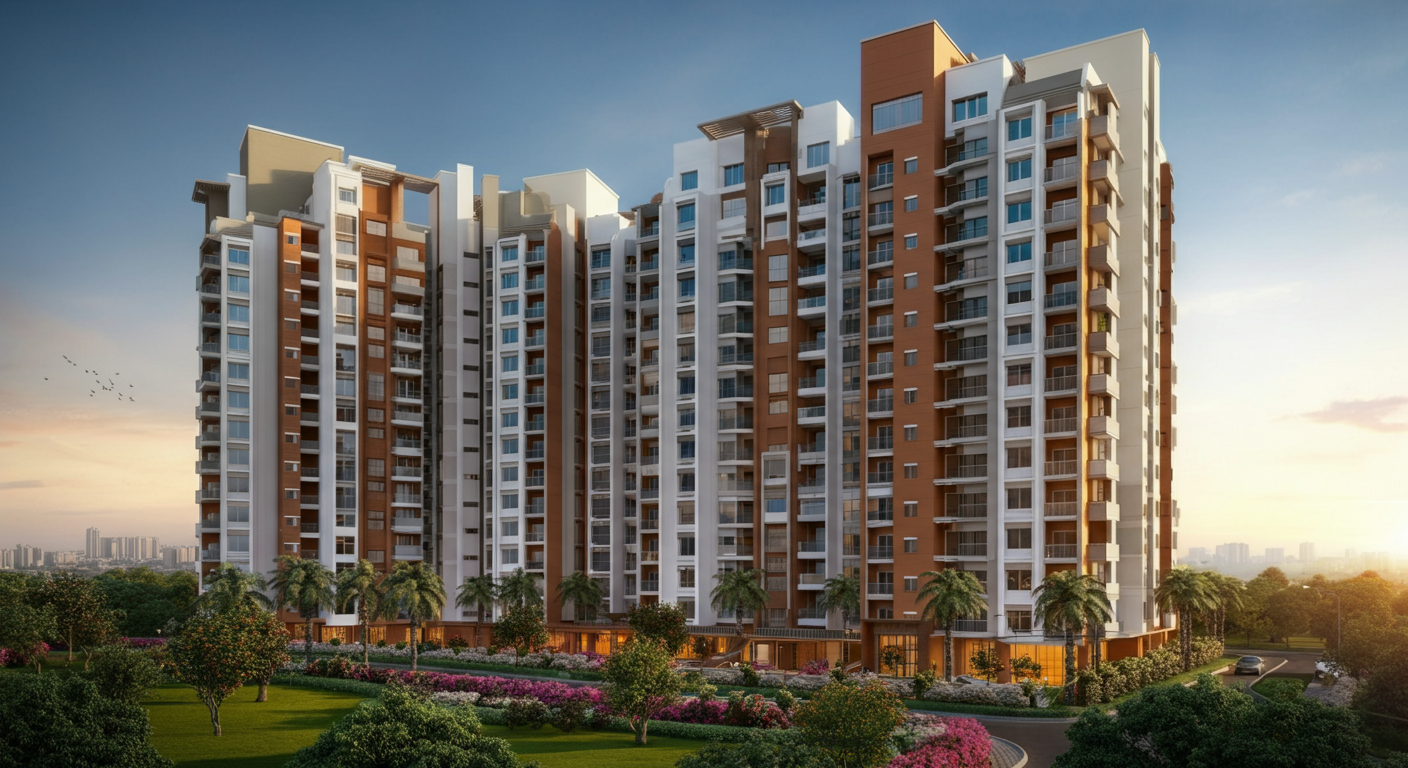
The quality of a residential project is not determined by the apartment alone. Lobbies, corridors, clubhouses, swimming pools, and landscaped gardens all contribute to the lived experience — and to resale value. A comprehensive digital walkthrough extends beyond the unit to cover these shared spaces, giving buyers a complete picture of what they are investing in.
Neighbourhood Context
Location intelligence is increasingly being integrated into 3D visualization platforms. Buyers can explore the surrounding neighbourhood — proximity to schools, hospitals, metro stations, and commercial centres — within the same digital environment. For NRIs who may not have visited the city in years, this contextual layer is invaluable.
Family Decision-Making Made Easier
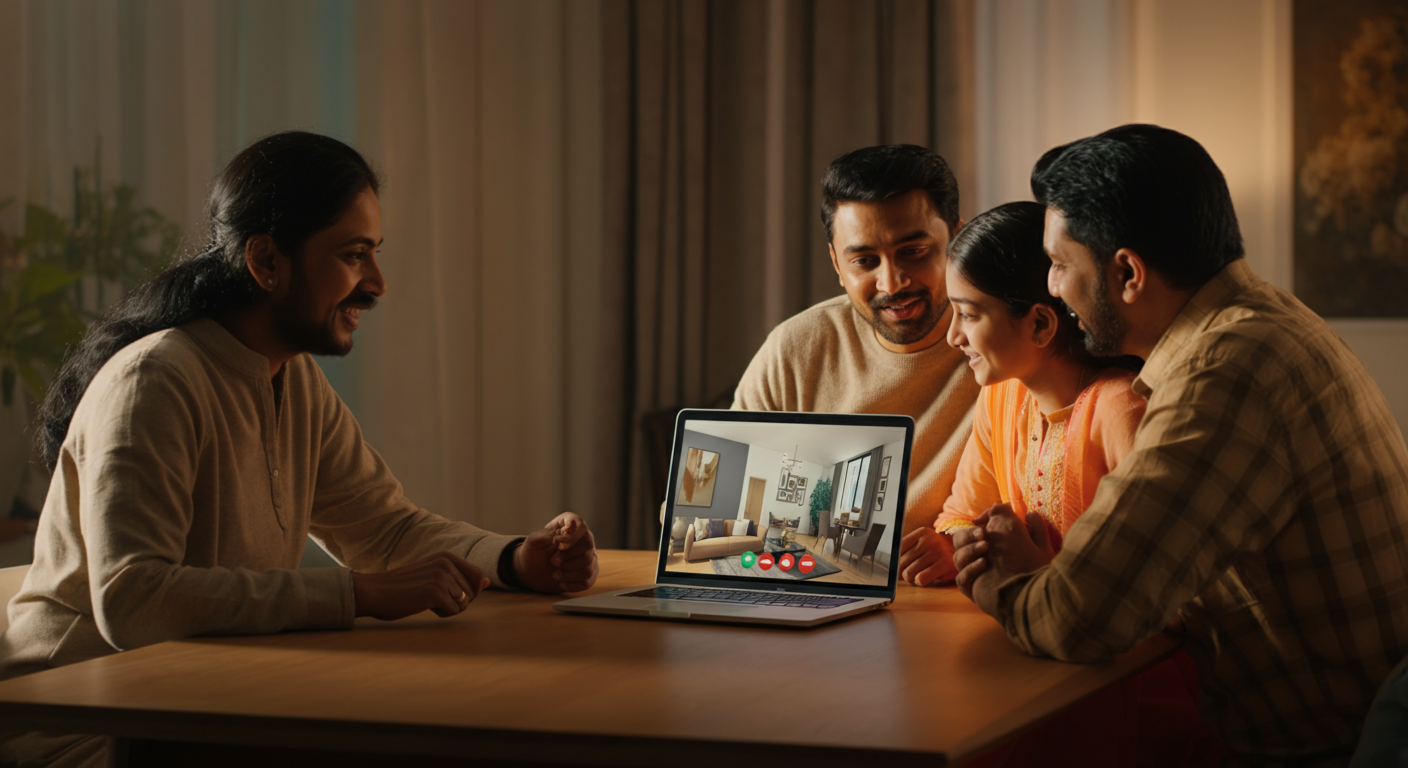
One of the most underappreciated benefits of digital walkthroughs is their ability to facilitate collective decision-making across geographies. A property purchase in India rarely involves just one person. The buyer in the US may need sign-off from parents in Chennai, a spouse in the UK, and a sibling in Bengaluru — all of whom have different schedules, different concerns, and different levels of familiarity with the project.
A shareable digital walkthrough link changes this dynamic entirely. Each family member can explore the property independently, at a time that suits them, and form their own impressions before coming together for a group discussion. When the family does convene — over a video call, typically — everyone is working from the same visual reference point. Disagreements become more productive because they are grounded in shared experience rather than conflicting secondhand accounts.
This shared visual language also reduces the emotional friction that often accompanies large family financial decisions. When a parent in Chennai can walk through the same apartment their child is considering from New Jersey, the conversation shifts from abstract reassurance to concrete evaluation. That shift builds confidence and accelerates consensus.
Trust and Transparency in Remote Transactions
Trust is the central challenge in any remote property transaction. NRIs are acutely aware that they are operating at an information disadvantage — and that unscrupulous developers or agents can exploit that disadvantage. The history of Indian real estate includes enough cautionary tales of delayed projects, misrepresented specifications, and vanishing developers to make any remote buyer cautious.
High-fidelity 3D visualization is, in this context, a trust signal. A developer who invests in accurate, detailed digital representations of their project is making an implicit commitment to transparency. They are saying: this is what you will get. The more precise and honest the visualization — including accurate room dimensions, realistic material finishes, and truthful views — the more credible the developer appears.
Conversely, buyers have become sophisticated enough to recognise when a visualization is being used to mislead rather than inform — when renders are suspiciously flattering, when views are digitally enhanced, or when common areas look nothing like the actual construction. The standard for visual honesty is rising, and developers who meet that standard earn a significant competitive advantage with NRI buyers.
💡When evaluating a developer's 3D walkthrough, look for accurate material textures, true-to-scale furniture, and realistic lighting conditions. Overly polished renders with no shadows or spatial depth are often a sign that the visualization is aspirational rather than accurate.
How SolidTwin Serves the NRI Market
SolidTwin was built with the understanding that the future of property sales is digital — and that NRI buyers represent one of the most underserved segments in that future. Our platform enables developers to create immersive, accurate digital twins of their projects that go far beyond conventional renders or virtual tours.
For NRI buyers, SolidTwin offers:
- Photorealistic walkthroughs accessible from any device, anywhere in the world, without requiring a site visit
- Accurate spatial representation with true-to-scale dimensions and realistic material finishes
- Shareable links that allow entire families to explore and evaluate a property independently before making a collective decision
- Sunlight and ventilation simulation to help buyers understand how a unit performs across different times of day and seasons
- Integration with neighbourhood context, so buyers understand the project's location within the broader urban fabric
For developers targeting the NRI segment — particularly those with projects in Hyderabad, Bengaluru, Chennai, Mumbai, and Gurgaon — SolidTwin provides the tools to present their inventory with the clarity and credibility that remote buyers demand. In a market where trust is the primary currency, the ability to show rather than tell is a decisive advantage.
The NRI buyer of 2024 is informed, discerning, and unwilling to make a multi-crore decision on the basis of a PDF brochure and a phone call. They expect the same quality of digital experience they receive when evaluating any other major purchase — and they are increasingly choosing developers who can deliver it. SolidTwin exists to make that possible, for buyers and developers alike.