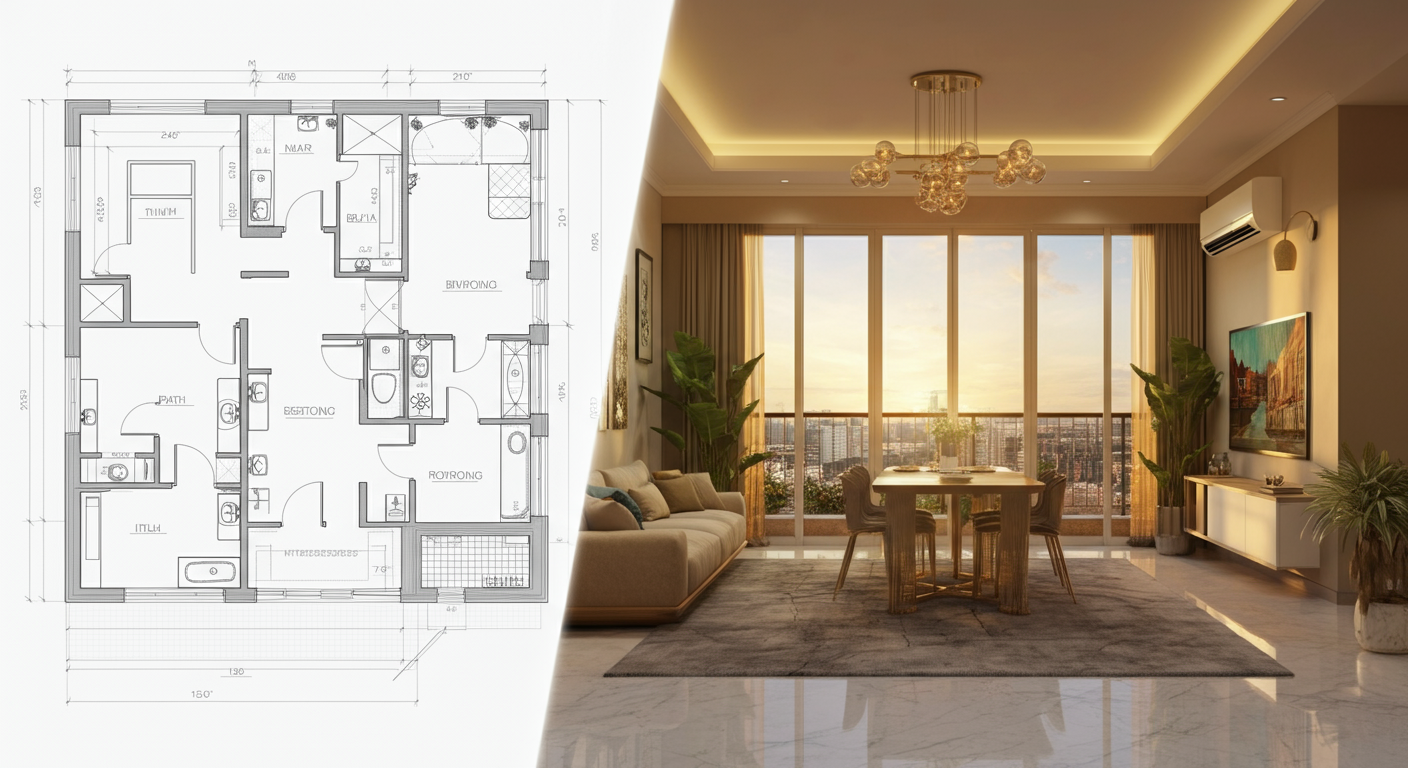
Communication problems exist in the Indian real estate sector, with 2D floor plans being the main cause. The developers are still asking for commitments of ₹80 lakhs to ₹2 crores or higher based on diagrams which resemble mathematics problems from an engineering class. Boxes and arrows and room numbers and the unspoken understanding that the buyer is to interpret lines with his mind to make something tangible. Confusion ensues? That is buyer hesitation. When there are delays, that is market conditions.
However, the reality is much simpler: most buyers simply can't understand 2D plans, and the industry has simply been pretending otherwise. The 2D floor plan had been working for several decades not because it is efficient, but because it was allowed by the market. Less choices. Less transparency. Less leverage for the buyer. If the family in Pune or Hyderabad did not understand the layout, they just filled the gaps with trust. If the investor in Gurugram got the scale or lighting incorrect, consequences occurred much later after the cheque was deposited. The safety margin of confusion no longer exists.
The real estate sector in India in 2026 is tough by comparison. Consumers verify floor plans for five different projects in one night. Regulators require clarity before sanctioning. Banking investigators scrutinize assumptions. Every pause multiplies rates; every changeover squanders money; and every puzzled customer results in an unsold property.
In this environment, 2D floor plans are not merely 'outdated' — they are not adequate by themselves. They describe intent, but they do not communicate reality. The plans depict what would work on a piece of paper, not what happens in reality. It is owing to this that the industry is now moving past 2D — not so much for a makeover but for sheer necessity. Digital walkthroughs and digital twins are not replacing architectural drawings. They are correcting a discrepancy between what gets drawn and what gets understood. Technical intention gets converted into spatial clarity. Hypotheses get converted into defensible experience. And most importantly, ambiguity gets eliminated before it translates into an objection, a delay, or a dispute.
As for development teams, this is not a matter of appearances or a concern to appear trendy. It is all about selling products faster, approving products faster, and protecting margins in a market where guesswork is no longer acceptable.
The Problems Central to 2D: They Assume Too Much
A 2D floor plan makes a great many assumptions about the person studying it. It assumes literacy in space, architectural knowledge, and the capacity to connect abstract representations to real-life space. The truth of the matter is that most consumers are not fighting to understand these designs because they're unintelligent — it's because the human mind isn't evolved to interpret space through these representations. '12 x 14' for the bedroom does not describe the space as it functions, the light patterns, the paths of movement. It does not describe the outline of the balcony as wind direction, privacy, or the relationship of the inside to the outside.
This disparity between representation and reality is where many issues with Indian real estate stem from: delayed decision-making, consumer inquiries, post-sale dissatisfaction, and costly redesigns. These issues are often taken as part of the business by developers — but often they no longer have to be.
Buyer Expectations Have Fundamentally Changed
The Indian real estate buyer is informed, cautious, and emotionally less pliable today than his predecessor. For many, projects have been delayed, layouts altered, or promised amenities quietly disappeared. Trust was once assumed; now, it has to be earned — and proven. Modern buyers don't want to be sold; they want to validate. They're comparing projects online, consulting with family members overseas, and interrogating every claim. To them, a 2D floor plan feels like a partial answer to a very serious financial question. There's just too much room for doubt, interpretation, and stress.
Digital walkthroughs completely reverse this dynamic. Instead of asking buyers to imagine, they let buyers experience. Instead of explaining verbally about circulation, proportions, or views, developers can show them. This shift from explanation to demonstration reduces friction in the sales process and replaces skepticism with confidence. With the ability to walk through a unit, see how rooms are arranged, know the ceilings in relation to the windows, and understand the light in the unit, decision-making happens much faster. And hesitation is the most expensive reaction in real estate.
Regulation, Compliance, and the Cost of Ambiguity
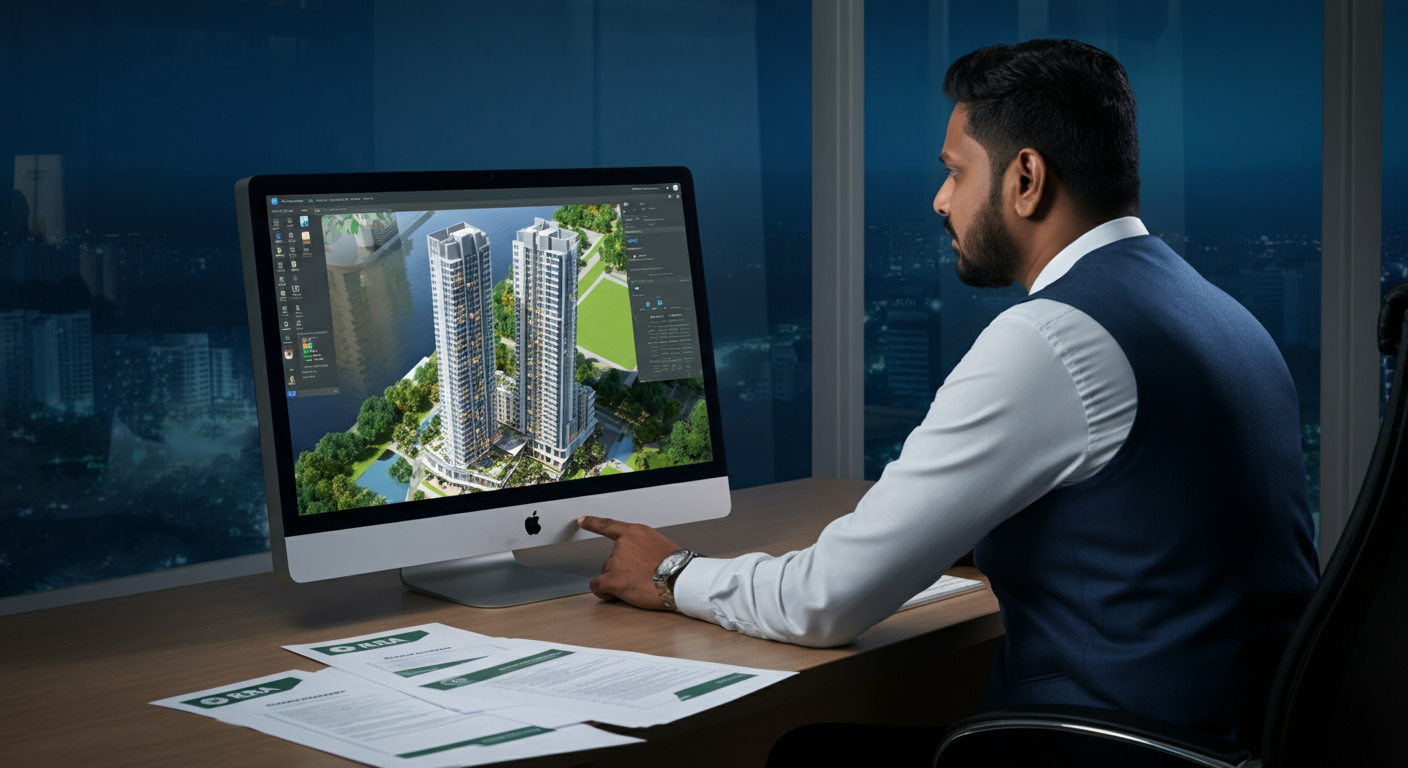
The Indian regulatory scenario has been changing at a fast pace in the past decade. With the advent of RERA, clarity has become mandatory — someone has to clear the doubts of the authorities. In the case of conventional 2D submissions, no matter how accurate, everything is left far too open to interpretation. The planner is expected to reconstruct the site in his or her head and make judgments regarding plans that exist in written form.
Digital walkthroughs and digital twins have the benefit of spatial precision that minimises ambiguity. Paths of circulation, exit routes in the event of a fire, accessibility requirements, massing, and climate are immediately clear. This not only facilitates faster approvals — it ensures fewer changes or objections at the final stages of construction.
From a developer's perspective, every month saved before breaking ground means money in the bank. Cost of interest, storage costs, and overhead costs do not wait for administrative formalities.
Sales Velocity Is a Survival Metric
In today's Indian real estate market, slow sales are not an inconvenience — they are a financial risk. High interest rates, volatile material costs, and tighter lending conditions have turned inventory into a ticking clock. Every unsold unit carries interest, overhead, and opportunity cost. Velocity is now not a preference but a requirement for staying solvent. What is holding back sales is not just demand, but clarity.
1. 2D Floor Plans Slow Down Decisions Instead of Speeding Them Up
A traditional floor plan answers questions in structure, but completely fails at the one thing that sales needs most — conviction. Buyers can't turn lines and dimensions into lived space in their heads. Sales teams then re-explain layouts for weeks, correct assumptions, and handle objections that exist only because the buyer never truly understood the product in the first place. This elongates sales cycles and increases drop-offs, especially in the pre-launch and under-construction phases.
2. Misunderstanding Creates Friction, Not Price Resistance
Many objections that come in as 'pricing concerns' are actually clarity gaps. Buyers demur because they cannot tell how spaces connect, whether rooms will feel cramped, or how the unit will perform in real conditions. These are not emotional objections — they're unresolved spatial questions. If left unanswered, they stall decisions and push buyers to 'think about it' — which often means indefinitely.
3. Virtual Walkthroughs Condense the Sales Cycle
Interactive walkthroughs eliminate mystery upfront. The ability of buyers to understand scale and flow before visiting a site shifts the conversation. Sales discussions are no longer focused on repeating explanations but on making decisions. Instead of saying 'I need to understand this better,' buyers are asking 'Which unit faces west?' or 'What's the difference between these two stacks?' That transition is when velocity happens.
4. Faster Understanding Leads to Clean Closures
Developers in India observe shorter sales cycles and fewer disputes following purchases when 3D walkthroughs are used prior to sales. With clear commitment from prospects, there are no misgivings or misunderstandings from the onset. This eliminates cancellations, negotiations, or disputes pertaining to handover.
In a world where uncertainty costs too much, predictability is priceless. Virtual walkthroughs help real estate sell not just faster — but cleaner. This margin of cleanliness makes all the difference in the present Indian real estate sector.
Remote Buyers and a Borderless Market
Real estate is no longer a local business in India. NRIs, institutional investors, and geographically mobile professionals now account for a sizeable chunk of demand. These buyers cannot visit multiple sites or physical show flats. 2D plans are especially weak in remote contexts — without any physical presence, the buyer has no anchor for scale or orientation.
Digital walkthroughs solve this problem by making projects accessible anytime, anywhere, on any device. A buyer in London can have an apartment in Bengaluru shown to him much the same way as someone standing on site. They can revisit the experience at their leisure, share with family, and make more intelligent decisions without scheduling pressures. This sort of access doesn't just expand reach — it enhances the quality of conversion. Developers benefit by engaging more serious buyers earlier, reducing wasted site visits, and concentrating sales efforts where intent is strongest.
From Marketing Asset to Intelligence Engine
One of the subtle failures of the 2D floor plan isn't what it reveals — it's what it doesn't reveal. Once printed or uploaded to listing websites, there is no discussion. No feedback loop. No signal. No means to see how consumers are relating to your product.
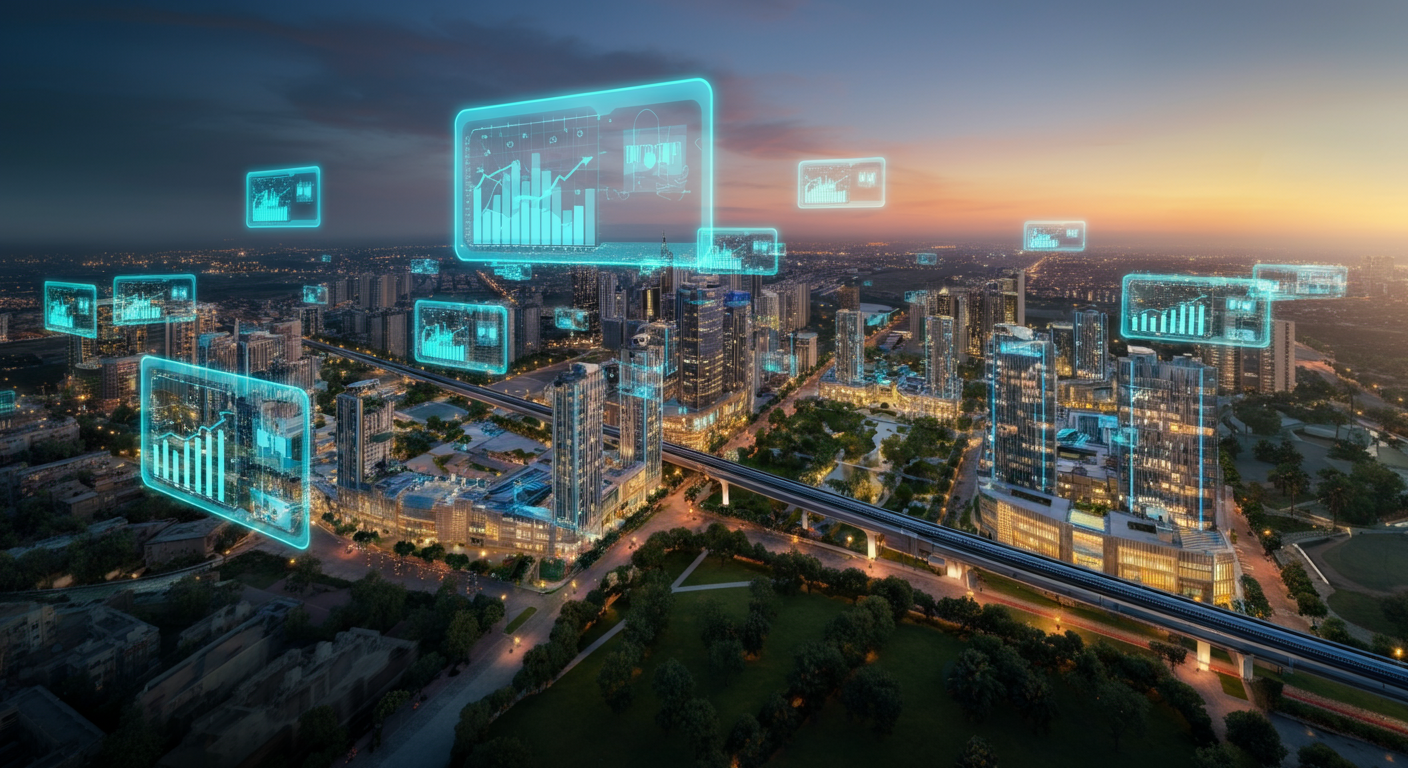
Digital walkthroughs radically shift the balance by adding intelligence to the marketing process. All interactions can now be quantified — the amount of time a client spends on a particular unit, which rooms they focus on, where navigation slows down, and where interest tapers off. Trends become apparent almost instantly.
This allows walkthroughs to become diagnostic. Marketing teams know what features to highlight. Sales teams know which features require further explanation and which sell themselves. Design teams obtain firsthand feedback that could shape future stages or projects. Teams come to a consensus based on facts — not assumptions.
This is critical intelligence in a market like India, where competition is intense, margins are tight, and capital is stretched across competing priorities. Pricing strategies become more precise. Inventory planning becomes more deliberate. Messaging gets sharper because it reflects how buyers actually behave — not how the developer wishes they would.
Most importantly, this feedback loop creates learning over time. Each project becomes smarter than the last. Each launch benefits from the data of the previous one. That compounding advantage is something 2D floor plans can never offer, no matter how beautifully drawn.
Why Solid Twin Represents the Next Evolution
Solid Twin is not designed to be impressive at face value. It is designed to decrease uncertainty on both sides of the exchange — converting walkthroughs into decision systems, not just visualizations.
- Living digital models, not static images: Every walkthrough is an active model that can change along with the project. Contrary to fixed renderings that solidify assumptions, these models are flexible — changes to design, phasing, or units can be indicated without repeating the whole marketing campaign.
- Accurate spatial representation: Sizes, measurements, and flow are calculated according to real-life experience, not rendered more attractively from a marketing point of view. The buyer has a realistic understanding of how living areas perform.
- Simulated environment baked into the experience: Solid Twin combines daylighting, shading, air movement, and orientation for walkthroughs. Consumers can assess comfort, usability, and livability in real-life simulations — and developers can identify potential shortcomings during early stages.
- Interactive exploration, not guided narratives: Consumers are not led through a choreographed tour. They roam on their own, look at different units, change designs, and check out all possible arrangements. This feeling of control boosts confidence and compresses decision timelines.
- Analytics turning engagement into insight: Every encounter produces data. Developers can track which units receive the most visits, which areas buyers congregate in, and which attributes drive interest — shaping pricing, sales approach, and design parameters.
Solid Twin doesn't supplant sales strategy or architectural knowledge — it honours them. It reconciles intent and experience in real estate decision-making, signalling not only an evolution in visualisation but an evolution in decision-making itself.
The End of Flat Thinking
2D floor plans will not go away. They will still be critical pieces of technical documentation. But they are no longer sufficient unto themselves. Indian real estate has outgrown flat thinking in a three-dimensional world.
The industry has got to learn to communicate with more clarity and intelligence as projects grow larger, buyers grow more cautious, and margins grow thinner. Digital walkthroughs and digital twins are not the future — they are the present catching up with reality. Developers who recognise this shift early will sell faster, build trust more easily, and protect margins more effectively. Those who don't may find themselves explaining drawings in a market that has already moved on.