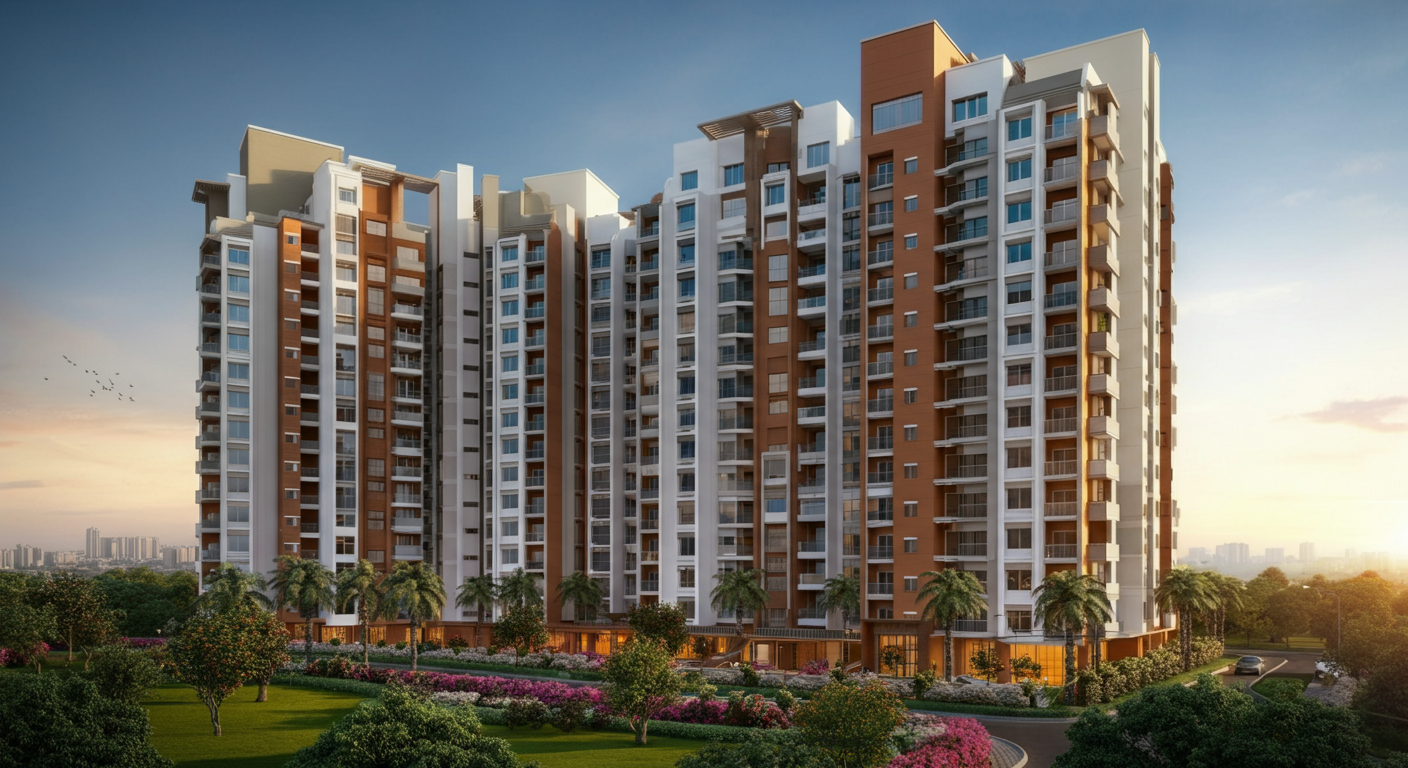
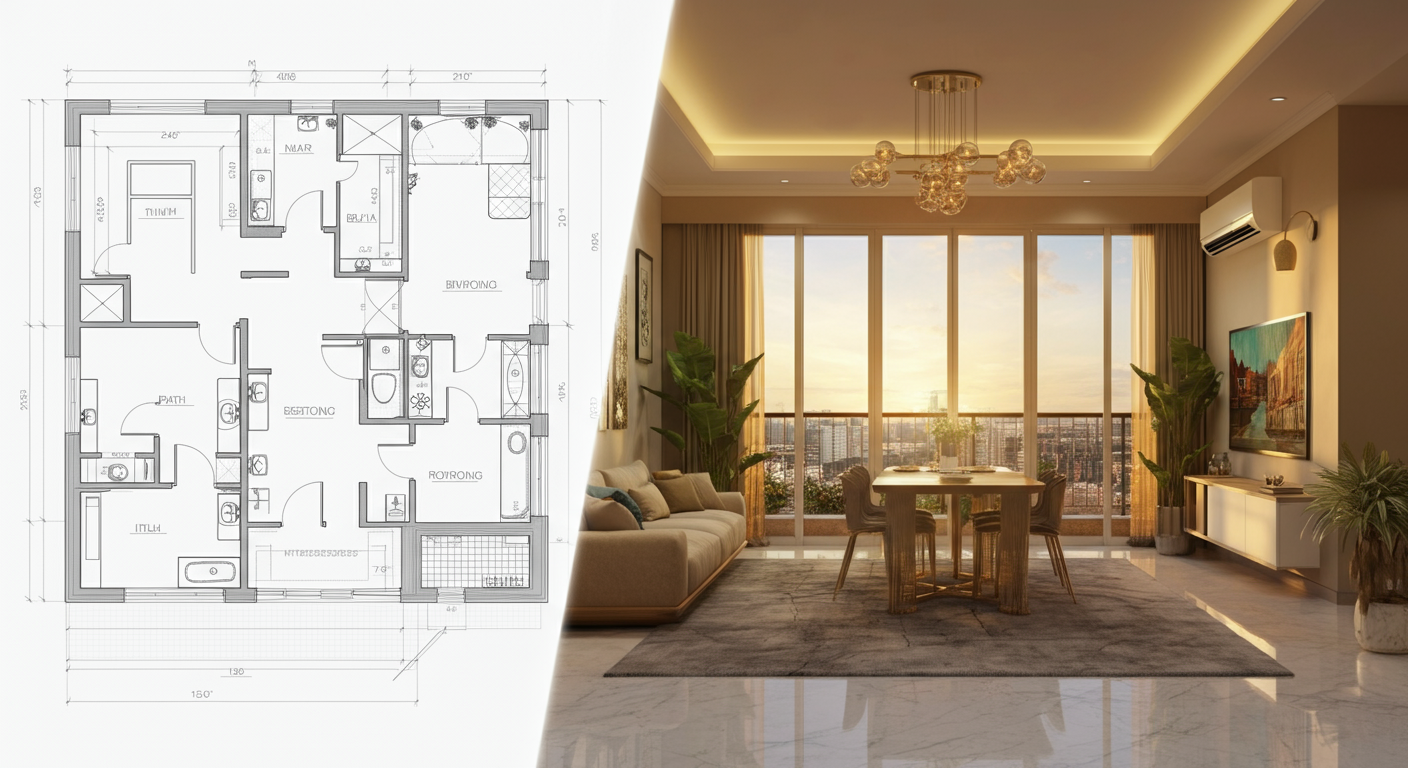
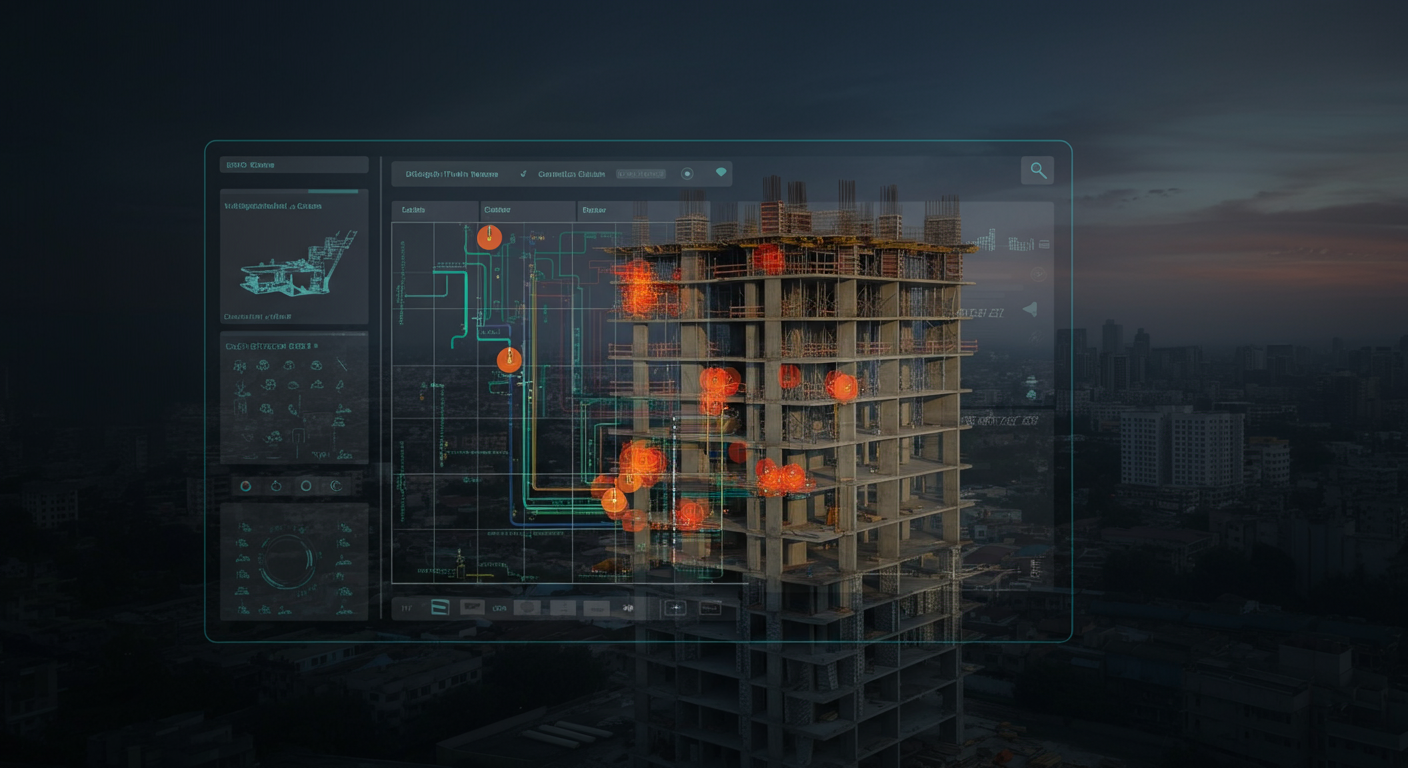
The real estate scene in India has always been ambitious yet disorganized and situation-specific. In Mumbai, for instance, builders pack high-rise properties into a compact plot, while the buyer struggles to rationalize space, lighting, and functionality. In Bengaluru, the layout reveals ample space and sunlight, but the purchase may be based merely on a drawing.
The customers had no other choice but to depend on blue prints, artist impressions, and sample flats, which were rarely proportional and lit accurately. Now, such patience is not expected. Indian customers today are technology-aware, research-oriented, and comparative buyers. NRIs, while acquiring properties in Hyderabad, Chennai, and Gurgaon, need optimal visualization inputs to make distant purchases. Even customers in Jaipur and Ahmedabad require visualization inputs.
Developers are also working with shorter timelines and stiff competition. Launches within Mumbai or Bengaluru need to have clarity to attain attention and marshal faster sales. Norms and regulations, including RERA, also promote the need for visual accuracy.
3D Visualization is no longer just a marketing play. It helps eliminate apprehensions while buying, provides a pre-launch boost, increases sales, and prevents miscommunication of projects. The subsequent sections will elaborate how 3D Visualization overcomes real-estate-related issues in India and how SolidTwin is specifically poised to assist developers make 3D Visualization a strength.
The Three Core Problems Indian Real Estate Has Always Faced
Before we proceed to the solutions, it's essential to identify the reasons why the 3D visualization concept has become an essential requirement for the Indian subcontinent. The following problems are what the concerned stakeholders have to encounter every day:
1. Interpretation Gaps Between Stakeholders
In the case of the Indian projects, there are architects, engineers, and salespeople along with buyers, each of whom may interpret the plan differently. A 2D plan may work well for the architect but could baffle the buyer and the salesperson.
Consequences include:
- Revisions in design that are made mid-way, leading to increased time and expenses
- Miscommunication in sales, eroding pre-launch conversion
- Buyer dissatisfaction post-delivery of services / poor reputation
3D visualization creates a shared visual reference. Everyone sees the same space, finishes, and dimensions, reducing assumptions. For example, Bengaluru developers use 3D walkthroughs to show light flow, room scale, and layouts, giving sales teams authority and buyers confidence before construction begins.
2. Pre-Construction Sales Rely on Imagination
Off-plan sales are critical in cities like Mumbai, Bengaluru, Pune, and Hyderabad. The buyers have to imagine the layouts, light, balcony usability, and views — therein lies the risk of hesitation.
3D walkthroughs eliminate guesswork and replace it with visual certainty. The buyers can walk through units, study the sunlight, and understand the scale of various elements. The projects in Bengaluru's Whitefield using this approach saw a rise in pre-launch bookings by almost 25%, cutting delays, and preserving cash flow.
3. Market Competition Compresses Decision Time
Indian buyers don't just compare two or three projects; they have a fistful of projects at one time, some in Mumbai or Hyderabad. In days, the prospect is evaluating several options. Projects that communicate clearly win.
3D visualization accelerates decisions. Interactive walkthroughs and photorealistic renders help buyers evaluate usability, layouts, and amenities speedily. Developers in Hyderabad using 3D tours clocked a 30–40% reduction in inquiry-to-booking time, which came at a much lesser cost in terms of marketing and operational efficiency.
What 3D Visualization Changes in Practice
Real estate in India is complex, with many stakeholders, thin margins, and a cautious consumer. 3D visualization is more than just a marketing tool. It is actually solving many existing problems related to designing, selling, and execution. Here is how it makes a difference:
- Early Design Validation: The potential for layout errors, circulation-related issues, and lighting problems can be assessed by the developers even before the onset of construction.
- Sales With Proof, Instead Of Promises: Customers can explore flats virtually, learning about their designs and materials.
- Alignment Across Teams: The same visual context is used by architects, contractors, and sales teams, eliminating misinterpretations and discrepancies in project implementation.
- Improved Buyer Trust: Especially among NRIs and long-distance buyers, virtual walkthroughs make it possible to view and approve spaces together, thus improving trust before buying.
How 3D Visualization Is Reshaping Key Stages of Development in India
Today, 3D visualization is no longer just used in marketing — it revolutionizes every stage of a property project from pre-launch to implementation. 3D visualization helps developers create clarity in every stage, making it possible to generate trust.
1. Pre-Launch Phase – Fostering Credibility
In India, it is often the pre-launch perception that determines the success of a project during its early stages. Those who incorporate 3D visualization during the pre-launch stage are able to better transmit their vision than those using two-dimensional floor plans and artist impressions — because they are able to perform a walk-through and have photorealistic images created.
This becomes an even more crucial point for NRIs, who entirely depend on these digital images for decision-making regarding purchasing. The very limited sites that are visited physically make trust an essential point, and that is where 3D visualization steps in. With the ability to walk through a flat, check the sun penetration in the rooms, or check the usability of the balcony, reservations are accelerated. Visualization does not only sell flats — it sells trust.
2. Approval and Communicating with Stakeholders
There are various stakeholders in Indian real estate projects, which include government bodies, joint development partners, and financial institutions. The conventional 2D plans tend to involve lengthy explanations and interpretations.
With 3D visualization, everyone interested is able to visualize clearly. Architects and developers are able to make explanations about massing, set back, and space relation without needing technical terminology. The planners are able to comprehend the plan at a quick glance. Financial institutions are also able to quickly assess the viability of a project based on 3D visualization.
3. Alignment Across Construction Teams
In India, construction projects can involve more than one subcontractor at a time, and if the plan is not clearly known, confusion and inaccuracies may arise.
3D visualization helps to ensure that, from engineers down to contractors, there is clarity on what the eventual result will look and be like on site. Walk-throughs and detailed renders assist teams in viewing what spaces should look like, how finishes should line up, and how the layout interacts with the surrounding environment. In complex high-rise projects around cities like Mumbai or Bengaluru, this clarity cuts down mistakes, enhances finishing quality, and keeps timelines intact.
Why Indian Buyers Respond Strongly to Visual Certainty
Indian buyers are naturally prudent when purchasing realty, and for a reason. Buying an apartment in India will rarely ever be an impulse buy. It will often comprise long-term economic intentions, family deliberations, and a great need for comfort. An apartment will never merely be an asset for the buyer — it will always be a place where life will happen.
It is here that 3D Visualization outshines the competition. With its ability to inspire a certainty of vision, it enables prospective buyers to clearly anticipate what they are actually going to buy even before it has been built. Families can virtually navigate interior designs, speculate about sizes, balconies, or common areas without having to be physically present, even thousands of kilometres away. The ability to compare different properties without relying on imagination is an edge 3D Visualization gives prospective buyers. More significantly, they already start to develop an ownership sentiment about the property even before they take it over.
The effect of such certainty on the Indian real estate market is quite dramatic. Cycle times for decision-making — potentially taking weeks or months through traditional channels of consensus-building within families before visits to the site — are thus compressed. Informed purchasing decisions lead to increased satisfaction for developers through simpler sales and cash flow. Moreover, when people are able to visualize a house they will possess in the future, there is an increased possibility that they will be satisfied with it, thus eliminating chances of conflict. Such certainty, therefore, is a necessity.
Post-Possession Confidence: Extending Value Beyond the Sale
Effects of 3D Visualization are not limited to the time the product reaches the marketplace. Trust, apart from investment, is what homebuyers in the Indian market look to accomplish. A family always looks for assurance that their product will meet their expectations even after it is acquired. This is where the role of 3D Visualization becomes all the more relevant.
For extended family members residing together — a very normal phenomenon for urban cities such as Pune, Jaipur, and Ahmedabad — it becomes possible with 3D walkthroughs to plan the furniture arrangement, visualize room sizes, and experience how the space will behave. This becomes a family affair as parents, kids, and grandparents can navigate together through the apartment to see how the space works for everyone.
Beyond standalone units, visualization extends the power of buyers to experience common areas and amenities much before they are built. Parks and gyms, clubhouses, swimming pools, and even landscaped walkways can be shown in immersive detail. Buyers can feel, virtually, the scale of a community, the usability of its facilities, and how these spaces connect with their homes. In Bengaluru's township projects or Mumbai's luxury complexes, this clarity turns abstract promises into tangible experience, building confidence in the developer and the investment.
This, in turn, extends the engagement of developers. When buyers know what to expect, complaints and disputes post-possession come down, reducing operational overhead and reputational risk. The projects that have detailed visualization generally enjoy better word-of-mouth promotion, higher ratings of trust, and more referrals — thereby creating a long-term competitive advantage in a crowded market.
Finally, the overall financial implications for the longer term cannot be underestimated. The units that buyers understand fully at the time of buying will encounter fewer resale misunderstandings, greater maintenance compliance, and greater value. In an industry that deals with the investment of significant amounts of money, the confidence that rendering provides leads to a direct correlation between loyalty and overall return on investment.
3D visualization, therefore, is not merely a tool that a developer uses prior to purchasing a property — it is an after-sales tool that instills confidence, builds the community image, and enhances the reputation of the developer in the highly competitive Indian market.
Where SolidTwin Fits In
Though it is the technology that offers the means, it is the execution that makes the difference. The 3D Visualization done by SolidTwin is not merely an aesthetic enhancement but an effective tool of communication between design, sale, and consumer understanding. It converts the intangible into tangible by ensuring that everyone — from the developer to the buyer — has the same clearly defined concept about the project.
SolidTwin's strategy has been formed by keeping the following three factors at the forefront. First and foremost, there has been an emphasis on accuracy of architectural depiction — the virtual depiction has to accurately align with the real-world setting. Next, the company takes into account the market sensibilities of the Indian market and the fact that clients from this region value access to sunlight, ventilation, vastu shastra, and efficient real-world layouts that will suit intergenerational living.
By focusing on these aspects, SolidTwin allows developers to transcend merely explaining an idea through words and static graphics. This enables them to show their value while providing buyers with an immersive experience. This has paved the path for quicker decisions, increased buyer confidence, and consequently, more efficiently sold projects. This blend of accuracy, understanding of culture, and functionality is why SolidTwin has been unique in India's highly competitive real estate sector.
A Structural Shift in Indian Real Estate: Why Visual Clarity Wins
The Indian real estate market has always been ambitious but not always clear. For decades, buyers committed life savings based on 2D floor plans, incomplete model flats, and verbal promises. That worked when alternatives were limited and patience high. Today, buyers are more discerning, digitally savvy, and geographically dispersed. They expect transparency, precision, and confidence before making a purchase — especially in urban hubs like Mumbai, Bengaluru, Hyderabad, and Pune, where competition is fierce and margins tight.
3D visualization is not just a trend — it's a structural shift in how Indian developers communicate, sell, and execute projects. Developers who adopt it gain three critical advantages:
Effective Communications Among Stakeholders
Indian examples include architects, designers, municipal officials, JV partners, sales teams, and consumers. Often, there is miscommunication, resulting in redesigns, delays, and disappointed consumers. 3D visualization offers a common language. All parties concerned view precise dimensions of a project, including light, perspective, and configuration. Such decisions — often requiring weeks of meetings and explanations — now occur quicker with less possibility of mistakes. For instance, skyscrapers developed in Pune have lowered changes during construction by allowing engineers and sales teams to view walk-throughs prior to actual construction.
Eliminate Buyer Uncertainty, Specifically NRIs & Offshore Investors
In India, it is not merely an investment that buyers make but an investment of trust and emotion. Many consumers will seek consultations with their families and make comparisons before investing. NRIs greatly depend on digital ease because it is very rare for them to visit the site and they must undertake informed decisions at a distance. Emotional amplification by 3D viewing enables families to walk through flats, view lighting, usability of the balcony, and size of rooms.
Make Better Decisions Faster in a Hypercompetitive Market
In cities such as Bengaluru, Mumbai, and Hyderabad, buyers consider several projects at once. Subtle differences in layout, amenities, or usability are not communicated through static images and floor plans. 3D visualization accelerates decision-making by offering buyers a realistic experience of the property. If prospects can explore the unit virtually and intuitively compare its features, developers will find faster conversions and more efficient pre-launch sales.
In the Indian real estate sector, which operates in a highly competitive scenario, the difference here isn't small. 3D visualization doesn't replace good projects — it helps good projects to be well-understood. It's the developers who have realized the value of clear understanding who will be the first to sell their projects and will retain the trust of customers.
It determines which one gets to sell first — and which one struggles to sell.
Take Your Projects From Concept to Confidence
In the fast-paced Indian property market, clarity convinces faster than promises. Customers don't want to use their imagination to picture their home of the future anymore — they want to feel and see it first. SolidTwin has come up with 3D visualization solutions that have the power to reduce sales reluctance and speed up the approval process.
Whether it's an office building in Mumbai, a typical township project in Bengaluru, or an upscale housing project for NRIs, SolidTwin will get your project well comprehended, well presented, and instantly trusted.
Join hands with SolidTwin and make every design a visual reality to accelerate sales, increase customer satisfaction, and build trust in the Indian market through our services!