A misaligned duct. A structural beam that cuts through a plumbing riser. A fire suppression line that was never coordinated with the electrical conduit. These are not hypothetical scenarios — they are the everyday reality of high-rise construction in India. And every one of them carries a price tag that developers, contractors, and ultimately buyers end up absorbing.
As Indian cities race to build taller, faster, and more ambitiously, the margin for error is shrinking. Digital twins are emerging as the most powerful tool available to close that margin — not by adding more inspectors or more meetings, but by creating a single, intelligent model of the building before a single column is poured.
The Real Cost of Construction Errors in India
Construction rework is one of the most expensive and least discussed problems in the Indian real estate sector. Industry estimates suggest that rework accounts for between 5% and 15% of total project costs — a staggering figure when applied to a 40-storey residential tower in Mumbai or a mixed-use development in Hyderabad.
The financial impact is only part of the story. Rework delays handover timelines, triggers penalty clauses, strains contractor relationships, and — in an era of social media and online reviews — damages developer reputations in ways that are difficult to recover from. Buyers in Bengaluru and Pune who experience delayed possession or discover post-handover defects are increasingly vocal, and increasingly litigious.
The root cause of most construction errors is not incompetence. It is fragmentation. High-rise projects involve dozens of disciplines — architecture, structural engineering, MEP systems, façade, interiors, landscaping — each working from their own drawings, their own schedules, and their own assumptions. When those assumptions collide on site, the result is rework.
Where Errors Begin: The Coordination Gap
In a typical Indian high-rise project, the coordination process looks something like this: the architect produces a set of drawings, the structural engineer produces another set, the MEP consultant produces yet another. These drawings are shared via email, reviewed in periodic meetings, and reconciled — in theory — before construction begins.
In practice, the reconciliation is incomplete. Drawings are updated at different times. Revisions are not always communicated across all parties. Subcontractors receive outdated versions. And by the time a clash is discovered on site — a structural beam occupying the same space as a ventilation duct, for example — the concrete has already been poured.
The coordination gap is widest in the following areas:
- MEP versus structural interfaces, where services must route through or around load-bearing elements
- Ceiling plenum zones, where HVAC, electrical, fire suppression, and data cabling compete for limited vertical space
- Shaft and riser coordination, where multiple services must share vertical runs across dozens of floors
- Façade and structural connections, where tolerances are tight and errors are expensive to correct
Each of these zones is a potential source of costly rework. And in a 40- or 50-storey building, the same clash can repeat across every floor.
How Digital Twins Catch Problems Before They Become Costs
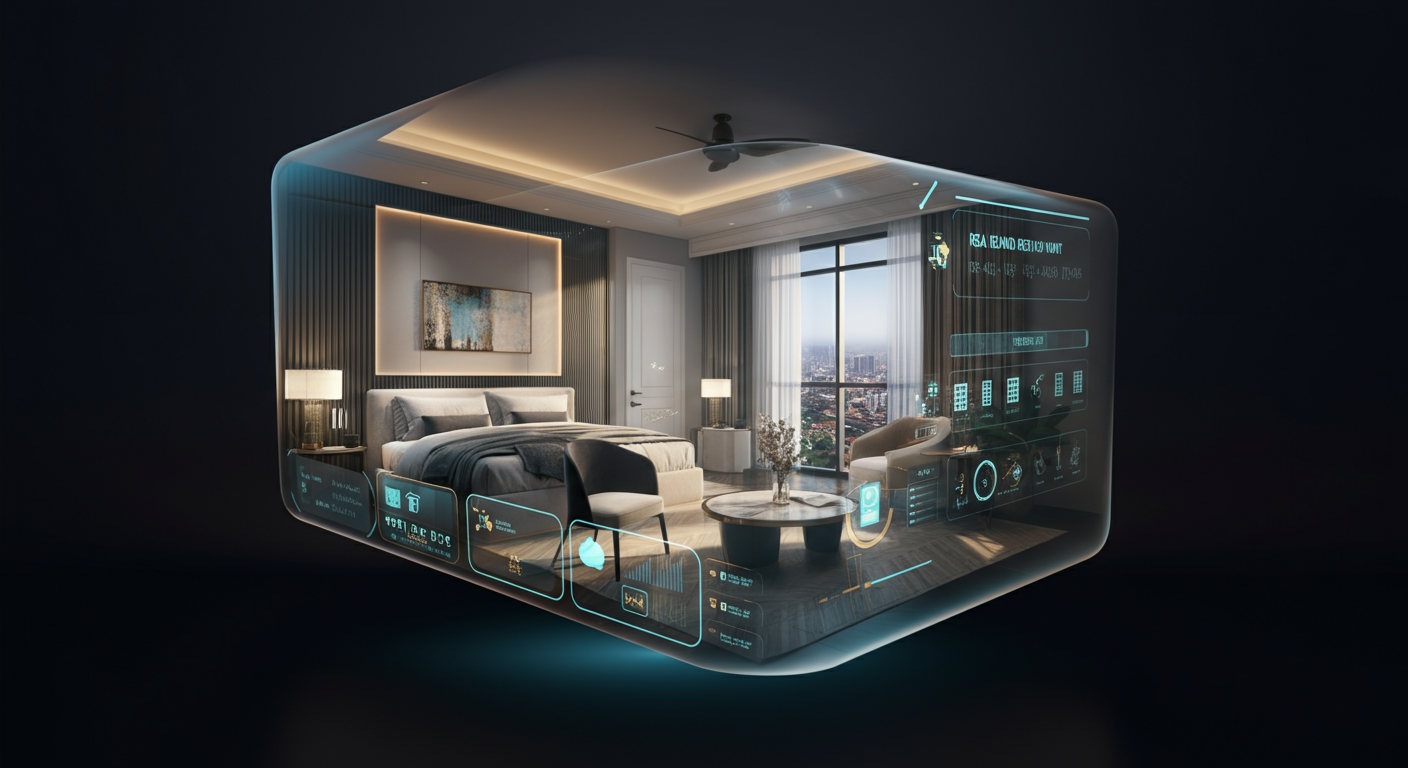
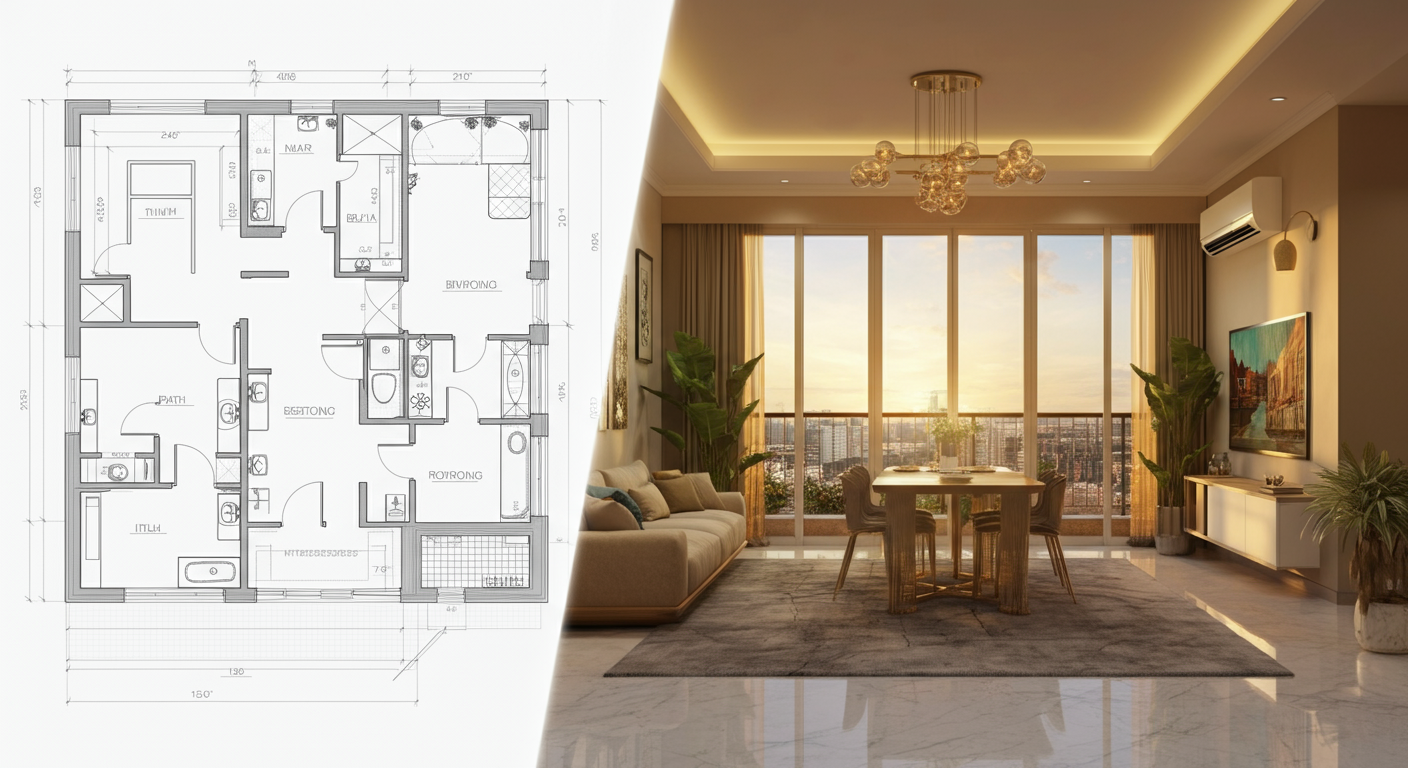
A digital twin is a living, data-rich 3D model of a building that integrates all disciplines into a single coordinated environment. Unlike a static BIM model, a digital twin is continuously updated as design decisions evolve, and it serves as the authoritative reference for every team on the project.
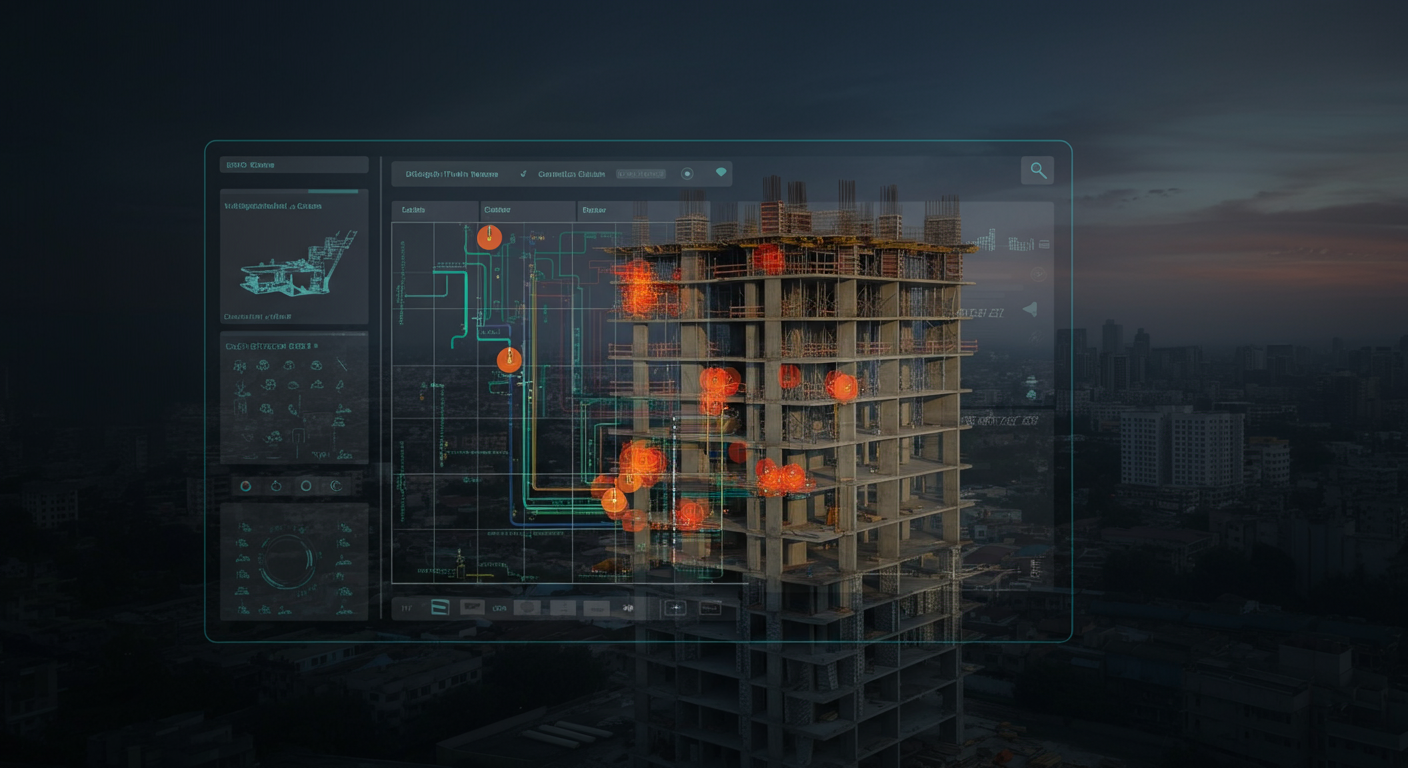
The most immediate benefit is clash detection. When the structural model, the architectural model, and the MEP model are federated into a single digital twin, automated clash detection algorithms can identify every point where elements from different disciplines occupy the same physical space. These clashes are flagged, categorised, and assigned for resolution — all before construction begins.
But digital twins go beyond clash detection. They enable:
- Construction sequence simulation, allowing teams to visualise the build order and identify logistical conflicts before they occur on site
- Design validation against regulatory requirements, including fire egress, accessibility, and structural load compliance
- Quantity take-off accuracy, reducing procurement errors and material wastage
- As-built documentation, creating a verified record of what was actually constructed for future maintenance and operations
For a developer building a 200-unit residential tower in Pune, resolving 300 clashes in the model costs a fraction of what it would cost to resolve even 30 of them on site. The economics are unambiguous.
MEP Coordination: The Biggest Beneficiary
If there is one discipline that benefits most dramatically from digital twin coordination, it is MEP — mechanical, electrical, and plumbing. In a modern Indian high-rise, MEP systems account for 25–35% of total construction cost and represent the most complex coordination challenge on the project.
The ceiling plenum of a typical commercial floor in a Bengaluru IT park, for example, must accommodate HVAC ducts, chilled water pipes, electrical cable trays, fire suppression mains, sprinkler branches, data conduits, and lighting fixtures — all within a vertical clearance that may be as little as 600mm. Without a coordinated 3D model, the probability of clashes is near-certain.
Digital twins allow MEP engineers to model their systems in full 3D, route services through the available space, and test clearances against maintenance access requirements. When a clash is detected — say, a chilled water pipe running through a structural beam — the model flags it immediately, and the team can reroute before fabrication begins.
The Cost of Getting MEP Wrong
MEP rework is among the most expensive categories of construction error. Cutting through a completed concrete slab to reroute a drain, or dismantling a suspended ceiling to reposition a duct, can cost multiples of what the original installation would have cost if coordinated correctly. In high-rise projects in Mumbai, where labour costs and site logistics are particularly challenging, MEP rework can add weeks to the programme and lakhs to the budget — per floor.
Digital twins eliminate the majority of these errors by making the invisible visible. Every pipe, every duct, every conduit is modelled in three dimensions, coordinated with every other element, and validated before a single bracket is fixed to a slab.
Subcontractor Alignment at Scale
A large high-rise project in Hyderabad or Mumbai may involve 20 or more subcontractors working simultaneously across different floors and zones. Each subcontractor has their own team, their own schedule, and their own interpretation of the drawings. Without a shared reference model, misalignment is inevitable.
The digital twin serves as that shared reference. When every subcontractor is working from the same federated model — updated in real time as design decisions are made — the risk of conflicting interpretations is dramatically reduced. A civil subcontractor can see exactly where the MEP contractor plans to install their services before casting the slab. A façade contractor can verify their fixing points against the structural model before fabricating panels.
This shared visibility also transforms the RFI (Request for Information) process. Instead of subcontractors raising queries based on ambiguous 2D drawings, they can interrogate the 3D model directly, identify the issue precisely, and raise a targeted RFI that can be resolved quickly. The volume of RFIs on digital twin-enabled projects is typically 30–50% lower than on traditionally managed projects.
Real Outcomes for Indian Developers
The benefits of digital twin-enabled coordination are not theoretical. Developers and contractors who have adopted this approach on Indian high-rise projects are reporting measurable improvements across every key performance indicator.
Typical outcomes include:
- Rework reduction of 40–60%, driven by clash detection and pre-construction coordination
- Programme savings of 8–15%, as on-site problem-solving is replaced by pre-construction resolution
- Cost savings of 5–10% of total project value, primarily from reduced rework, better procurement, and fewer variations
- Improved quality at handover, with fewer defects, snags, and post-possession complaints
- Stronger subcontractor relationships, as disputes over scope and responsibility are resolved by reference to the model rather than by argument
For a developer delivering a ₹500 crore residential project in Bengaluru, a 5% cost saving represents ₹25 crore — more than enough to justify the investment in digital twin technology many times over.
Beyond the Build: Operational Value
The value of a digital twin does not end at practical completion. The as-built model becomes a powerful asset management tool for the building's lifetime — enabling facilities managers to locate services, plan maintenance, and manage renovations without the guesswork that typically accompanies older buildings. For commercial developers in Hyderabad and Mumbai who retain ownership of their assets, this operational value is increasingly significant.
How SolidTwin Supports Error-Free Delivery
SolidTwin is built specifically for the Indian construction market, with a platform designed to address the coordination challenges that Indian high-rise developers face every day. Rather than adapting a generic BIM tool to local conditions, SolidTwin has been developed from the ground up to support the workflows, team structures, and project scales that characterise Indian real estate.
The platform enables project teams to:
- Federate models from all disciplines into a single coordinated digital twin, regardless of the authoring software used by each consultant
- Run automated clash detection across all discipline combinations, with results categorised by severity and assigned to responsible parties
- Track clash resolution through a structured workflow, ensuring that every identified issue is formally closed before construction proceeds
- Provide subcontractors with model access through a lightweight viewer, so every team on site is working from the same coordinated reference
- Maintain an as-built record that is updated throughout construction and handed over to the client at project completion
SolidTwin works with developers, main contractors, and project management consultants across Mumbai, Bengaluru, Pune, and Hyderabad — helping them move from a fragmented, drawing-based workflow to a coordinated, model-based one. The result is fewer errors, faster delivery, and buildings that perform as designed from day one.
Construction errors in Indian high-rise projects are not inevitable. They are the predictable consequence of fragmented information and disconnected teams. Digital twins solve that problem at the source — by creating a single, coordinated model that every discipline works from, every clash is resolved in, and every decision is validated against. For developers who are serious about delivering quality projects on time and on budget, the question is no longer whether to adopt digital twin technology. It is how quickly they can get started.