India's luxury real estate market is undergoing a quiet revolution. In cities like Mumbai, Delhi NCR, Bengaluru, and Hyderabad, a new generation of ultra-premium residential developments is competing not just on location or square footage, but on the quality of the buying experience itself. At the heart of this shift is 3D visualization — a technology that is fundamentally redefining how developers present, market, and sell high-value properties.
The Luxury Buyer Is Different
To understand why 3D visualization matters so profoundly in the luxury segment, you first need to understand who the luxury buyer is. India's premium property market is driven by a distinct cohort of high-net-worth individuals (HNIs), non-resident Indians (NRIs), and senior corporate executives (CXOs) — a group that is globally mobile, digitally sophisticated, and accustomed to world-class experiences in every domain of their lives.
These buyers have toured penthouses in Dubai, evaluated residences in Singapore, and browsed luxury developments in London — all from their smartphones. They arrive at a sales conversation already informed, already opinionated, and already expecting a presentation that matches the calibre of the product being sold. A printed brochure, however beautifully designed, simply does not meet that bar.
Key Characteristics of India's Luxury Property Buyer
- Globally travelled and exposed to international luxury standards
- Time-poor — decisions must be facilitated efficiently and remotely
- Emotionally driven — they are buying a lifestyle, not just a property
- Highly visual — they respond to immersive, photorealistic experiences
- Discerning — they can immediately detect low-quality or generic presentations
Why Brochures Fail the Premium Segment
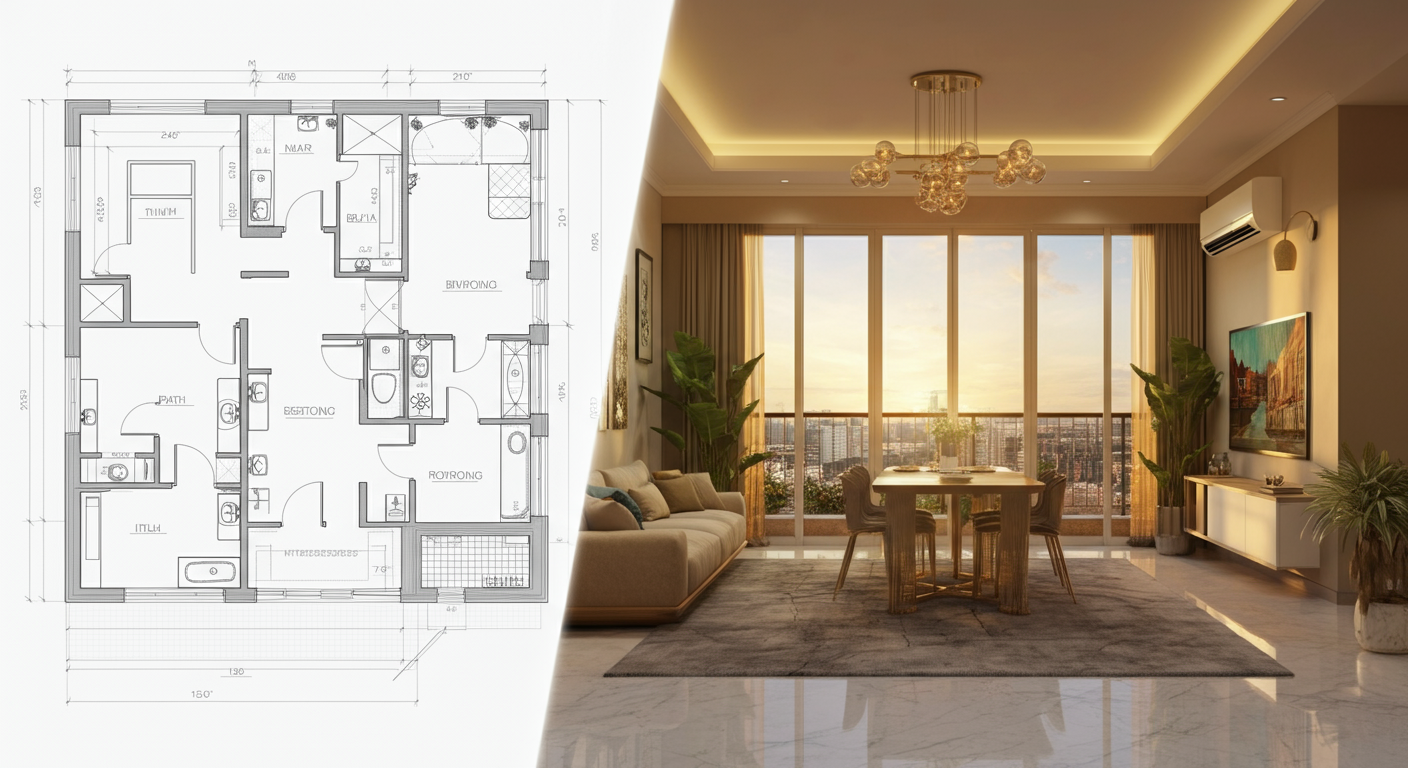
Traditional real estate marketing — glossy brochures, static floor plans, and site visits to incomplete construction — was designed for a different era and a different buyer. For the luxury segment, these tools carry a fundamental flaw: they ask the buyer to imagine. And imagination, however vivid, is no substitute for experience.
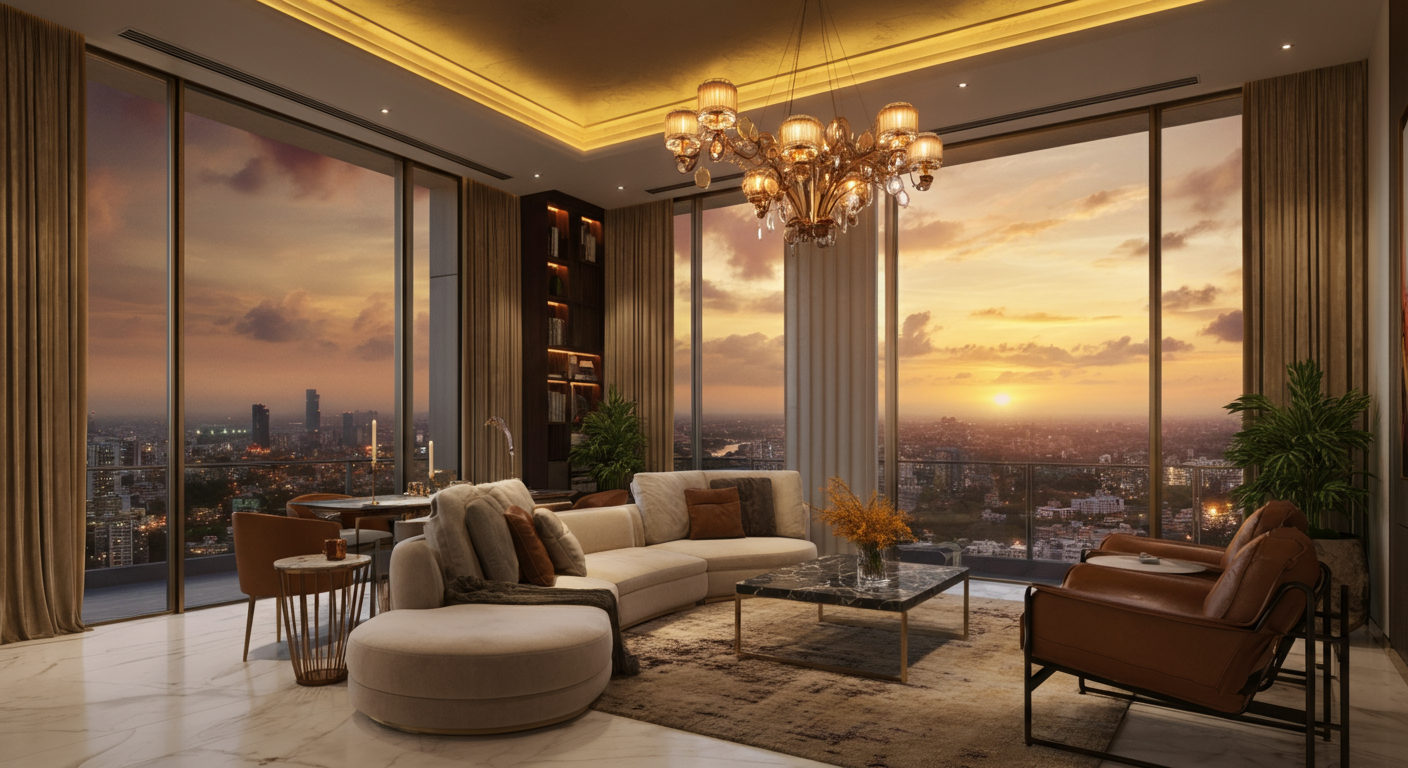
Consider a ₹15 crore penthouse in Worli, Mumbai, or a ₹8 crore villa in Whitefield, Bengaluru. The buyer is being asked to commit a life-defining sum of money to a property that may not yet exist in physical form. A two-dimensional floor plan cannot convey the sweep of a double-height living room. A photograph cannot capture the way evening light falls across a marble foyer. A brochure cannot communicate the sense of arrival that a grand lobby is designed to create.
The result is hesitation, extended decision cycles, and — most critically — a failure to emotionally connect the buyer to the property. In the luxury segment, emotional connection is not a soft metric. It is the primary driver of purchase decisions.
Immersive Experiences That Match Premium Expectations
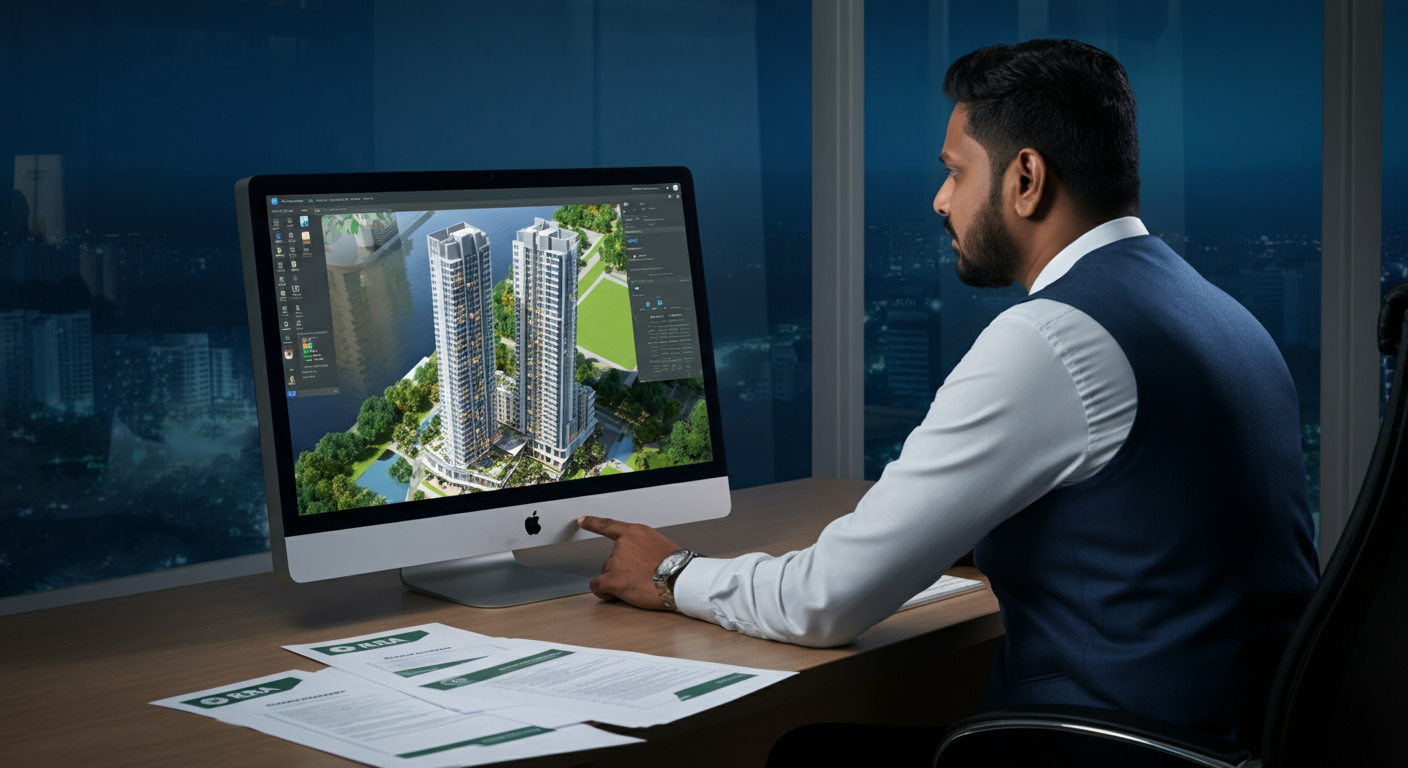
3D visualization changes the equation entirely. Through photorealistic renders, interactive virtual walkthroughs, and digital twin environments, developers can now present a property in its full, finished glory — before a single slab of concrete has been poured. The buyer does not need to imagine. They can see, explore, and feel.
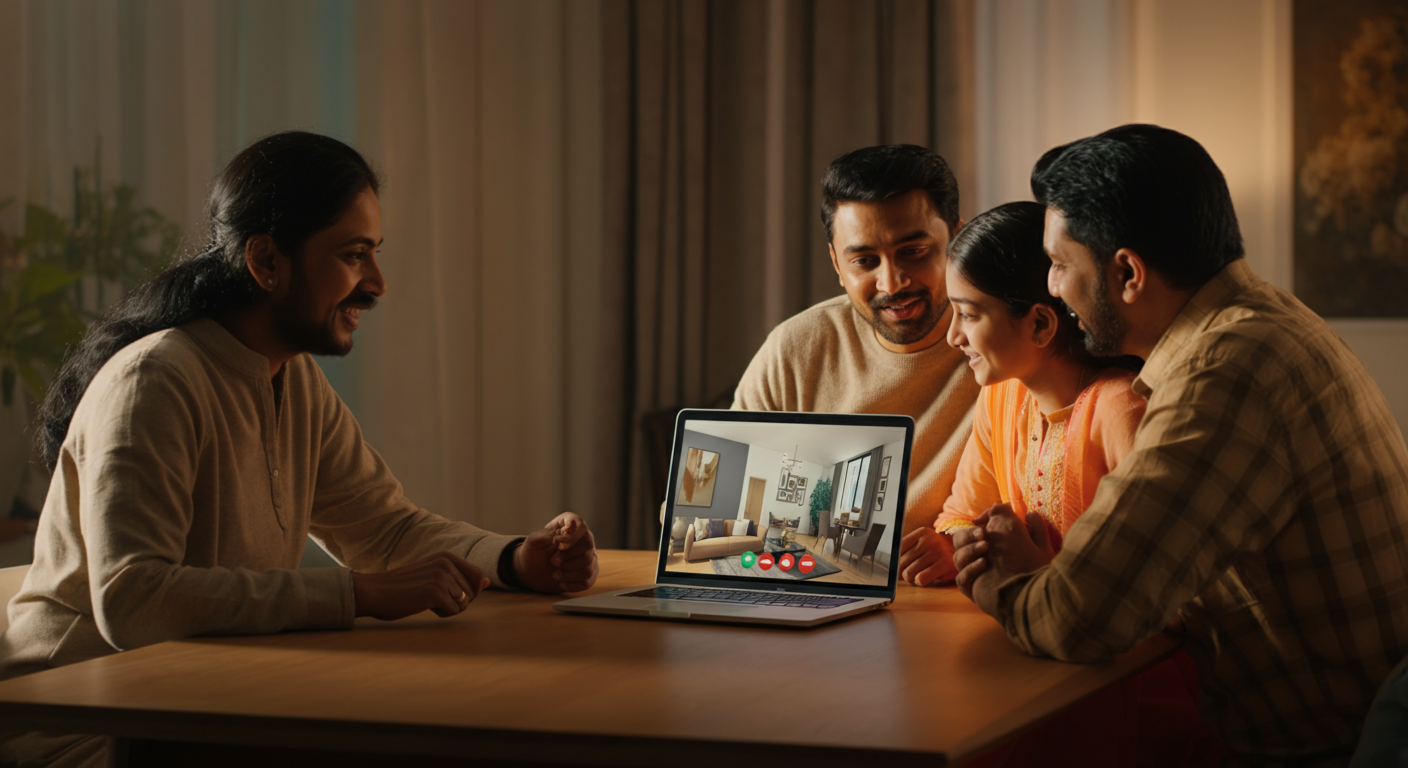
For NRI buyers based in the United States, the United Kingdom, or the Gulf, this capability is transformative. A developer in Gurgaon or Hyderabad can now offer a prospective buyer in Dubai or New Jersey a fully immersive walkthrough of a property — complete with material finishes, furniture layouts, lighting conditions at different times of day, and panoramic views from every room. The buyer experiences the property as if they were standing inside it, without ever boarding a flight.
What Immersive 3D Visualization Delivers
- Photorealistic interior and exterior renders that replicate real-world lighting and materials
- Interactive virtual walkthroughs navigable on desktop, mobile, or VR headsets
- Real-time customisation — buyers can switch finishes, materials, and furniture configurations
- Accurate spatial representation — buyers understand scale, proportion, and flow
- Cinematic fly-through videos for use in digital marketing and social media campaigns
This level of presentation signals something important to the luxury buyer: that the developer takes quality seriously at every stage — not just in construction, but in communication. The presentation itself becomes a proof point of the product's premium positioning.
Showcasing Amenities and Lifestyle
In the luxury segment, the apartment or villa is only part of what is being sold. The lifestyle — the amenities, the community, the environment — is equally, if not more, important. A rooftop infinity pool overlooking the Mumbai skyline. A double-height clubhouse with a curated art collection in Delhi NCR. A landscaped podium garden with jogging trails and water features in Bengaluru. A sky lounge with panoramic views of the Hyderabad cityscape.
These are the elements that differentiate a ₹5 crore apartment from a ₹15 crore one. And they are precisely the elements that are most difficult to convey through traditional marketing. A photograph of an empty swimming pool communicates very little. A photorealistic 3D render of that same pool — bathed in golden evening light, surrounded by lush landscaping, with the city glittering in the background — communicates everything.
Amenity Spaces That Benefit Most from 3D Visualization
- Infinity pools and aquatic facilities with skyline or landscape backdrops
- Grand clubhouses, banquet halls, and private dining spaces
- Landscaped gardens, podium parks, and outdoor recreation areas
- Wellness centres, spas, and state-of-the-art fitness facilities
- Sky lounges, observation decks, and rooftop entertainment areas
- Concierge lobbies, arrival courts, and valet drop-off zones
3D visualization allows each of these spaces to be presented at its absolute best — in the right light, at the right time of day, with the right atmospheric conditions. It is, in essence, the ability to show the property not as it is during construction, but as it will feel when it is lived in.
Closing High-Value Deals Faster
Beyond the experiential dimension, 3D visualization has a measurable commercial impact: it accelerates the sales cycle. In the luxury segment, where a single transaction can represent ₹10 crore or more, the cost of a prolonged decision cycle is significant — for both the developer and the buyer.
When a buyer can experience a property fully and confidently — when they can walk through every room, explore every amenity, and visualise their life within the space — the psychological barriers to commitment are dramatically reduced. Uncertainty is replaced by conviction. Hesitation gives way to decision.
Developers across Mumbai, Delhi NCR, Bengaluru, and Hyderabad who have adopted immersive 3D presentations report shorter sales cycles, higher conversion rates from site visits, and a significant reduction in post-booking cancellations — because buyers who have experienced the property virtually arrive at their decision with far greater clarity and confidence.
The Commercial Case for 3D Visualization in Luxury Sales
- Reduced sales cycle length — buyers reach decisions faster with complete visual information
- Higher conversion rates — immersive experiences create stronger emotional commitment
- Lower cancellation rates — buyers who have 'experienced' the property are less likely to withdraw
- Expanded buyer reach — NRI and outstation buyers can be engaged without physical site visits
- Premium pricing justification — high-quality visualization reinforces the property's value proposition
How SolidTwin Elevates Luxury Presentations
SolidTwin is purpose-built for the demands of India's premium real estate market. Our platform combines photorealistic 3D rendering, interactive digital twin technology, and immersive virtual walkthrough capabilities into a single, seamlessly integrated solution — designed specifically for developers who refuse to compromise on quality.
We work with luxury developers across Mumbai, Delhi NCR, Bengaluru, and Hyderabad to create presentation experiences that are as premium as the properties they represent. From the grand arrival sequence of a Juhu villa to the sky-high views of a Gurugram penthouse, from the lush landscaping of a Whitefield township to the waterfront vistas of a Hyderabad lakeside residence — SolidTwin brings every detail to life with cinematic precision.
What Sets SolidTwin Apart
- Ultra-high-fidelity renders that meet international luxury presentation standards
- Interactive digital twin environments accessible on any device, anywhere in the world
- Real-time customisation tools that allow buyers to personalise finishes and configurations
- Dedicated NRI presentation modules optimised for remote engagement
- Full amenity and lifestyle visualisation — pools, clubhouses, landscaping, and beyond
- Seamless integration with developer sales and CRM workflows
India's luxury real estate market is growing rapidly, and the competition for discerning buyers has never been more intense. In this environment, the quality of the presentation is not a secondary consideration — it is a strategic differentiator. Developers who invest in immersive 3D visualization are not simply improving their marketing. They are elevating their brand, accelerating their sales, and delivering an experience that matches the extraordinary properties they have built.
With SolidTwin, that level of excellence is within reach — for every project, in every city, for every buyer who deserves to experience the extraordinary before they commit to it.