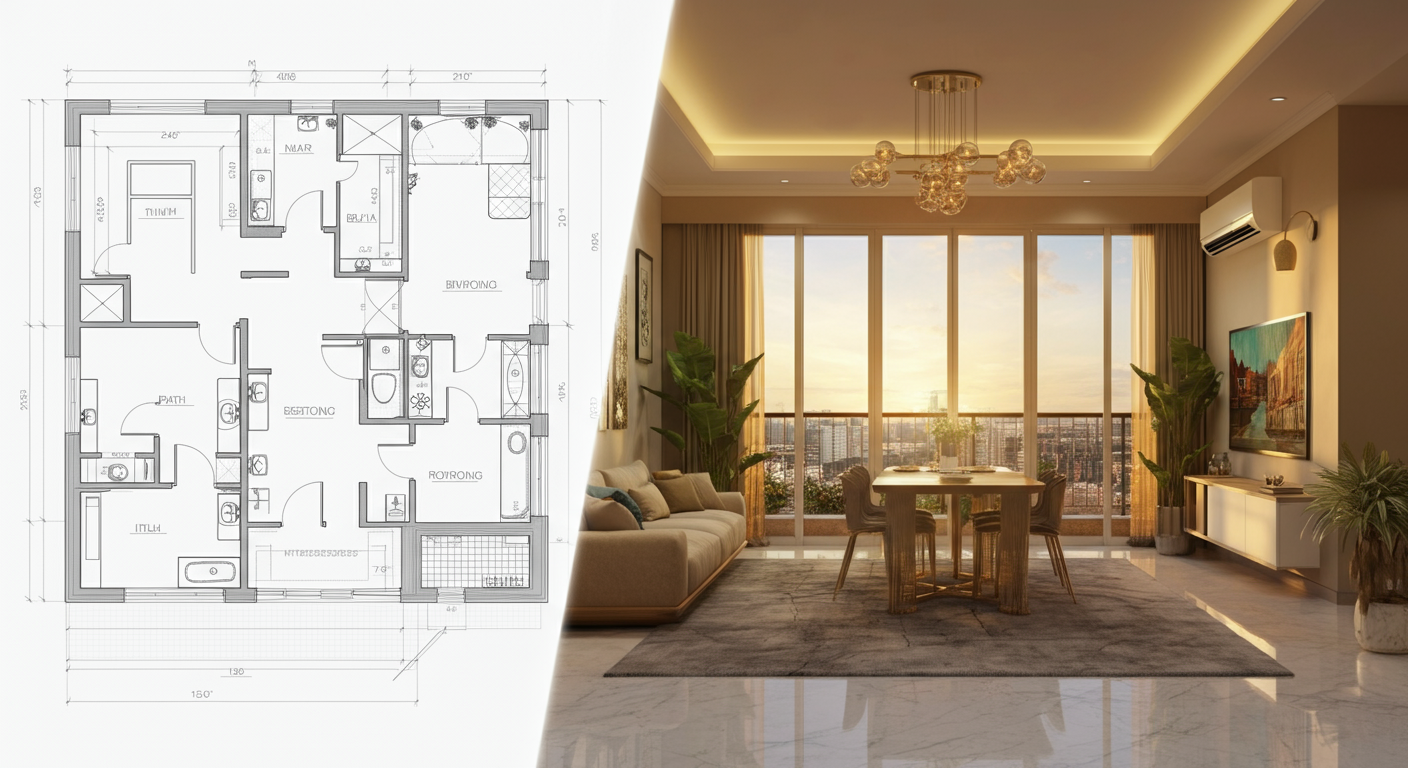
The truth that Indian developers do not like to accept in particular is that the conventional brochure and 2D image are literally costing you money. Every apartment that sits unsold, the buyer who hesitates before walking away, has been the victim of an outmoded marketing solution that does not communicate the things that matter — the experience of the space.
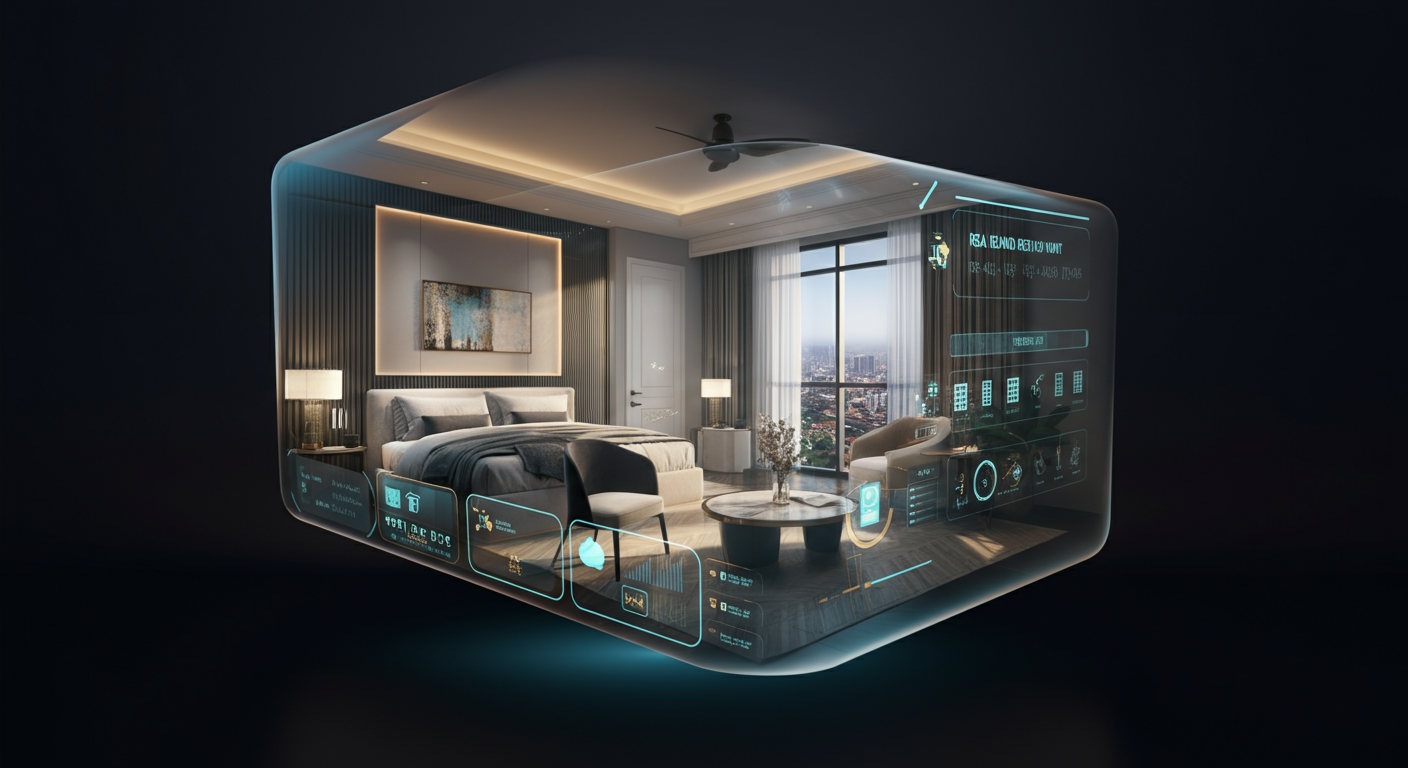
Customers are no longer fooled by pretty pictures. Customers want proof, not promises. Customers don't want to picture themselves in a space, they want to experience it, feel it, experience it virtually, before giving out lakhs or crores. If that experience isn't provided by marketing, it'll be provided by someone else. Virtual 3D walkthroughs emerge. These aren't novelties or toys with glitz but instead armory. Interactive digital twins allow potential customers to walk through properties, view scale, observe patterns of sunlight penetration, and even arrange layouts with furnishings from the potential customer's laptop or phone. This means quicker sales cycles, reduced points of opposition, and greater buyer confidence for the developer.
The challenge is very real in the India market. With the urban housing market projected to touch $200+ billion by the end of 2027, the cost of delays and lost sales is very expensive. The problem is the same for the multi-phased residential, the luxurious residential, or the commercial segment — in every case, a potential buyer demands answers before he or she forks out the cash. A digital walkthrough is the solution.
The Modern Indian Buyer Has Evolved
The property buyer of today is no longer convinced by a fancy brochure or by a smooth-talking salesperson. Decisions are not impulsive; investments are questioned, and commitments against viable alternatives are weighed. Layouts, amenities, price, and returns are compared across various developments before the buyer actually speaks with a sales team. In tier-I cities like Mumbai, Bengaluru, and Pune, on any given day a buyer may go through ten or more competing units online. Traditional floor plans and static images simply don't provide clarity for such buyers.
Modern purchasers are experience-driven. They want to understand how a space will truly feel, not just how it looks on paper. Will the living room get enough sunlight in December? Does the balcony fit four people for a dinner gathering? How will the airflow go through a large apartment or township during peak summer heat? Static brochures offer no answers — only digital tools such as 3D walkthroughs can.
The use of digital twin technology enables buyers to walk through the property as if they are physically present through the help of the following features:
- Independently traverse spaces to grasp proportions mentally
- Observe patterns of sunlight at various times of the day throughout the seasons
- Note airflow and circulation patterns in massive and intricate systems or designs
Such an experience helps eliminate guesswork and boosts confidence. The buyer is not required to visualize and subsequently decide; rather, he or she is able to check out the property in a virtual way prior to spending a single penny.
Another factor is convenience. The customers in the urban areas of India tend to be quite occupied, considering their career, family, as well as travel. The digital walk-arounds offer convenience as they are always available, giving potential customers the chance to view the property without actually visiting the place. This is especially the case with pre-launch or off-plan projects.
Builders Are Using Digital Walkthroughs to Protect Margins
In the Indian property market, time is money. If a property remains unsold for a day, every hesitant buyer who walks away is adding to the cost of inventory, not to mention the time it will take for completion. When it is a twin property, the cost will compound. Traditional methods — brochures, 2D drawings, and site visits — are open to interpretation. Each party forms their own understanding of the plan, and misalignments only surface during implementation.
Digital walkthroughs are revolutionizing this paradigm. Here's how they cut down ambiguity and safeguard the bottom line:
- Point out the strong points of the units: Compared to photographs or 2D drawings, 3D walkthroughs feature units at actual sizes, with actual lighting, actual proportion, and actual environmental elements. It allows potential buyers to tour the units, including the circulation paths, as well as the external areas, at their own tempo.
- Cut down on physical visits for remote buyers: The majority of property buyers are either NRIs or investors living in other cities or local professionals with no time to physically visit various locations. Walkthroughs help such buyers virtually walk through the property, eliminating the restrictions of distance or time. Builders can save on logistics and sales personnel while reaching a larger pool of potential buyers.
- Preempt objections before they become prohibitive: Objections regarding layout, natural lighting, furniture positioning, or movement paths are usually posed before closing a deal. With interactive walkthroughs, customers are able to walk through an online layout to examine finishes and spatial dynamics. The rapid preempting of possible objections helps builders close deals without lengthy negotiations.
- Optimize sales cycles and customer satisfaction: Projects implemented with 3D interactive models have seen an acceleration of up to 30% in their sales cycles and a reduced number of complaints regarding purchases. Walk-throughs align customer expectations with reality prior to development.
Digital walk-arounds are not just a marketing era — they are actually a risk management technique. By eliminating indecision, providing transparency, and allowing potential purchasers to have an accurate idea about the space, developers can ensure their bottom-line interests are protected, timelines are reduced, and operational efficiency remains intact.
How 3D Walkthroughs Drive Faster Approvals and Greater Confidence
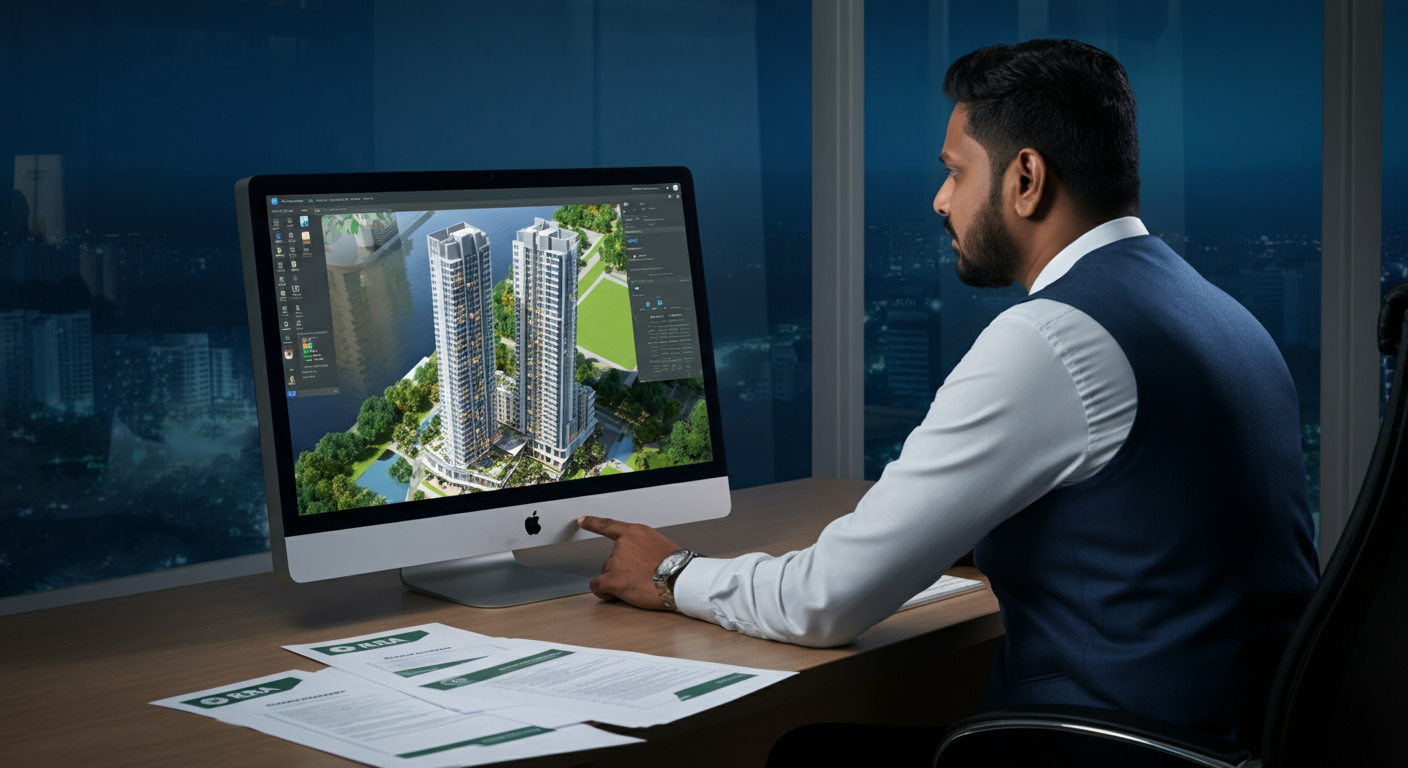
Benefits are enjoyed not only by those who are selling. In India, it has been observed that regulatory and planning authorities tend to delay when they are not clear about plans. As floor plans, sections, and spreadsheets are involved, many ambiguities arise. On the other hand, digital walking tours reveal precise spatial conditions. One can quickly judge mass, pathways, fire safety, and environmental effects without relying solely on technical descriptions.
For developers, this means:
- Involving more parties: More parties' interests can be taken into account and addressed
- Fewer surprises on-site: If approvals are clear, the chance of design or compliance problems on-site is reduced
- Cost Efficiency: Every month saved in approvals means less cost in terms of storage, interest, and personnel costs, specifically with large projects
Through the inclusion of walkthroughs within the submission packages, the developer can expedite the timelines without any compromise on the safety and compliance fronts.
Enhancing Buyer Trust and Engagement
Trust is the key selling factor in the real estate market in India. Today, buyers are not fooled by pictures in brochures, artist impressions, or even show apartments. There is a lot of skepticism regarding investing in the range of tens of lakhs or crores. Today, they want proof — they want to check it out on their own instead of listening to a salesperson.
In response to this need comes the solution of 3D walkthroughs, where the control resides solely with the consumer. Buyers can explore their future properties, move from one floor to another, and analyze their designs as they want, feeling the dynamics of each area as they interact with it. They also get to witness how the lighting affects other rooms at different times of the day, picture how furnishings will fit, and analyze the movement patterns so that they can be sure that the living or working experience will be as expected. With walkthroughs, consumers get rid of uncertainties that lead to distrust.
The effect on the sales side is quite substantial. Customers who get to "experience" the property before actual visits will raise fewer objections, leading to an easier negotiation process and faster decision-making. The walkthrough also provides the property with the perception of authenticity and gives the client an understanding or guarantee that they will get the precise thing they are seeing.
Data-Driven Insights: From Interaction to Action
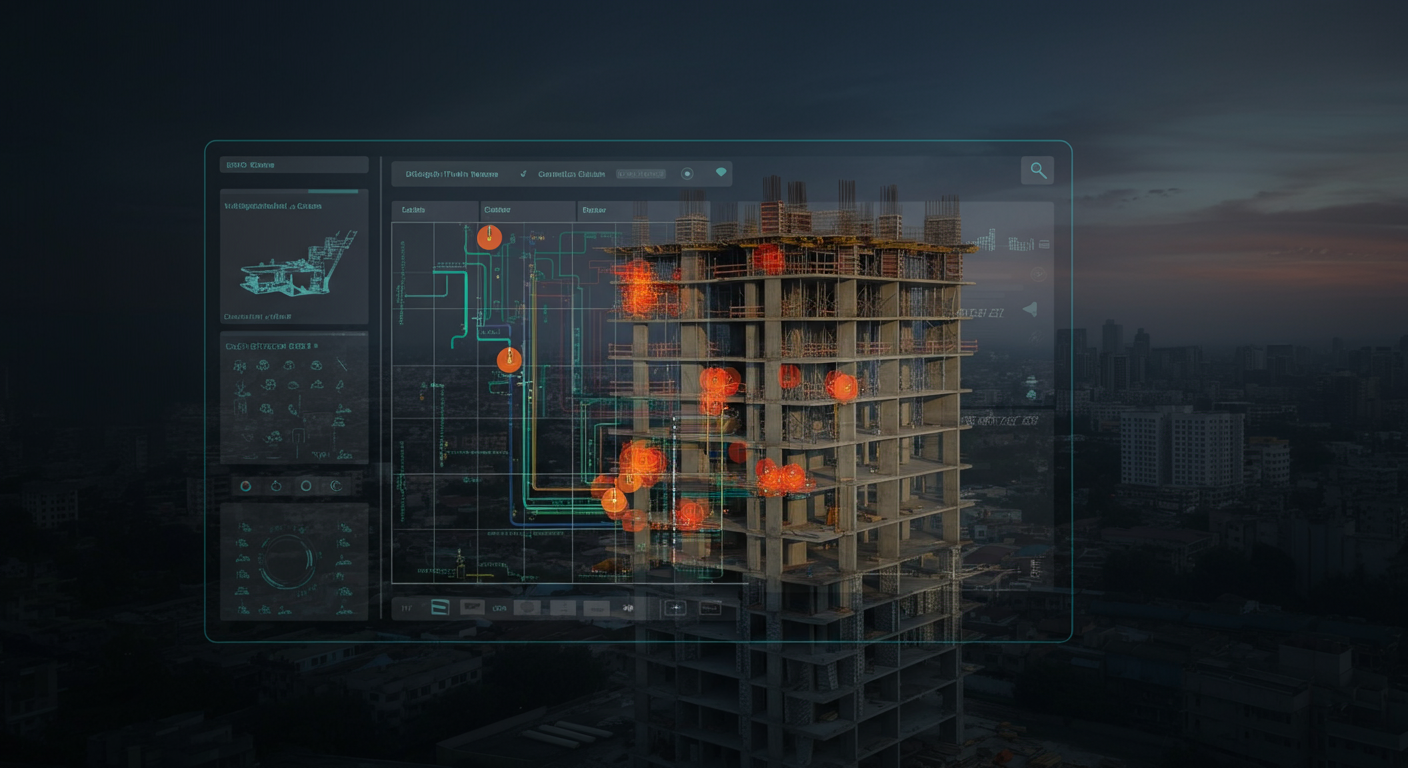
One of the most revolutionary advantages that digital walkthroughs provide is that of analytics. With digital walkthroughs, it becomes possible to monitor buying behavior in a virtual world, giving developers invaluable feedback that was not even feasible to generate with pre-existing marketing solutions. Some key points that define what that information entails are:
- Average Time Spent per Unit: Spending more time on one unit indicates more interest from potential buyers. Follow-ups, emphasis on facilities, or marketing strategy can be adjusted according to which unit attracts more attention effectively.
- Rooms Viewed Most: Analyzing the rooms that home buyers visit the most will indicate what the home buyer is interested in, whether the living room, master bedroom, or the kitchen itself. Such information will equip salespersons with the necessary facts to prioritize highlighting selling points while also forecasting objections.
- Features of Most Interest: It identifies those elements driving the greatest interest, be it a balcony, layout, or natural lighting, to refine design decisions in current or future developments and to create targeted campaigns and price strategies for key premium features.
In India, where high-value real estate purchases involve many stakeholders — investors, family decision-makers, and corporate buyers — these data-backed insights create clarity and reduce miscommunication. Sales, marketing, and design teams will be able to act upon the same verified data to fast-track decision-making and accelerate the path from inquiry to closure.
Marketing Reach Without Boundaries
The Indian real estate market is no longer limited by geographies. Today's buyers comprise NRIs, institutional investors, and busy urban professionals who cannot visit the site every now and then. For these buyers, 3D digital walkthroughs break the barriers of distance and time, allowing them to explore properties at their convenience anytime and from any device. As a developer, showcase different units, various layouts, multiple amenities on single interactive platforms, and give an overall sense of the development without multiple site visits.
This ability to access properties remotely is more than a matter of convenience — it's a factor that drives conversions, especially for luxury apartments, off-plan townships, and commercial developments where the early commitment of buyers often makes or breaks project viability. By creating presence and clarity among buyers digitally, walkthroughs eliminate delays in decision-making and hasten closure, driving tangible business outcomes in a fiercely competitive market.
Solid Twin: Enabling Faster Sales, Smarter Decisions
The Solid Twin extends the 3D walkthrough by incorporating intelligence and analysis in every design. This provides the buyer with proper spatial orientation, making it easier to perceive the design as a real-life, relatable construct rather than an abstract, deceptive notion. The capacity to simulate an environment gives the buyer an opportunity to understand, through virtual scanning, the effects of sunlight, wind, and shades on that particular area, allowing the buyer to predetermine the usability, functionality, and design of the setting even before deciding upon the purchase.
At the same time, the developers are granted thorough analytical data in the form of engagement, behavioral, and buyer preference insights, guiding the marketing approach, pricing, and design of the project. The Solid Twin interactive walkthrough provides a whole range of new applications that do not necessarily confine a marketing approach, but rather serve as a tool in the sales process by removing friction from sales, buyer hesitations, and resulting delays.
Walkthroughs Are No Longer Optional
For developers in the Indian scenario of 2026 and beyond, the walkthrough experience is no longer a compliment — it has become a necessity. The marketplace has evolved significantly; the needs and demands of the buyers have shifted radically. Home buyers are no longer interested in merely looking at images and walk-throughs; instead, they want to experience and verify the property before making major investments. Walkthrough solutions enable them to do that.
Apart from impacting the buying community, 3D walkthroughs also simplify the regulatory process and the plan approvals for projects. The designing process will be visually and spatially reviewed by the authorities such that there are minimum chances of misunderstanding the design and the design resulting in higher redesign expenses during the execution phase. For mega projects involving phases, saving one month in the approvals and selling cycles will result in major economic benefits.
What the current generation of developers has at its disposal is a clear choice. Remaining the same, with brochures and 2D images, means a certain loss of sales cycle time, increased selling cycles, and a lack of confidence for the buyer. But taking the leap into the 3D world of interactive walkthroughs and digital twins gives the developer the opportunity to show, not tell, the buyer what he is promising. The early adopters of this model are doing far more than just optimizing sales — they are making a statement. They are showing that, through these walkthroughs, they are thinking ahead, are agile, and are customer-focused. This puts them out front in market leadership but also makes them game-changers who are equipped to take on complex projects in an elegant and clear manner. As competition in the Indian real estate market heats up, holding back will mean being left behind in both terms and notions.
In the end, 3D walkthroughs are the new way of real estate sales in India. Today, 3D walkthroughs are not just add-ons, but the need of the hour in order to ensure guaranteed confidence, minimize risks, and ensure optimum return on investment. Those who adopt 3D walkthroughs will witness acceleration in their ongoing projects, and will gain a competitive edge in the emerging real estate industry.