The Indian real estate business is in a fundamentally different era than it ever was-even a decade ago. The price of land has gone up, regulatory frameworks have increased manifold, and buyer scrutiny has also increased by leaps and bounds. A wrong assumption today does not just delay a project-it can derail profitability entirely. Earlier, uncertainty was absorbed as part of the business. Delays were normalized. Buyers tolerated discrepancies between brochures and delivered reality. That tolerance has disappeared. Every square foot now comes with financial, regulatory, and reputational weight attached. Builders are supposed to get it right the first time; projects are getting larger and more complex.
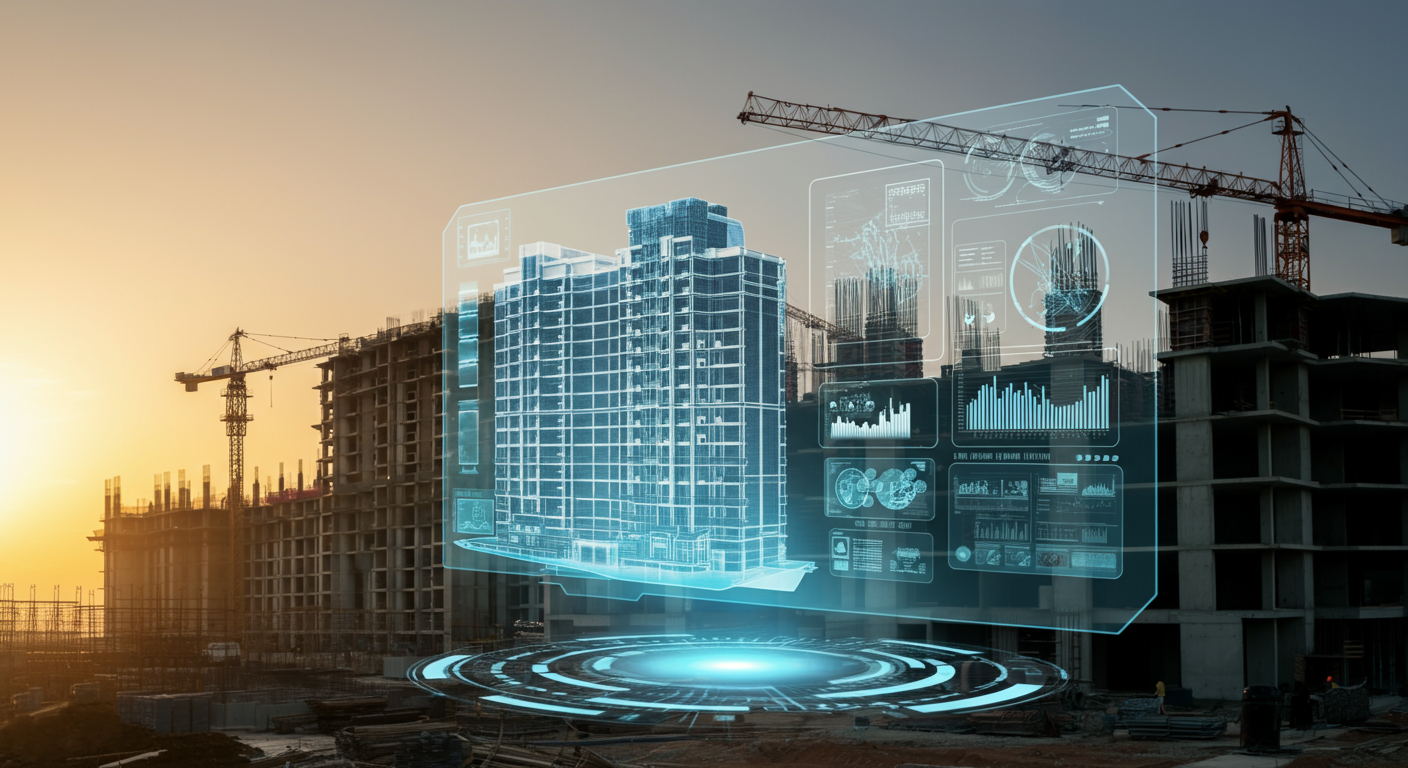
In these environment, the most crucial decisions are no more on site. They are made before construction actually begins-on paper; it means at the stage of planning, design coordination, approvals, and pre-sales. This is precisely where digital twins are entering the Indian construction ecosystem. Not to enhance the visualization, but as a mechanism of risk control.
The Structural Shift in Indian Real Estate Development
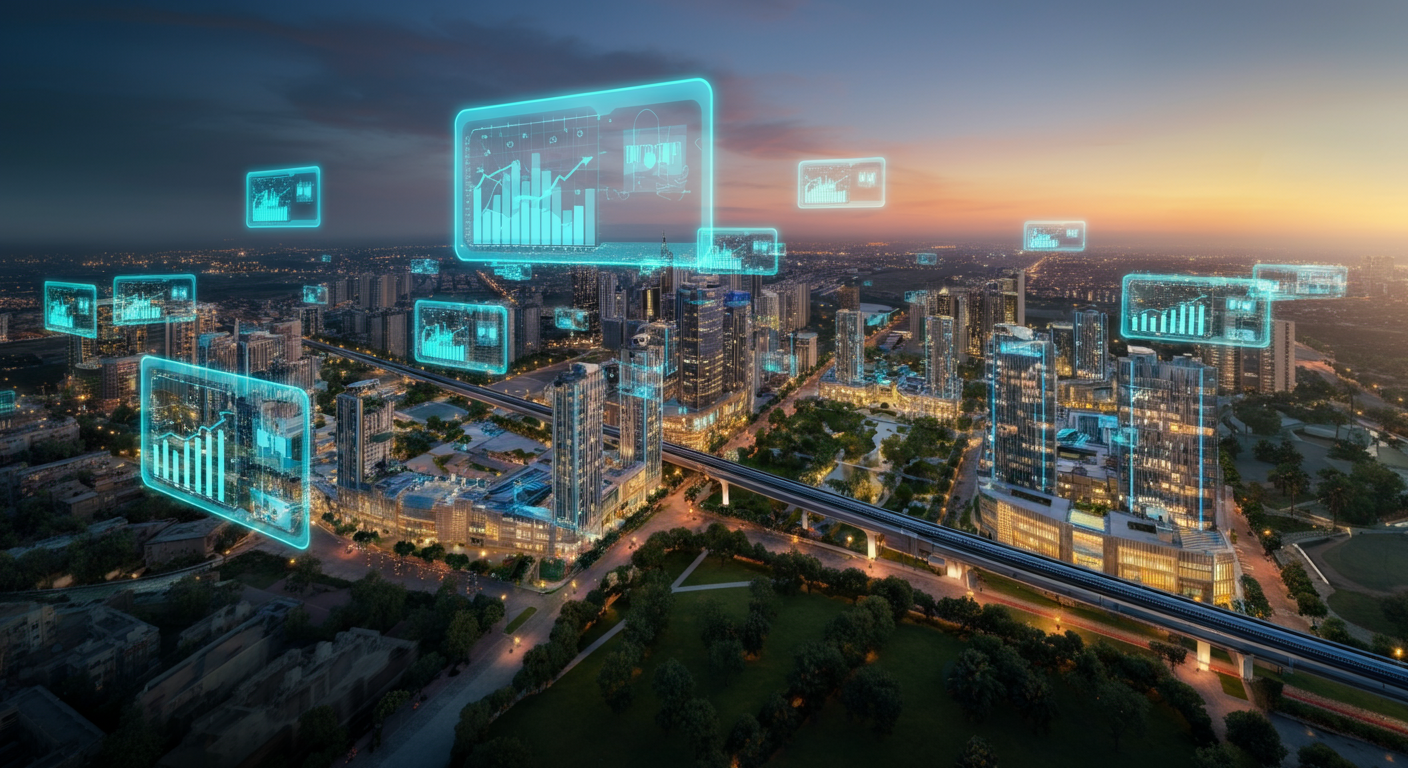
The real estate industry in India is undergoing a paradigm shift because of three factors: scale, scrutiny, and sophistication. Projects have increased in scale and level of integration. Mixed-use projects provide integrated living, retail, office space, and hospitality components in a unified footprint. Townships are miniature cities with infrastructure and services integrated inside the township and circulation networks in place. On the other hand, attention is also intensified. Governments demand clarity on matters of compliance, sustainability, safety, and the environment. Finance institutions are more rigorous in their evaluation of the feasibility of projects. Consumers demand clarity and not clarity in the sense of reassurance.
Finally, there has been an improvement in terms of sophistication. The parties involved such as architects, consultants, and buyers are better informed and not tolerant of imprecise answers. Static representations lack relevance in this emerging scenario. These static representations, also referred to as fixed renderings, lack the ability to decompose knowledge. In this case, each party has their own understanding of the plan, and they only get aligned as they are implemented. Digital twins offer a means to resolve this fragmentation problem by providing a shared point of reference that everyone can interpret, interrogate, and trust.
What Digital Twins Mean in the Indian Construction Context
In the Indian real estate context, it is not some futuristic experiment or a speculative technology waiting to achieve mass adoption. It is a practical decision-oriented tool shaped by the realities of today's market: rising land costs, compressed timelines, tighter regulations, and increasingly discerning buyers have made intuition an unreliable strategy. What builders need is clarity upfront, not corrections later.
Unlike most models, which are traditionally created more for aesthetic purposes or marketing, a digital twin integrates design, data, and behavior into one living representation. It goes beyond showing how a building looks to revealing how it actually functions. Stakeholders aren't reading between the lines on symbolic drawings or interpreting space from fixed renderings anymore. They are experiencing the project spatially, at scale, and in context. This paradigm shift holds immediate implications for Indian construction companies. Firstly, they need to note that their traditional approach is being replaced by:
- Understanding by seeing the actual experience of unit space, not just its appearance, including ceiling heights and circulation patterns that are commonly misunderstood on plans
- Comprehending spatial relationships on the human scale, especially in a highly dense development where each square foot is precious
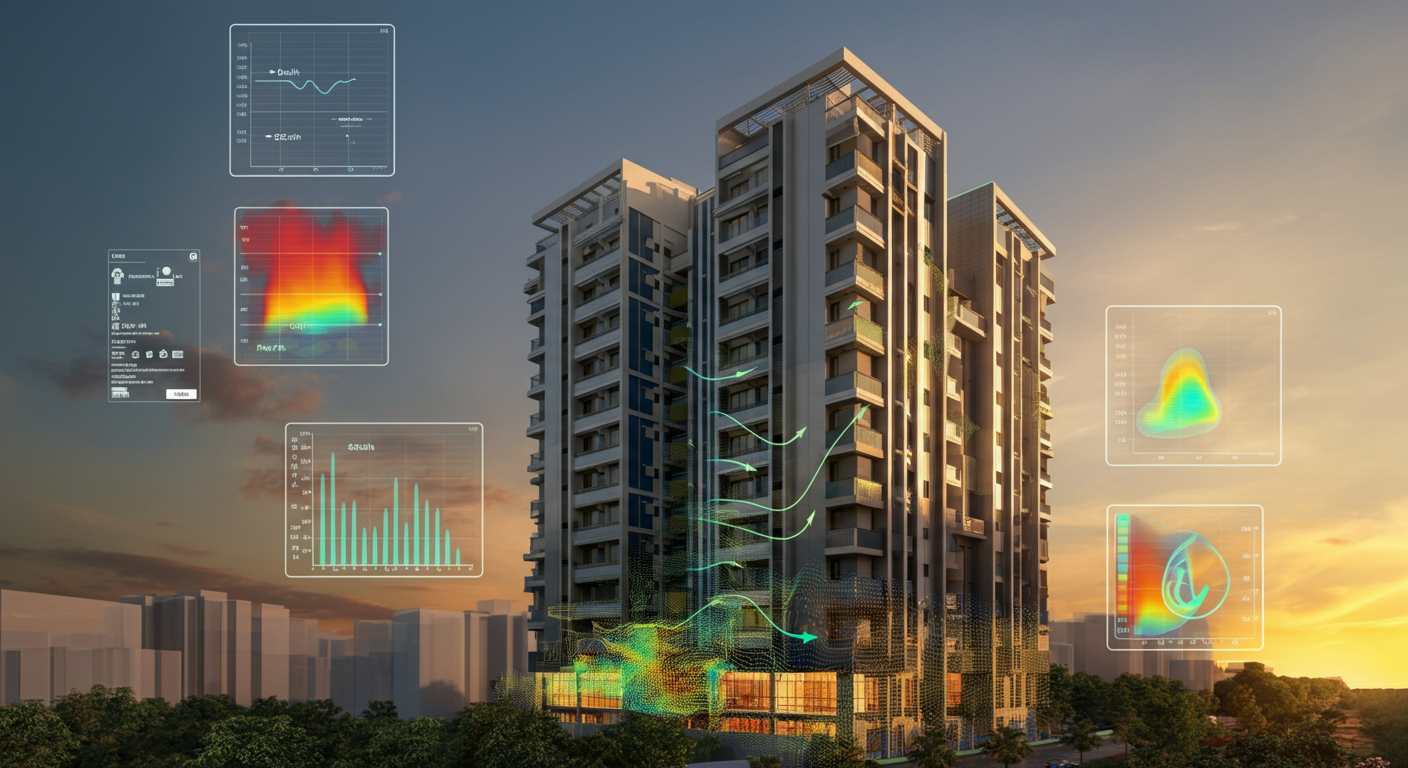
- Assessing how materials will or will not respond to environmental elements of daylight, heat exposure, and ventilation prior to material selections and facade designs being made
- Modeling the possible results for various scenarios rather than basing conclusions on assumptions that can only be proved at the time of construction work itself
Skills Required and Implementation
This is a crucial service, especially in the Indian context where the differences in climate, orientation, density, or cultural usage patterns can result in stark variations in performance. What may seem functional on paper may not be so in actual use. What may look great on paper may not be so functional or appealing under actual daylight or heat. Most importantly, digital twins diminish the need for interpretation. A floor plan needs interpretation. A section drawing necessitates technical knowledge. A brochure is where trust comes into play. A digital twin is an attribute where exploration is encouraged. The stakeholders do not need convincing — they can explore and interpret for themselves.
This distinction has high significance in an environment where misunderstandings are costly. If misunderstandings emerge at a late stage, it results in redesign, delay, dispute, and loss of consumer trust. Digital twins bring these conversations upstream, where correction is less expensive, convergence is simpler, and consensus emerges from common understanding, not personal interpretation.
Why Builders Are Shifting Before Construction, Not After
A problem isn't a problem until there's an audience, and there's no audience quite like a construction crew waiting to break ground. All construction experts know the importance of correcting problems when they're easiest and cheapest to fix. Until recently, however, the construction industry has lacked the means to effectively apply this simple yet key concept. Blue prints and 2D diagrams were adequate for several decades and depicted little flaws in construction plans that could not be detected when considering people and functionality.
In traditional processes, issues considered related to circulation or system usability can come up during construction. This is when it becomes a problem in demolition and repair, in meeting timelines, and in relationship building with other teams when it can be solved by a design correction. Digital twins transform the locations where such issues are posed.
Rather than trying to identify problems on-site, construction companies can investigate and validate them before a solitary foundation is laid. This is possible through a digital twin because it provides a platform to walk through all the spaces as they will finally be.
The builders can test:
- Layout support regarding natural and real-world movement behaviors
- If the common areas have a good proportion of size compared to the private areas, versus cramped or underutilized
- How the mechanical, electrical, and plumbing functions are integrated within the available area
- Whether vertical circulation, such as lifts and staircases, relates to actual use patterns and density
This level of visibility happens so early, it essentially means the field of design goes from being a theoretical one to a proven one. Hypotheses are replaced with experience, with questions being put to rest before they become a cost. The economic impact is evident here. When a digital model has to be altered, it would require hours or days. When changes are required in the structures developed, it would require weeks. Along with this, it also demands resources and approvals. Since the size of the projects and the margin are increasing, construction organizations are no more ready to undertake unnecessary risk. This is why earlier change is being witnessed in the current scene.
Regulatory Approvals Move Faster When Clarity Improves
In the Indian scenario, the delay in approval is more related to ambiguity. The traditional method of drawings, sections, and spread sheets is subject to interpretation, which gives rise to possible doubts leading to rejections or prolonged approval times. Digital twins solve this issue by offering the authorities a clear 3D representation of the proposed project. The authors can themselves judge the massing, setbacks, fire evacuation routes, and environmental impact without having to depend on calculations. This makes the entire process free from ambiguities, leading to faster approval times. The construction companies relying on digital twins see reduced rounds of comments leading to faster approval or green light without any extra costs.
Environmental Performance Is No Longer Optional
India's climate makes environmental performance a business issue, not just a sustainability one.
- Poor daylight design affects livability.
- Poor ventilation affects the comfort and health of a person.
- Excess heat gain raises operating costs as well as buyer dissatisfaction.
Digital twins also let builders simulate:
- Daylight penetration across seasons
- Airflow patterns influenced by orientation and massing
- Heat exposure based on the choice of façade
This capability is especially of great value in Indian cities, where even over short distances the microclimates differ drastically. Guesses from builders on how buildings will behave is no longer the status quo out there.
The Buyer Has Changed and Builders Know It
The contemporary Indian property buyer is no longer lured by emotional appeal or promise. Today's buyer is a cautious, informed, and comparative buyer. They assess, question, and check facts before taking a decision. Conventional methods used in sales, such as marketing materials, two-dimensional drawings, or engaging storytelling, are inadequate to satisfy these needs.
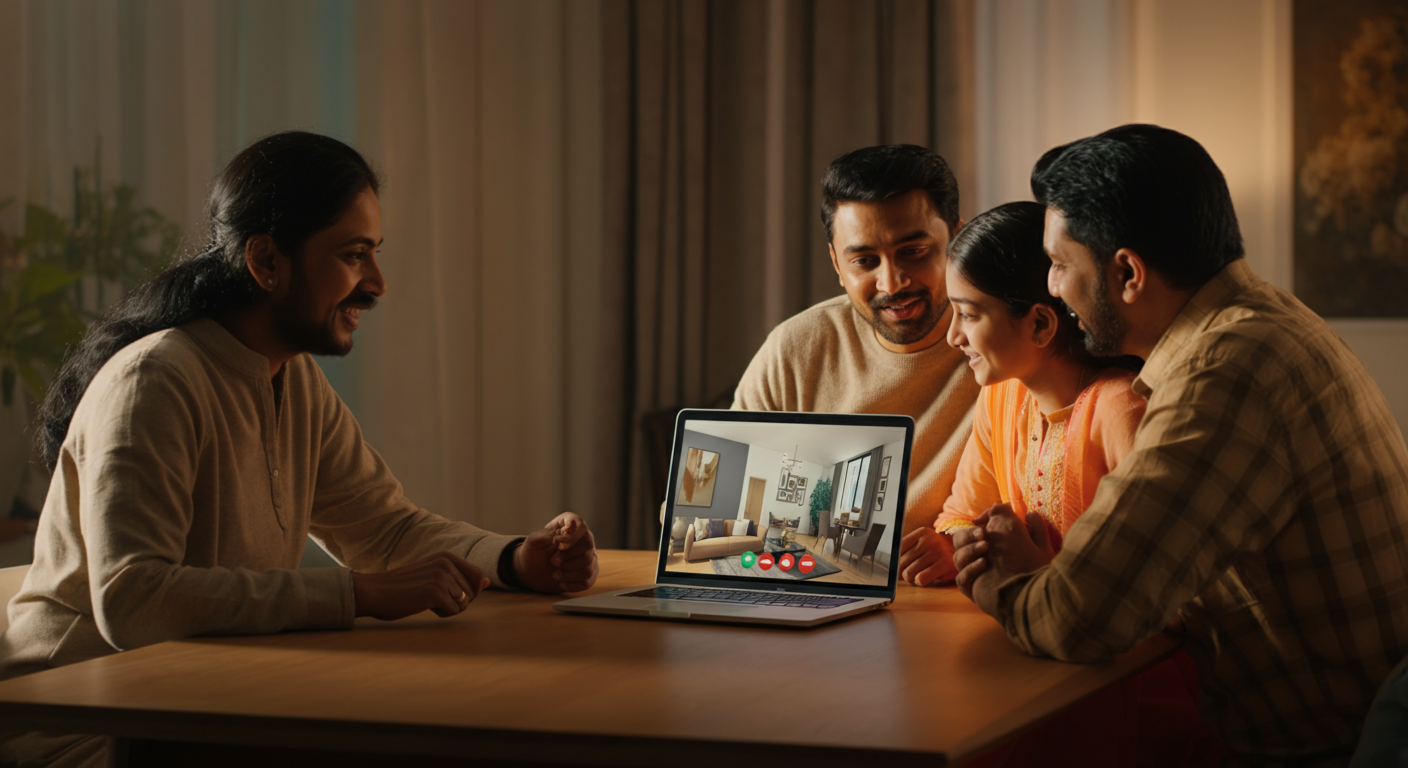
Digital twins fill the gap with their own experience-based evidence, not marketing speech. A consumer can explore virtual environments, comprehend scales intuitively, or understand the feeling of being inside a house or office at any particular moment of the day or weather condition. It's an immersive, data-driven experience, which leaves no room for questions or explanations from the sales representative. The effect is not lost on property developers. Properties showcased on a digital twin demonstrate fewer objections in the selling process, faster closing of sales, and higher levels of satisfaction after handing over the property. This is achieved by matching the selling process to the educated and autonomous mindset of modern buyers.
Digital Twins as a Sales Accelerator and Not a Marketing Supplement
Digital twins shorten the sales cycle as they negate any uncertainties in the early stages. Instead of multiple site visits, clarification requests, and delayed decisions, customers intensely interact with the brand through the first touch point. The sales force is spending more time on the conversation process, while sales teams spend less time on explanation.
This is an improvement in:
- Lead quality
- Conversion efficiency
- Guarantees of Revenue
In a capital-intensive industry, increasing sales velocity helps to directly optimize project economics.
Cost Efficiency Across the Project Lifecycle
When compared to the entire project life cycle, digital twin technology proves to be far more cost-efficient compared to traditional brochures. Although setting up a digital twin would require investment, the outcomes will be manifold while designing, building, promoting, and after-sales.
1. Lower Redesign Costs
Digital twins empower architects and engineers to test and verify the layout, structure, and flow within a structure virtually before commencing any work. Correcting errors identified within a digital environment is much more cost-effective than when performed on a physical site, where the cost can rise by 10–30%.
2. Less Changes at the Construction
Digital twins are able to simulate actual scenarios and bring issues pertaining to the circulation of system conflicts and usability to the fore. This will enable developers to rectify the problems in the virtual scenario itself without spending money on rectifications while constructing the system. Each avoided change translates into the savings of labor and overhead costs.
3. Lower Marketing Rework
The traditional brochure has a fixed nature and, when there are changes in the project, reprinting or redesigning is a must. The digital twin changes dynamically and in sync with the project. When modifications were made in the designs or features, they were updated instantly.
4. Increased Buyer Satisfaction
Digital twins create a virtual experience for buyers, allowing them to familiarize themselves with the space, the layout, the environment, and so forth, even before they make a purchase. This allows for a reduction in complaints after the purchase, ensuring a positive influence on project profitability.
5. Continuity on Long Term Basis
Unlike brochures, which are considered outdated once an improved version emerges, digital twins are live asset documents. They can be utilized during construction, when handing over, and during facility operation. This will enable cost-efficient spending at different stages, thereby magnifying cost efficiency.
Why This Matters, Especially in India
Success and failure are magnified by India's scale. But small planning oversight repeated hundreds of times turns out to be systemic. It is here that digital twins help identify such issues before scaling. They also contribute to smarter, more sustainable urban development by enabling better-informed decision-making at every level in India.
Why Digital Twins Are Replacing Brochures, Not Supporting Them
Brochures communicate intent. Digital twins communicate reality. Where the industry is maturing, intent is no longer good enough; stakeholders want to see proof. Digital twins are increasingly becoming the main decision-making interface, as brochures become supportive material and not the core storytelling.
Why Builders Are Choosing Solid Twin
The kind of rendering that builders require in the present involves more than just visually gratifying images. With Solid Twin, the pastime of rendering has been elevated, as Solid Twin provides the kind of digital twin that responds to the important questions that need answers in a project. The project ensures alignment in design, environment, and experience.
1. Will This Design Work?
Solid Twin allows construction professionals to create a digital replica of their designs and systems, and they are then able to test them realistically. The use of Solid Twin in testing projects at an early stage helps eliminate possible conflicts and inefficiencies.
2. Will Buyers Trust It?
The buyers today are educated and more cautious. The 3D models provided by Solid Twin enable buyers to walk around on their own and get a feel of the place. It helps them get a sense of what it would be like at different times of the day.
3. Will It Perform As Expected?
Solid Twin combines environmental and behavioral knowledge in each of the models. Various stakeholders can then determine daylight penetration, air flow, efficiency, and other performance metrics before any ground is even broken on the project to ensure the completed structure meets all related expectations.
4. Risk Reduction Through the Life of the Project
With the integration of design validation, consumer confidence, and performance simulation, financial, operational, and reputational risks are lowered. The digital twin serves as a system of truth for all parties, and this increases faster decision-making and decreases costly corrections.
Building the Future Starts Before the First Brick
The future of Indian property belongs to developers who display foresight. In today's scenario of increasing land prices, increased governmental regulations, and ever more informed consumers, success would no longer be measured merely by speed and scale. It would also be measured by clarity of planning, confidence in doing, and clarity in communication and engagement. This is where digital twins come into play. Digital twins are capable of building a virtual model that comes to life before a single brick is put in place, giving developers an idea of what can be achieved, model real-world environments, and predict problems that might arise during development. They provide a level of detail that is not achievable with drawings, floor plans, or even brochures, helping to translate abstract concepts into testable, measurable situations that can be analyzed by developers, taking into consideration concepts such as circulation, usability, reaction, and system performance.
This early engagement allows and enhances construction skills, but it will not replace it. Seasoned architects, engineers, and project managers are still making important decisions, but those decisions are now made using data, simulation, and learning from experiences. There will be no misalignment of teams, changes during construction will be reduced since most changes are associated with cost, and LCM will get approvals faster since speed can be equivalent to money.
In addition, the use of digital twins is able to improve transparency for buyers, the government, and even investors. The potential buyers will be able to view and interact with the layout, experience light and air movement, and then know what the environment is like before making any decision. The government will also be able to see if the building is compliant without having to wait for long, as in the past. The institutional investor will know the feasibility of the project even before it is developed.
For the constructors of India, the use of digital twin technology even before the project is executed is no indulgence; it is the need of the hour. The earlier they do this, the better they establish a leadership position, achieving the project expectations with minimal risks associated with them.
Essentially, the use of digital twins is revolutionizing the planning, construction, and selling of real estate in India. Digital twins have empowered construction companies to take informed decisions, have transparency in their communication, and finally, build the future of the real estate sector before laying even the first brick.