Bengaluru — India's Silicon Valley — has long been at the forefront of technology adoption, creative innovation, and digital transformation. As the city's real estate, architecture, product design, and startup ecosystems continue to expand at a remarkable pace, the demand for immersive, interactive 3D design services has surged to unprecedented levels. Clients no longer settle for static renders or flat floor plans; they expect to walk through a building before a single brick is laid, configure a product in real time, or explore a digital twin of an entire campus from their browser.
This guide explores the top interactive 3D design services available in Bengaluru, examines what sets them apart from conventional rendering, and explains why this city has become the undisputed hub for interactive 3D innovation in India.
Why Interactive 3D Matters in Bengaluru
Bengaluru's unique position as a technology capital creates a fertile environment for interactive 3D design to thrive. Several converging forces make the city an ideal market for these advanced visualization services.
A Tech-First City Culture
With thousands of technology companies, global R&D centres, and a dense concentration of engineering talent, Bengaluru's professional community is inherently comfortable with cutting-edge digital tools. Decision-makers here are not intimidated by real-time 3D interfaces, VR headsets, or browser-based configurators — they actively seek them out. This tech-first mindset accelerates adoption and pushes service providers to continuously raise the bar.
A Fiercely Competitive Market
Bengaluru's real estate market is one of the most competitive in India. Developers launching residential towers, commercial complexes, or mixed-use projects must differentiate themselves aggressively. Interactive 3D walkthroughs, immersive VR showrooms, and web-based configurators have become powerful sales tools that convert prospects faster and reduce the sales cycle significantly. In a market where dozens of projects compete for the same buyer, interactive 3D is no longer a luxury — it is a competitive necessity.
Stakeholder Clarity and Faster Approvals
Architecture and engineering projects in Bengaluru often involve multiple stakeholders — municipal authorities, investors, end-users, and international clients. Interactive 3D models dramatically reduce miscommunication by allowing every stakeholder to explore the same spatial experience simultaneously. Design changes that once required weeks of back-and-forth can be visualised and approved in a single review session, compressing project timelines and reducing costly revisions.
A Culture of Innovation
Bengaluru's startup ecosystem — one of the largest in Asia — constantly generates demand for novel product experiences. From consumer electronics to industrial machinery, startups and established enterprises alike need 3D product configurators, digital twins, and interactive demos to pitch investors, train sales teams, and engage customers. The city's innovation culture ensures that interactive 3D services are not just adopted but continuously evolved.
ℹ️Bengaluru accounts for a significant share of India's total interactive 3D visualization projects, driven by its booming real estate sector, thriving startup ecosystem, and a highly tech-literate professional community.
Differences Between Regular 3D Rendering and Interactive 3D
Understanding the distinction between conventional 3D rendering and interactive 3D is essential before evaluating service providers. The two approaches serve fundamentally different purposes and deliver vastly different user experiences.
User Control vs. Passive Viewing
Traditional 3D rendering produces a fixed image or pre-rendered animation. The viewer is a passive observer — they see exactly what the artist chose to show them, from a predetermined angle, with predetermined lighting and materials. Interactive 3D, by contrast, places control in the hands of the viewer. Users can rotate, zoom, pan, and navigate freely, choosing their own vantage points and exploring areas of personal interest.
Multiple Routes and Scenarios
A pre-rendered walkthrough follows a single scripted path. An interactive walkthrough allows users to choose their own route — entering through the lobby, heading directly to the penthouse, or exploring the basement parking. This non-linear exploration mirrors how people actually experience physical spaces and products, making the interaction far more meaningful and memorable.
Real-Time Interaction and Customisation
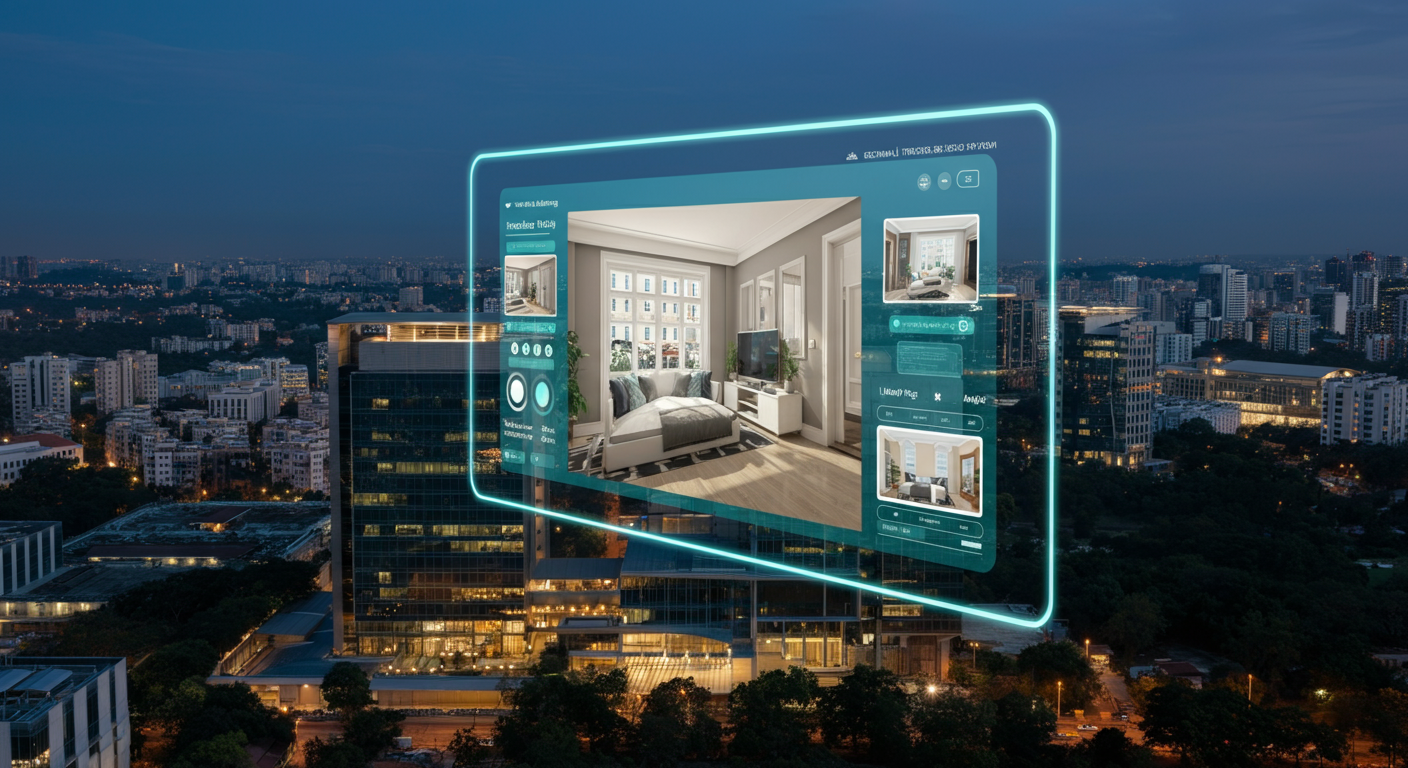
Interactive 3D enables real-time changes. A prospective homebuyer can switch wall colours, swap flooring materials, change furniture layouts, or toggle between day and night lighting — all within seconds. A product customer can select different configurations, finishes, and accessories and see the result instantly. This level of personalisation is impossible with static renders and transforms the viewer from a passive audience into an active participant.
Significantly Higher Engagement
Studies across real estate, automotive, and retail sectors consistently show that interactive 3D experiences generate dramatically higher engagement metrics than static visuals — longer session durations, higher return visit rates, and significantly improved conversion rates. When users can explore and personalise, they develop a stronger emotional connection to the product or space, which translates directly into purchasing confidence.
💡Interactive 3D experiences typically generate 3–5× longer user engagement compared to static renders, and can increase conversion rates by up to 40% in real estate and product sales contexts.
Real-Time Interactive Walkthroughs and Digital Twin Services
Among the most sought-after interactive 3D services in Bengaluru are real-time walkthroughs and digital twin solutions. These two service categories represent the pinnacle of spatial visualisation technology.
Real-Time Interactive Walkthroughs
Real-time interactive walkthroughs are built on game-engine technology — primarily Unreal Engine and Unity — which renders photorealistic environments at interactive frame rates. Unlike pre-rendered animations that can take hours to produce a single frame, real-time engines calculate lighting, shadows, reflections, and materials on the fly, allowing users to move freely through a space.
Top Bengaluru studios offering this service deliver experiences that include:
- First-person and third-person navigation modes
- Dynamic time-of-day and weather simulation
- Material and finish swapping in real time
- Furniture placement and interior customisation tools
- Multi-user collaborative exploration sessions
- Integration with VR headsets for fully immersive experiences
Digital Twin Services
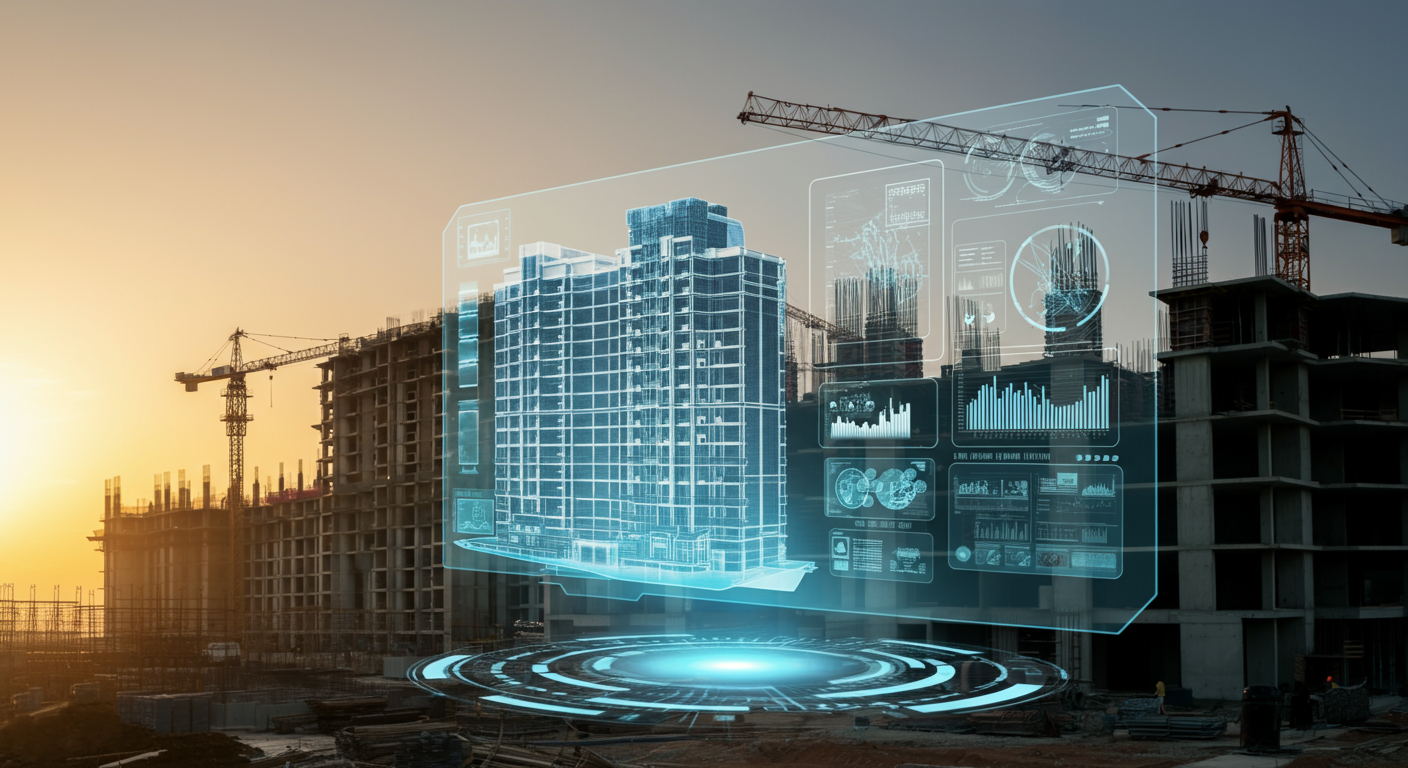
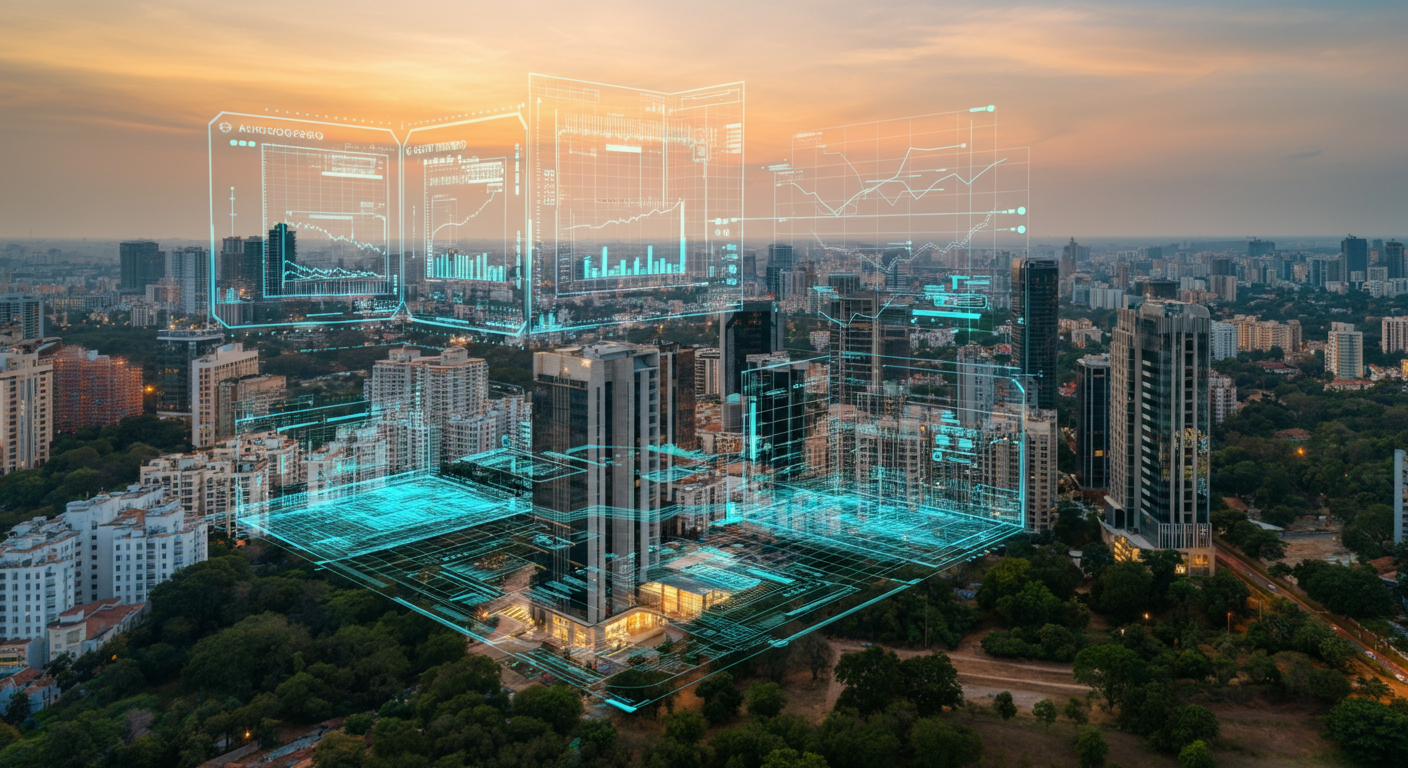
Digital twins take interactive 3D a step further by creating a live, data-connected virtual replica of a physical asset — a building, a factory floor, an urban district, or an infrastructure network. Unlike a walkthrough that is purely visual, a digital twin is a functional model that mirrors the real-world asset's behaviour, performance, and status in real time.
Bengaluru's digital twin service providers are working with some of India's largest infrastructure and real estate projects, delivering capabilities such as:
- IoT sensor integration for live building performance monitoring
- Predictive maintenance dashboards overlaid on 3D models
- Energy consumption visualisation and optimisation tools
- Crowd flow simulation and emergency evacuation planning
- BIM-to-digital-twin conversion pipelines
- Cloud-hosted twin access for distributed teams and remote stakeholders
❗Digital twins are not just visualisation tools — they are operational platforms. A well-built digital twin can reduce facility management costs by 15–25% through predictive maintenance and energy optimisation alone.
VR/AR Visualization and Web-Based 3D
Virtual Reality and Augmented Reality visualization services, alongside browser-native web-based 3D experiences, represent two of the fastest-growing segments of Bengaluru's interactive 3D industry.
VR Visualization
VR visualization immerses the user completely within a 3D environment using a head-mounted display. In Bengaluru's real estate sector, VR showrooms have become a standard offering for premium residential and commercial projects. Prospective buyers wearing a VR headset can stand inside an apartment that exists only as a design file, look up at the ceiling, peer out of the window at the city view, and walk from room to room — all before construction begins.
Leading VR visualization services in Bengaluru offer:
- Standalone VR experiences for Meta Quest and similar headsets
- Tethered high-fidelity experiences for PC-connected headsets
- Multi-user VR sessions for collaborative design reviews
- VR-based training simulations for industrial and construction clients
AR Visualization
Augmented Reality overlays 3D content onto the real world through a smartphone, tablet, or AR glasses. In Bengaluru, AR visualization is being used across architecture, interior design, retail, and product marketing. An architect can project a proposed building onto an empty plot using a tablet. A furniture retailer can let customers place a sofa in their living room before purchasing. A product designer can overlay a new machine component onto an existing assembly to check fit and clearance.
Web-Based 3D Experiences
Web-based 3D is arguably the most democratising development in interactive visualization. Powered by WebGL, Three.js, Babylon.js, and increasingly WebGPU, modern browsers can render sophisticated 3D environments without any plugin or app installation. A user simply clicks a link and is immediately inside an interactive 3D experience.
Bengaluru studios specialising in web-based 3D are delivering experiences that include interactive property tours embedded directly in real estate websites, 3D product viewers for e-commerce platforms, interactive campus maps for educational institutions, and browser-based digital twins accessible from any device. The elimination of the download barrier dramatically expands the potential audience for interactive 3D content.
💡Web-based 3D experiences remove the single biggest barrier to interactive visualization adoption — the need to install software. A shareable URL is all that stands between your client and a fully immersive 3D experience.
3D Product Configurators and Emerging Trends
Beyond architectural visualization, Bengaluru's interactive 3D industry is making significant inroads into product design, manufacturing, and retail through 3D product configurators and a range of emerging technologies.
3D Product Configurators
A 3D product configurator allows customers to customise a product in real time — selecting colours, materials, components, sizes, and accessories — and see the result rendered photorealistically before placing an order. This technology is transforming how Bengaluru's manufacturing and consumer goods companies sell their products.
Applications in Bengaluru span a wide range of industries:
- Automotive: Configure vehicle colours, trims, wheels, and interiors
- Furniture and interiors: Select fabrics, finishes, and dimensions
- Industrial equipment: Customise machine specifications and configurations
- Consumer electronics: Preview device colours, accessories, and bundles
- Jewellery and fashion: Visualise custom designs before production
Emerging Trends Shaping the Industry
Several powerful trends are reshaping the interactive 3D landscape in Bengaluru and beyond:
Real-Time Rendering Engines
Unreal Engine 5's Lumen and Nanite technologies have brought cinematic-quality real-time rendering to interactive applications. Bengaluru studios are leveraging these tools to produce interactive experiences that are visually indistinguishable from pre-rendered animations, while maintaining full interactivity. The gap between 'rendered' and 'real-time' quality has effectively closed.
AI-Powered Visualization Tools
Artificial intelligence is beginning to transform the 3D content creation pipeline. AI-assisted modelling tools can generate detailed 3D assets from text descriptions or reference images, dramatically reducing production time. AI-powered upscaling and denoising technologies improve real-time rendering quality on lower-end hardware, making interactive 3D accessible to a broader audience.
WebGPU and Next-Generation Web 3D
WebGPU, the successor to WebGL, is beginning to roll out across major browsers. It offers dramatically improved performance and access to modern GPU features, enabling web-based 3D experiences that approach the quality of native applications. Bengaluru's web 3D specialists are already building on WebGPU to deliver next-generation browser experiences.
Digital Twin Technology Maturation
Digital twin platforms are maturing rapidly, with standardised data formats, improved IoT integration frameworks, and cloud-native architectures making it easier and more cost-effective to build and maintain digital twins at scale. Bengaluru is at the forefront of this maturation, with studios developing proprietary twin platforms tailored to Indian infrastructure and real estate contexts.
Selection Criteria for Interactive 3D Services
Choosing the right interactive 3D service provider in Bengaluru requires careful evaluation across multiple dimensions. The following criteria provide a structured framework for making this decision.
Project Goals and Use Case Alignment
Different service providers excel in different domains. A studio with deep expertise in architectural visualization may not be the best choice for a product configurator project. Evaluate each provider's portfolio for projects that closely match your use case — not just in terms of visual quality, but in terms of interaction design, performance, and deployment context.
Technology Requirements and Platform Compatibility
Consider how and where the interactive 3D experience will be delivered. Will it run on dedicated hardware at a sales centre? Will it be embedded in a website? Will it require VR headset support? Will it need to work on mobile devices? Each deployment scenario has different technical requirements, and not all providers are equally capable across all platforms.
Budget and Timeline Realism
Interactive 3D projects are significantly more complex and resource-intensive than static rendering projects. Budgets and timelines must reflect this reality. Be wary of providers who quote unusually low prices or unrealistically short timelines — these are often indicators of compromised quality, outsourced production, or scope misunderstanding. A realistic budget for a high-quality interactive walkthrough in Bengaluru typically ranges from ₹3–15 lakhs depending on scope and complexity.
Scalability and Long-Term Support
Interactive 3D assets are not one-time deliverables — they need to be updated as designs evolve, new phases are added, or product lines change. Evaluate whether the provider offers ongoing maintenance and update services, and whether their production pipeline is structured to accommodate future changes efficiently. A digital twin, in particular, requires a long-term operational partnership rather than a one-off project engagement.
User Experience and Interface Design
The quality of an interactive 3D experience is not determined solely by visual fidelity. The user interface, navigation design, loading performance, and overall user experience are equally critical. An experience that looks stunning but is confusing to navigate or slow to load will fail to achieve its business objectives. Evaluate providers on the quality of their UX design as rigorously as you evaluate their 3D artistry.
⚠️Always request a live demo of a provider's interactive 3D work — not just screenshots or video recordings. The true quality of an interactive experience can only be assessed through direct interaction.
Industry Impact Across Real Estate, Architecture, and Product Design
Interactive 3D design services are creating measurable impact across multiple industries in Bengaluru. Understanding these impacts helps organisations build the business case for investment.
Real Estate
Bengaluru's real estate sector has been transformed by interactive 3D. Developers are using interactive walkthroughs and VR showrooms to sell units in projects that are years away from completion. International buyers and NRI investors can explore properties remotely with the same level of detail as an on-site visit. Sales teams report shorter sales cycles, higher average transaction values, and significantly reduced physical showroom costs.
Architecture and Urban Planning
Architecture firms in Bengaluru are using interactive 3D to transform client presentations and design review processes. Complex spatial relationships that are difficult to communicate through drawings or static renders become immediately intuitive in an interactive 3D environment. Urban planners are using digital twins to simulate traffic flows, pedestrian movement, and environmental impacts of proposed developments before seeking regulatory approval.
Product Design and Manufacturing
Bengaluru's manufacturing and product design sector — spanning aerospace, automotive, electronics, and industrial equipment — is leveraging interactive 3D for design validation, sales enablement, and training. Engineers use interactive 3D models to review assemblies and identify design issues before physical prototypes are built. Sales teams use product configurators to demonstrate complex machinery to customers. Training departments use VR simulations to onboard technicians safely.
Retail and E-Commerce
Bengaluru's thriving retail and e-commerce ecosystem is adopting 3D product viewers and AR try-before-you-buy experiences at an accelerating pace. Furniture retailers, fashion brands, and consumer electronics companies are embedding interactive 3D into their online stores, reducing return rates and increasing customer confidence. The ability to see a product from every angle, in photorealistic detail, before purchasing is becoming a baseline expectation for premium online retail.
Education and Training
Bengaluru's world-class educational institutions and corporate training departments are using interactive 3D and VR to create immersive learning experiences. Medical students can explore anatomical models in 3D. Engineering students can interact with virtual machinery. Corporate trainees can practice complex procedures in safe, repeatable VR simulations. The pedagogical benefits of interactive 3D learning are well-documented, and Bengaluru's education sector is embracing them enthusiastically.
Why Bengaluru Leads and the Future Outlook
Bengaluru's dominance in India's interactive 3D design industry is not accidental — it is the product of a unique confluence of factors that no other Indian city currently replicates.
High-Tech Innovation Ecosystem
The presence of global technology giants, world-class research institutions, and a dense network of startups creates an environment where new technologies are adopted, refined, and commercialised faster than anywhere else in India. Interactive 3D service providers in Bengaluru benefit from proximity to cutting-edge GPU hardware, cloud computing infrastructure, and a talent pool that includes game developers, VFX artists, software engineers, and UX designers.
Strong Creative Talent Pool
Bengaluru is home to some of India's finest architecture schools, design colleges, and game development programmes. This produces a steady stream of graduates who combine technical 3D skills with strong design sensibilities. The city's game development community — one of the largest in India — provides a deep reservoir of real-time 3D expertise that interactive visualization studios draw upon extensively.
Tech-Savvy Client Base
Bengaluru's clients — whether real estate developers, architects, product companies, or startups — are among the most technologically sophisticated in India. They understand the value of interactive 3D, are willing to invest appropriately, and provide the kind of informed, constructive feedback that drives service quality upward. This client sophistication creates a virtuous cycle that continuously elevates the standard of interactive 3D work produced in the city.
Booming Real Estate and Startup Ecosystem
Bengaluru's real estate market continues to grow at a pace that outstrips most other Indian cities, generating a constant stream of projects that require high-quality interactive visualization. Simultaneously, the city's startup ecosystem — with thousands of funded companies across sectors — creates demand for product configurators, digital twins, and interactive demos. This dual demand engine ensures that Bengaluru's interactive 3D industry has a robust and diversified client base.
The Future Outlook
The trajectory of interactive 3D design in Bengaluru points unmistakably upward. Several developments will shape the industry over the next three to five years:
- AI visualization tools will dramatically reduce production costs and timelines, making interactive 3D accessible to smaller projects and budgets
- Next-generation VR and AR headsets will deliver higher resolution, wider fields of view, and lighter form factors, driving mainstream adoption of immersive visualization
- WebGPU-powered web 3D will make browser-based interactive experiences indistinguishable from native applications, eliminating the last barriers to universal accessibility
- Digital twin adoption will expand from large infrastructure projects to mid-scale commercial and residential developments as platform costs decrease
- 5G connectivity will enable cloud-streamed interactive 3D experiences on mobile devices, removing the hardware constraint entirely
Bengaluru is exceptionally well-positioned to lead this evolution. Its combination of technical talent, innovation culture, sophisticated clients, and robust demand across multiple sectors creates a foundation for continued dominance in India's interactive 3D design industry. For organisations seeking the best interactive 3D design services in India, Bengaluru is not just the obvious choice — it is the only choice.
ℹ️As AI, WebGPU, and next-generation VR/AR converge, the interactive 3D experiences of 2027 will be as different from today's as today's are from the static renders of 2015. Bengaluru's studios are already building for that future.