Introduction
The real estate business is still a physical one. When buying a home, buyers want to be able to feel the home, see where it sits, and see what surrounds it, as well as whether it meets their needs and wishes.
The only thing that has changed is what can happen before they arrive.
An individual may conduct research on a development that has taken place in another country. Digital exploration is possible for a project that is still in the construction phase. A property's information that previously sat across drawings, spreadsheets, and separate systems can now be consolidated and made more accessible.
PropTech is behind these changes.
It's a big term, but the idea behind it is pretty simple: use technology to solve real-world problems.
What is PropTech in real estate?
PropTech, or property technology, refers to technology used to plan, develop, market, sell, buy, lease, operate, or manage real estate.
Property portals are part of PropTech. The same can be said for a digital twin of a residential development. Also applies to real estate data management platforms, building sensors, CRM systems, valuation tools, and 3D visualization software.
Due to the long lifecycle of property, the category is broad.
Before construction, technology can help with research, planning, and design. During development, teams need to manage project information. When sales start, the challenge shifts to presenting the property clearly. As soon as people move in, technology can help them manage and operate the building.
PropTech makes more sense if you view it as one type of software rather than a bunch of different ones.
How is PropTech transforming real estate?
The biggest change isn't more software for real estate companies.
It's that property information can now be used in ways that were hard, slow, or impractical before. It affects decisions inside a company, but buyers also notice it.
Better property data is changing real estate decisions
Property decisions are rarely based on one piece of information.
The location, the demand, the regulations, the design, the pricing, the mix of units, and the construction all play a role. Often, the information behind those decisions sits in different places.
In one team, there are drawings. There is another with spreadsheets. Research on the market is handled by someone else. The gaps are filled by email and internal systems.
Some of this information can be gathered and worked with more easily through the use of digital property management systems.
Markets generally tend to move in the same direction at the moment. According to JLL's 2026 Global Real Estate Transparency Index, transparency has improved in two-thirds of the 88 markets it tracks. This progress was largely driven by improved access to real estate data and the digitization of property records.
There is no guarantee that more data will lead to a better decision. Judgment and experience still play an important role.
It is the starting point that needs to be changed. Before making a telephone call, people have access to more information.
Digital twins make complex properties easier to understand
Imagine a residential development with six towers, hundreds of apartments, landscaped areas, parking, a clubhouse, and other amenities.
All of that can be illustrated in drawings. The problem is understanding how it all fits together.
With a digital twin, the project can be viewed from a different perspective.
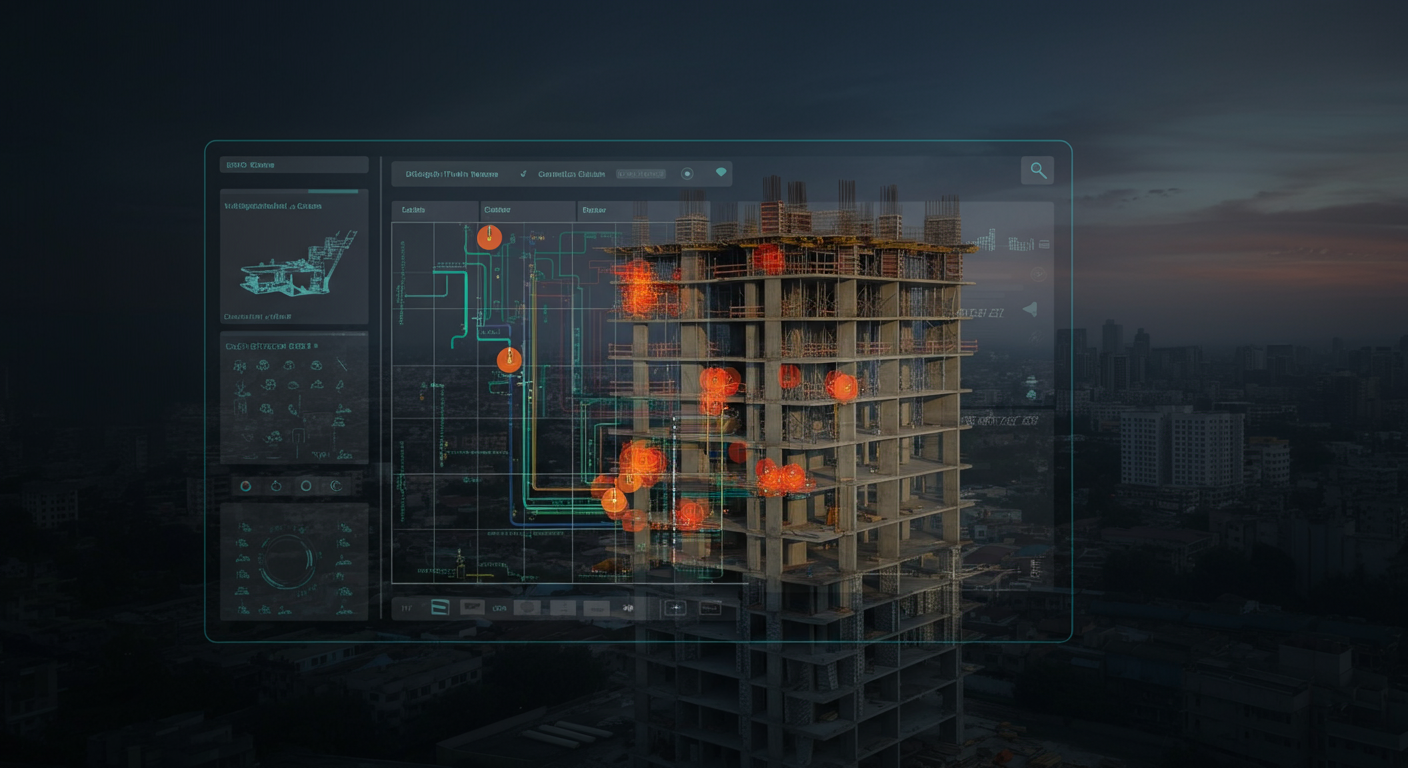
In real estate, a digital twin represents a property, site, or environment. It connects the visual property with useful information, as opposed to a standalone 3D model.
The development may be explored by moving between towers, viewing floors and units, exploring amenities, or understanding the relationship between parts of the development.
By having that context, people do not have to piece together several documents to understand the property.
When a development is still under construction, the difference is even more apparent.
3D visualization is changing pre-construction property sales
It is obvious that selling an unbuilt house is difficult: a buyer cannot see it.
A completed apartment allows one to walk through the rooms, step onto the balcony, and see how the spaces are interconnected.
Before construction is done, we have to rely on floor plans, renders, brochures, sample apartments, and conversations.
An interactive 3D visualization makes the project easier to understand.
The buyer can check out the development, look at different buildings and floors, compare apartment types, understand layouts, and see where amenities are located.
When the question is spatial, this comes in handy.
Where's this apartment in the tower? What's around here? Is this unit better than another?
Often, it is easier to demonstrate something than to explain it.
Property research now starts before the site visit
Screens are often the first thing buyers interact with when they're looking at a project.
People might find it on Google, social media, advertising, a property portal, or through a recommendation. Then comes the research: developer, location, layouts, price range, amenities, neighborhood, and what's available.
The site visit is later.
That changes what a property website needs to do. Now it's more than just a place to display a gallery and collect inquiries.
Buyers can use it to understand the master plan, review layouts, compare options, and decide whether they want to look further.
Even better when it's far away.
An NRI considering a home in India or an investor comparing developments across cities can't visit everything.
A good digital property experience won't replace a visit. The information can help someone decide which properties are worth checking out.
PropTech is changing the sales conversation.
Think of a buyer looking for a three-bedroom apartment on a higher floor who cares about proximity to the clubhouse and orientation.
That sounds pretty straightforward. Answering them might involve switching between a brochure, floor plan, availability list, price sheet, and several pictures.
The conversation becomes more direct when you connect property information with a visual experience.
A salesperson can show where a unit is instead of describing it. It's easy to compare two options in context. Buyers can ask about things they see.
It's not about replacing the salesperson.
Buying a house involves personal preferences, money, family discussions, and trust. People still need someone who understands the project and listens to their concerns.
When technology gives those conversations better information, it's useful.
AI is finding practical uses in real estate.
AI is now part of the PropTech conversation, but its usefulness depends on the job.
A lot of real estate companies are testing it for document review, property research, customer queries, forecasting, data analysis, portfolio management, and building operations.
JLL's 2025 Global Real Estate Technology Survey found that 92% of corporate real estate teams had started AI pilots or planned to start them in 2025.
Adoption is interesting, but what do those pilots actually improve?
Can AI make it easier to review a big collection of documents? Does it find anything useful in property data? Can it take repetitive work off someone's plate?
That's a good reason to use it.
AI isn't going to make a process better unless it has a clear job to do.
Marketing and sales can tell the same property story
The gap between property marketing and property sales is often awkward.
A buyer sees an impressive campaign, visits the website, downloads a brochure, talks with a salesperson, and visits the experience center. In each stage, the same development may look different.
It's natural to have some variation. That's not the case with disconnected information.
Shared digital properties can provide continuity.
This is how marketing introduces the project. The buyer explores it. Later, the salesperson can talk about the same property.
Every time the conversation moves to another channel, the buyer doesn't have to start over.
Why does accurate property data matter for PropTech?
PropTech is only as good as the information behind it.
An attractive interface can't fix an outdated availability list. A digital twin loses credibility if its property details are wrong. The AI might just produce poor answers faster if it's given bad information.
It makes data quality a business issue.
Based on JLL's 2026 Global Occupancy Planning Benchmark, improving space-data accuracy is the second-highest corporate real estate priority. It was also reported that 73% of respondents had data governance programs in place.
Basic questions need to be answered before we connect more technology.
What's the source of the information? Who's updating it? What's the frequency of changes? Do sales, marketing, and project teams have the same version?
Unless that foundation is in place, another platform could be another place where property data gets stale.
What PropTech trends are shaping real estate in 2026?
PropTech is becoming less about novelty and more about value.
There is a lot of technology available. What is harder to answer is which tools should be incorporated into the way a property business operates already.
Real estate companies want measurable results from PropTech
According to the Year-End 2025 Global PropTech Confidence Index from MetaProp and PwC, there is an increasing interest in technology that fits existing property workflows and provides measurable operational or financial benefits.
For any new platform, that is a useful test.
Does it save you any meaningful time? Improve the clarity of important information? Is there a way to remove a frustrating step? Would you be able to help someone better understand a property?
For a technology to be justified, it doesn't have to change everything.
One persistent problem might be enough.
India's real estate market is becoming more digitally transparent
JLL's 2026 Global Real Estate Transparency Index places India 26th, making it the leading improver in Asia Pacific.
The reason for this progress is digitized land registries, maturing RERA frameworks, growth in listed real estate, and improvements in digital infrastructure.
Better access to information changes buyer behavior.
Those who can research more can also ask better questions. With this information, they can compare projects, check details, and prepare for sales conversations.
As they rise, so does the standard for accurate property information.
How should developers choose the right PropTech?
Usually, starting with a technology list isn't a good idea.
The frustrating part should be the first.
Find the problem first.
Unfinished developments might be hard to understand for buyers. Maybe sales teams spend too much time searching for current info. Prospects outside the city can't evaluate the project without traveling.
Each problem has its own solution.
Defining the problem first also makes it easier to ignore technology that looks cool but doesn't help.
Be clear about what should improve
What will be different if a new tool works?
Buyers might be able to understand unit choices more easily. The sales team might spend less time looking for information. It might be possible for remote prospects to decide whether a site visit is worthwhile.
It does not need to be complicated, but it should be specific.
In that case, technology can be implemented without anyone knowing whether it will make a difference in the original problem or not.
Think about integration and the buyer experience
A majority of property companies already have websites, CRM systems, inventory data, BIM files, sales tools, and internal databases.
A new technology must coexist with an existing one.
The new platform may have created more work rather than less if the same information has to be entered and updated in three different places.
Customer service should be simplified.
A buyer should not be required to understand the technology behind an experience. It should be easy for them to find what they are looking for, to understand what they are seeing, and to know what to do next.
What is the future of PropTech in real estate?
In the coming years, PropTech is likely to become less noticeable as a separate category and more incorporated into ordinary real estate activities.
A property's information created during planning can be used in later sales. Using digital twins, you can contextualize that information spatially. The use of artificial intelligence can make it easier for people to work with large amounts of data or documents. After people move into a building, building systems can continue to produce useful information.
The physical side of property is not removed by any of this.
There will still be home inspections, walking of sites, meetings with salespeople, negotiating, and relying on the opinions of professionals.
They can now arrive at those moments with more knowledge than before.
PropTech has made a significant contribution by helping people understand physical properties before they make decisions about them.
Conclusion
PropTech matters when it solves a real estate problem.
Finding and managing property information is sometimes part of that process. In some cases, it is helping a remote buyer research a project. When it comes to pre-construction sales, the problem may be as simple as asking someone to comprehend something that doesn't yet exist.
It depends on the problem which technology is best suited.
In order to meet this last challenge, SolidTwin creates interactive digital twins that make it easy for users to explore unbuilt developments and learn about their properties visually.
If buyers have to make decisions about a property before they can see it, giving them a clearer picture of it is a good place to start.
Frequently asked questions
What is PropTech?
PropTech, or property technology, covers technology used in the planning, development, marketing, sale, purchase, leasing, operation, and management of real estate. It includes property platforms, digital twins, 3D visualization, smart-building systems, property management software, and AI tools used for real estate work.
How is PropTech transforming real estate?
PropTech is changing how property information is collected, accessed, understood, and presented. It is already being used in project planning, property research, pre-construction visualization, sales, building management, and real estate data analysis.
What are examples of PropTech?
Examples include property portals, digital twins, virtual property tours, 3D visualization, CRM platforms, building sensors, smart-building systems, property management software, valuation platforms, and AI applications designed for real estate tasks.
How does PropTech help real estate developers?
Its role depends on the problem. PropTech may make project information easier to work with, help present an unfinished development, support remote property research, improve sales conversations, or provide better information for building operations.
What is a digital twin in PropTech?
A real estate digital twin is a digital representation of a physical property, site, or development. It can connect a visual representation of the property with relevant information, helping people understand the project and relationships between different spaces.