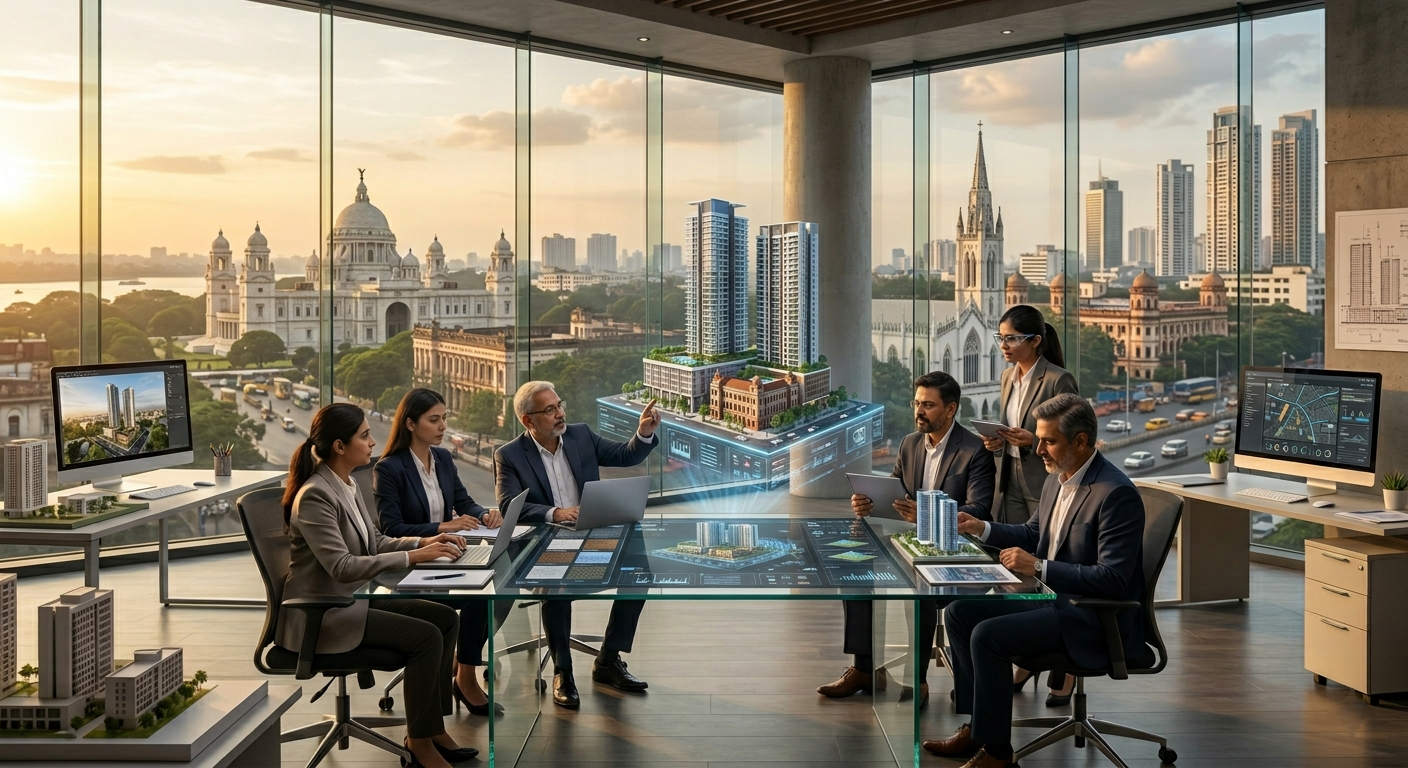
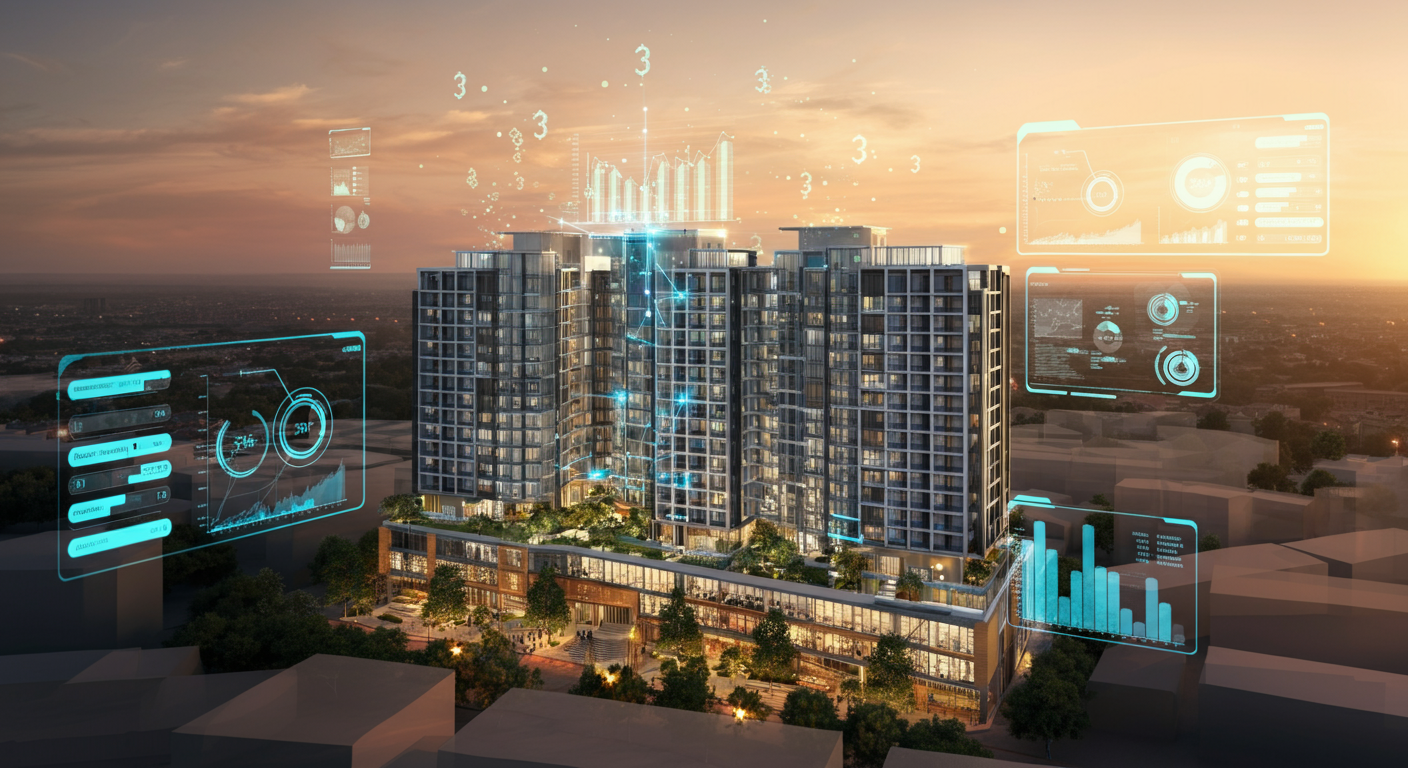
Kolkata is a city of layers. It’s not just a place; it’s an idea. You can feel the past in its streets, in the old architecture, in the way people talk, in that slow rhythm of life, which nonetheless races with modern speed. But beneath that timeless surface is a new reality that is moving faster than ever. The city is growing, the tech is expanding, and the real estate market is evolving. It is becoming more modern, more ambitious, and more demanding. And in that environment, one needed to evolve the way projects were visualized.
Interactive 3D is not a novelty in Kolkata anymore. It’s not a fancy extra. It is the new language of visualization. It’s how developers, architects, designers, and brands get complex ideas across without confusing anyone. It’s how they command trust in a world where skepticism runs amok and attention spans are shorter than ever.
It used to be that if you wanted a 3D rendering, you would get a picture. One viewpoint. One angle. Everything perfect. But Kolkata’s market does not want perfect anymore. They want real. They want it to be clear. They want it to be understood. And that’s exactly what interactive 3D design can deliver.
Interactive 3D Design: Not Just Visuals, But Experience
Interactive 3D design is not about just creating an effect to make things look nice. It is an art of creating space that emulates reality. The main variation stands in user control: users get to control the look, direction, and even motion. It is an experience, not a picture. And this is exactly where it matters in Kolkata — when people are not just buying properties, they are buying their future, their lifestyle, their very own narrative of life. That has to be presented in such an emotionally appealing manner that it can be understood without words. Interactive 3D design is where one actually sees the property without words.
That is precisely why interactive 3D design is not just something — it’s a medium of communication. This is how architects show intent, developers sell, investors decide on investments, and consumers confirm. This is the way you take out uncertainty, build confidence, and speed up decisions. When you can virtually walk through a property, you no longer have to imagine. You no longer have to make guesses. It gives clarity, and when you’re in a marketplace like Kolkata, where your consumer is very thoughtful and careful, that clarity is everything.
Real-Time Interactive Walkthroughs
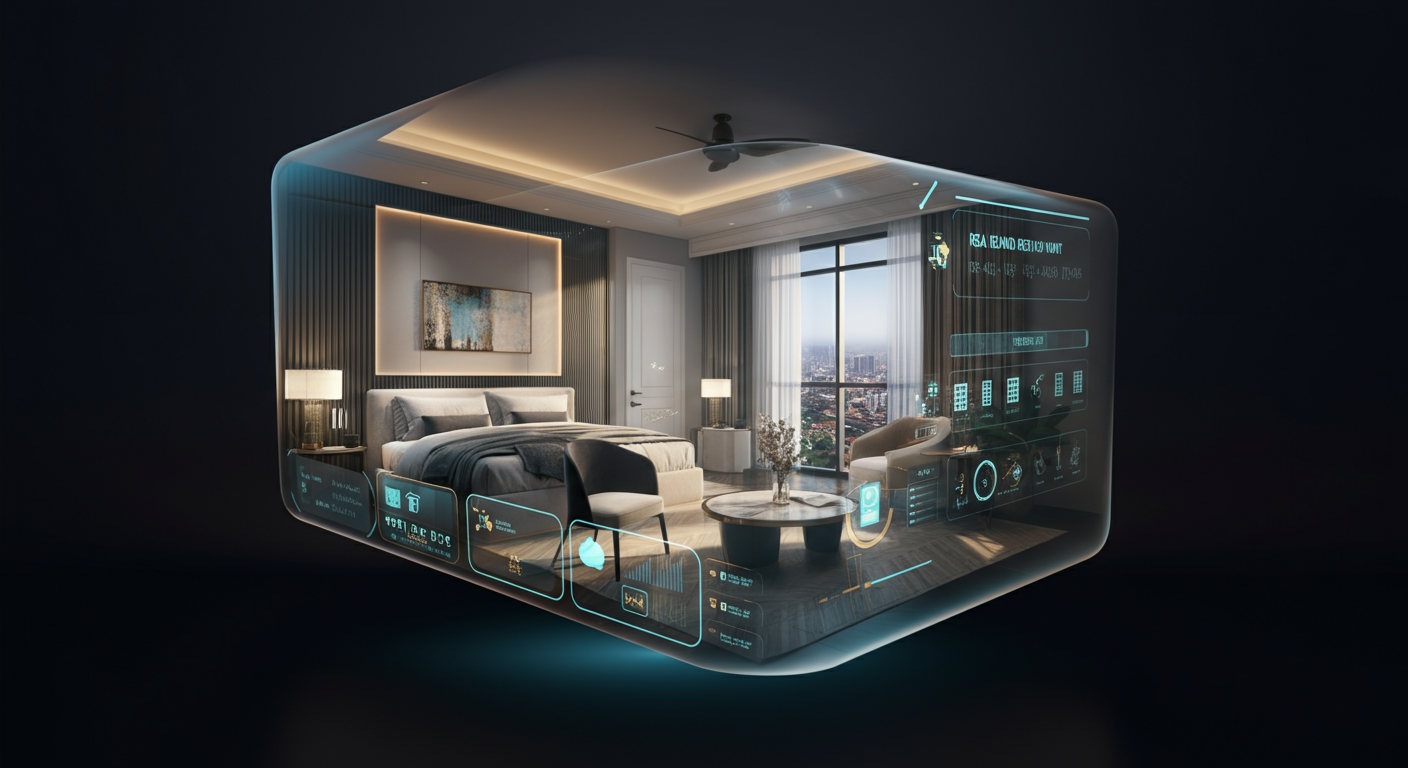
The most powerful form of interactive 3D service is real-time walkthroughs. It is the type of experience that can make one stop and say, ‘Wait, this feels like the real thing.’ Real-time walkthrough means users can walk freely in the space. They can view rooms, check how the connection between the spaces is, how light is falling, and get an understanding of the scale. This is not a video and not some set path — it is quite literally an experience driven by the user’s movement.
This service is a game changer for developers in Kolkata. Quite often, buyers are not in a position to visit sites frequently, particularly if they live outside the city or abroad. Real-time walkthroughs allow them to explore from anywhere in the world and get an idea of the layout and flow without a physical visit. This is also useful for architects — it enables them to communicate design intent to their stakeholders in a more understandable manner. An architect would instead prefer that their audience experience it, rather than having to explain it in words.
Real-time walkthroughs are more beneficial in cases of premium projects. In the case of luxury homebuyers, it is not enough to know the space. They are looking to know the feeling as well — the atmosphere and the space quality. The real power of this service is that it clears away ambiguities. One is able to view one’s own property and is no longer worried about what it looks like — one is able to look at what it is. Yet it is this transformation, this swing from a lack of certainty to a sense of certainty, which generates sales.
Web-Based Interactive Experiences
One of the most underrated attributes of interactive 3D design is accessibility. For many interactive experiences, you need a very powerful device or application to run it. However, for web-based interactive 3D design, you can access it through a web browser. This is particularly important in Kolkata as users come from mixed backgrounds and use different devices. The web-based option eliminates barriers and provides everyone with access to interactive 3D.
It is also vital to note that a web-based interactive design is more easily shareable. A developer may share it with a potential buyer through a link. A designer may share a link with all their key stakeholders. A marketer may embed it within a site. It thus allows for a wider range of participants to engage with it while at the same time maintaining quality. The web-based experience brings together the richness of interactive 3D with the ease of modern web use — and in Kolkata’s changing market, ease of use can be every bit as important as quality.
Virtual Reality Experiences
Virtual reality is often thought of as a luxury, but it’s being harnessed as a strategy in Kolkata. Virtual reality is interactive 3D design taken to the next level. With VR, it’s as if you can literally step into a space and be in it. VR technology holds a lot of potential for real estate and architecture fields as it could provide a real experience to property buyers by offering a try-out on a property. It allows real estate developers to promote luxurious properties with an immersive experience that can create a feel factor.
VR is also used for training and simulation. Different sectors like manufacturing, health, and construction are using VR to train employees in a safe working environment, and the risk involved in training is reduced through VR simulation. Though VR in Kolkata continues in an evolutionary state, it’s becoming the norm. It’s best suited for high-end projects when emotions need to be attached to an experience.
Augmented Reality: Bringing Design Into the Real World
Another form of interactive 3D service that is becoming more important in Kolkata is augmented reality. AR is a form in which digital information is superimposed over the real world in real time through the camera of the device. Augmented reality is important in the fields of interior design, furniture selection, and product vision. For example, the buyer can see how the furniture fits into the room. The designer can see how a space will look with different materials. The brand can help customers see how their product will look in their environment.
AR makes visualization personal. AR makes the design, which is usually confined to a screen, into reality. AR empowers users with both control and understanding. In a practical-minded place like Kolkata, this is the kind of tool an increasing number of citizens wants.
Interactive Product Configurators
Interactive product configurators are becoming popular tools for businesses within the retail and design industry within Kolkata. An interactive product configurator is one that enables an individual to configure, or alter, any given product — changing colors, materials, sizes, and accessories and viewing the product from all dimensions. This service is especially helpful with the selection of furniture, home decor items, or product design. It helps customers visualize the look of the product before purchase, which enhances the user experience by promoting higher engagement.
In a marketplace such as Kolkata, where consumers seek customization and personalization, configurators can create an exciting buyer experience and help alleviate buyer indecisiveness. They also assist designers and manufacturers by enabling users to visualize different products and take decisions quickly. This minimizes iteration requirements, making it easier to speed up the process.
360-Degree Virtual Tours
360-degree tours are one of the most used interactive 3D services. They are not video — they are interactive. Examples of 360-degree tours are commonly found in real estate, museums, educational sites, and hospitality, where users can explore the space in a quick and realistic way without using any additional hardware. In Kolkata, the need to provide a 360-degree real view in an uncomplicated manner is important — more so as remote buyers, investors, and stakeholders may not have the facility to visit the location.
The strength of 360 tours is that they are a basic solution that is easy to use and work well. They enable a user to comprehend a space without having to learn a different tool’s functionality. In Kolkata, a place of convenience, this facility is gaining popularity.
Interactive 3D Visualization with Clickable Layers
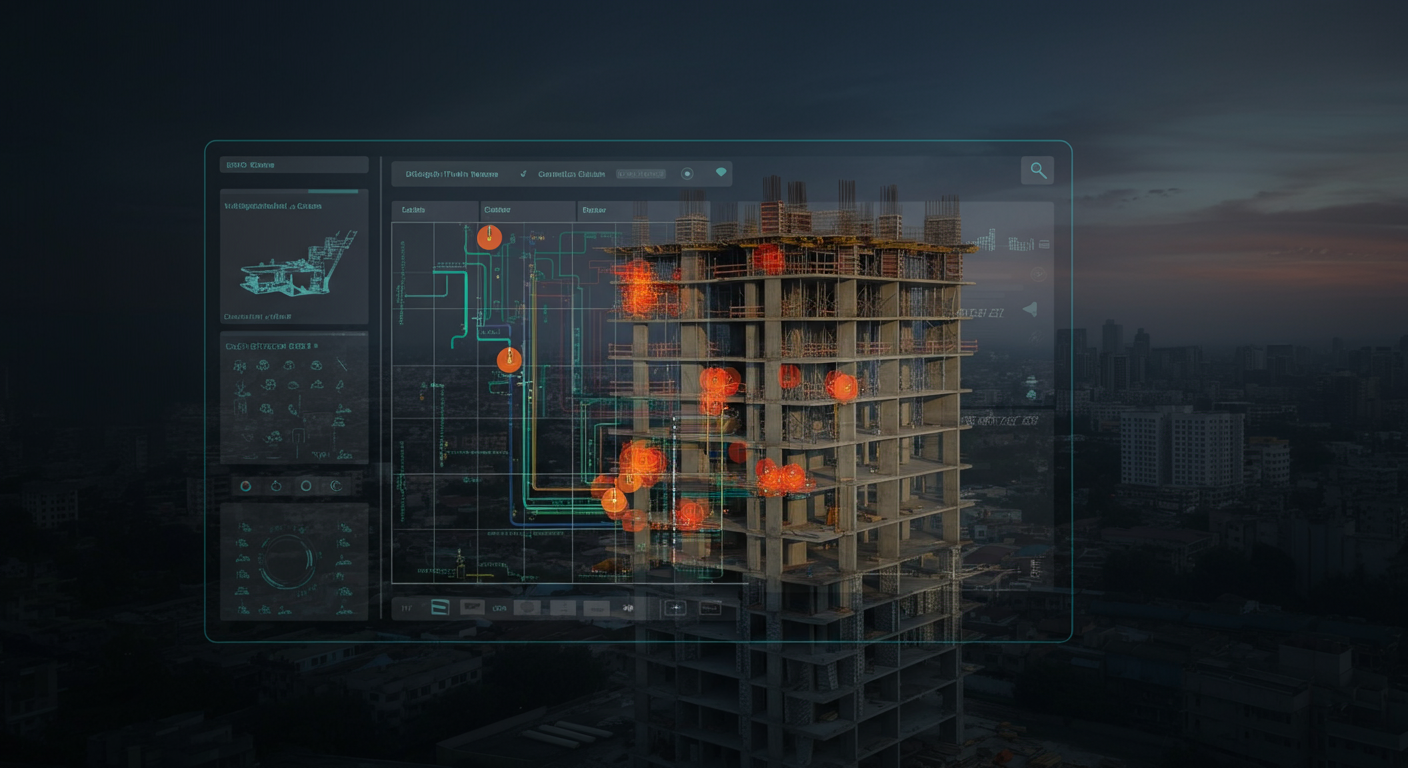
Interactive 3D design takes a new step forward with clickable layering. This service allows you to click on a design to obtain more information or to select different design layers. This is important because it is good to create such data models for architecture and building. Clients would be able to explore the structural layers in only a single model — they would not need to explore many drawings. It makes communication easy, reducing cases of confusion. The user can easily get information through this system. In complex projects undertaken within Kolkata, this service will enable teams to close more projects, faster.
Interactive Training and Simulation
Interactive 3D design is used for training. The training via simulation occurs within a virtual space. Such facilities have proven particularly useful in fields such as construction, manufacturing, healthcare education, and corporate training scenarios, as it helps the user practice in a real-world environment in a risk-free way. Training simulation is becoming more common in Kolkata as it has greater safety and efficiency benefits. It allows employees to learn by doing and not learn by studying theory. This is an extremely powerful use of interactive 3D design that is often overlooked but remains one of its most useful applications.
Why Kolkata Is Becoming a Hub for Interactive 3D Design
Kolkata is all about experience. It’s a thinking and making city. The flavor of real stuff, with lots of depth, is just what this city enjoys. That is why interactive 3D design creates a perfect fit for the city. The Kolkata real estate market is growing, and buyers are getting aware. Developers need new methods to convey the value proposition. Architects need innovative ways to explain their design intent. Brands need new ways to communicate customer engagement. Interactive 3D design envisions all these requirements.
This is not just a visual tool — it is actually a communication tool that builds trust. Because Kolkata knows the value of experience, the city is turning into a hub for interactive 3D design. Interactive 3D design is the modern way to deliver experience.
The Future of Interactive 3D in Kolkata
The future of interactive 3D design in Kolkata is not about better visuals; it is about better experiences, deeper engagement, clarity, and understanding. In the future, the integration of interactive 3D design in business workflows will be further extended. It is going to serve marketing and sales, design and training, and planning. It will become integral to the standard part of the project lifecycle.
As technology evolves, it will make interactive 3D even more accessible and powerful — web-based experiences more common, VR and AR more mainstream, and AI improving the speed and quality of visualization. In Kolkata, the integration of interactive 3D design will be observed more in how projects are built and sold. It will become the new standard.
Kolkata has never been a city that accepts things at surface level. It has always been a city that believes in looking deeper — in meaning, in context, in experience. This is exactly why interactive 3D design works so well with Kolkata’s culture. Interactive 3D design is more than just a means for creating nice visualizations. It is a tool for understanding. It is a tool for making decisions. It is a tool for trust. The best projects in Kolkata are not simply done — they are seen, they are felt, they are understood. And that is what makes interactive 3D design not just important, but essential.