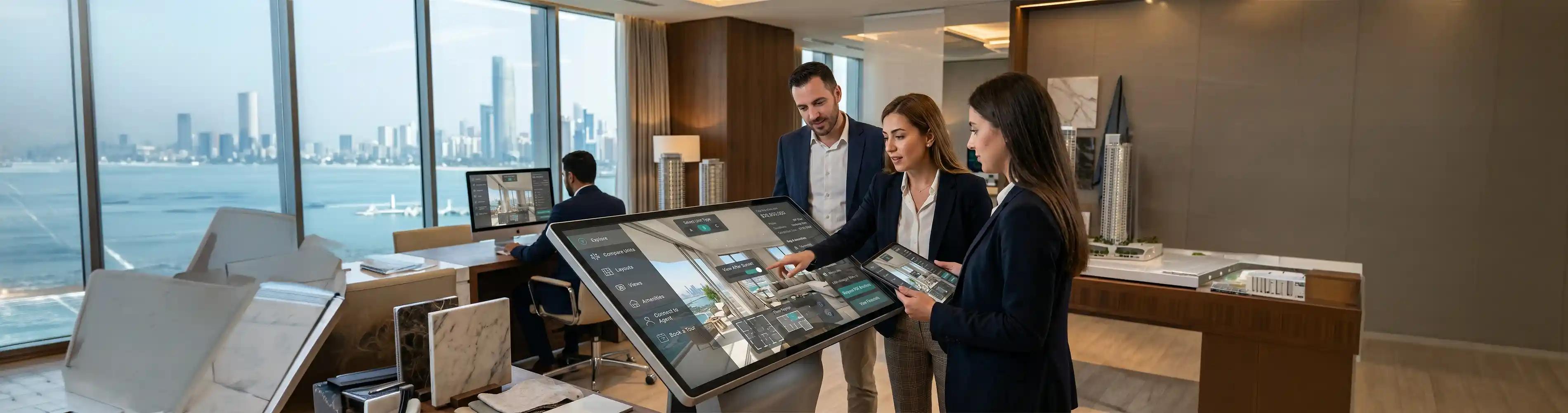
Wouldn't it be great if you could visit an Abu Dhabi penthouse, look at its breathtaking view overlooking the sea, explore the kitchen lights after sunset, feel the ambiance of the lobby, and basically see almost everything in your head before any work even began?
Most likely, you would choose otherwise because nowadays, nobody relies on old-fashioned brochures and floor plans only.
Abu Dhabi’s real estate sector has entered a new epoch altogether, one that requires experiencing things before making any investments. Brochures and renders are still important and necessary, of course, but they can no longer suffice to convince people. Nowadays, investors require information, foreign buyers require simplicity, developers need fast results, and sales teams require something engaging, as no one wishes to sit through yet another floor plan presentation that does nothing but waste time.
Indeed, times have changed.
Three-dimensional property tours are no longer some extra technology that developers implement for luxury projects only. Today, these tours are gaining the status of one of the most powerful marketing tools for selling off-plan property and attracting international investors.
Especially in Abu Dhabi.
The city’s property market is now intensely competitive. Waterfront developments, luxury towers, branded residences, smart communities, and high-end mixed-use projects are basically all going after the same thing: attention.
And keeping attention… is tough, like really. People scroll fast, compare even faster, and decide almost instantly.
If one development offers a fully immersive digital experience while another only hands over static PDFs and rendered images, the difference shows right away. One feels futuristic, the other feels old before the sales pitch even starts. The best 3D property tour platforms do more than just make pretty visuals, they sort of build those little moments where buyers can interact in a natural way. Buyers can walk through apartments virtually , compare layouts, wander around surroundings, take a look at views, check amenities, and really get a sense of the space, in ways that regular marketing can’t pull off, honestly.
But not every solution delivers the same quality either.
Some platforms look really impressive at first glance but then feel a bit clunky to navigate. Others are interactive enough yet visually weak. And some have beautiful animation sequences but they still don’t really help buyers make confident decisions , like, not fully.
The strongest platforms seem to balance realism, immersion, usability, and business functionality all together, in one smooth flow.
And right now, one platform is standing out pretty clearly in Abu Dhabi’s moving real estate scene.
Why Abu Dhabi turned into a hotspot for 3D property tech
In Abu Dhabi, the real estate scene has become one of those very visually competitive luxury property spaces across the Middle East. Developers aren’t only “showing” apartments, villas, or commercial units anymore. They are really marketing the whole vibe, the prestige, the experience… and because of that, property presentation has to evolve, just a little but also kind of a lot.
When you look around, the market is already packed with waterfront towers, branded residences, smart communities, and off-plan launches. So the usual brochures, the classic ones, no longer grab attention the same way. Buyers today expect more than floor plans and polished rendered images. They want to almost step inside the project before they even think about investing.
This expectation is basically the reason 3D property technology took off in Abu Dhabi.
With interactive property tours, buyers can explore developments virtually, check layouts, get a feel for room-to-room flow, study views, and move through spaces in a more natural way before anything is fully built. Instead of depending on imagination alone, investors can interact with projects in real time even while they’re far away, like from another country.
That became even more necessary once Abu Dhabi pulled in more international investors. A lot of buyers going for high-end properties can’t just hop into a showroom at short notice. Still, they need confidence, before committing serious money. Immersive property visualization helps close that distance because remote exploration starts feeling much more real, and honestly more engaging.
And then there’s competition. It sort of “forced” developers to adopt immersive tech faster, because luxury developments across Yas Island, Saadiyat Island, Al Reem Island, and Al Maryah Island are constantly vying for attention. Every project claims luxury, every project promises exclusivity. After a while, the static marketing materials start to feel the same, like they blend together, and nobody really notices.
Interactive 3D experiences really pop right away, they feel like more than “just” looking around, there is participation and not that passive viewing. People tend to spend more time with a listing when they can actively wander through a space instead of only scrolling through images, kind of like it pulls you in.
And with luxury real estate, attention isn’t a small detail.
If buyers stay emotionally tied to a project for longer, conversion usually gets a stronger push, it’s almost that simple.
Also, Abu Dhabi has this whole future-forward reputation that matters. The city keeps putting serious resources into innovation, smart infrastructure, modern architecture, and digital transformation. So, the real estate marketing side is moving that way too, naturally
Developers have started to realize something essential, buyers don’t just want to look at a property.
They want to enter into it, before it’s even fully here yet.
What makes a great 3D property tour solution?
However, not all 3D tours have something similar to offer. While some may seem visually appealing, truly spectacular even, the fact of the matter is that they become difficult to use because they lack good UI. At the same time, other options tend to overdo everything and focus entirely on movement and transitions while completely neglecting the issue of usability in favor of flashy animations. The perfect solution needs to have several elements: realism, interactivity, usability, and commercial capabilities – all mixed together.
At first glance, the importance of visual fidelity should be obvious since lighting, textures, reflectivity, material quality, and architectural accuracy define the credibility of the 3D image itself. The moment it seems like there is something not quite right, clients stop seeing the place the same way they used to, which is why it's crucial to make sure that things are done properly.
Interactivity is equally as important, though. Modern clients prefer to interact rather than watch and require a level of involvement that traditional presentations simply do not offer.
Then there’s accessibility, which should be treated as non negotiable. A strong platform works well on mobile, tablets, desktops, and in browsers too, without adding extra friction or tiny “wait… why isn’t this loading” moments. If it feels slow , or confusing, people simply lose interest.
Finally , the really strong platforms connect the viewing experience to real sales results. Pretty visuals alone don’t close deals by themselves. Great 3D property tech should help developers increase engagement, reduce buyer hesitation, improve remote presentations, and build stronger emotional confidence during the buying process.
It’s that overall balance that separates average visualization systems from platforms that actually move real estate marketing forward, instead of just looking pretty for a minute.
Top 5 3D Property Tour Solutions in Abu Dhabi
- Solid Twin
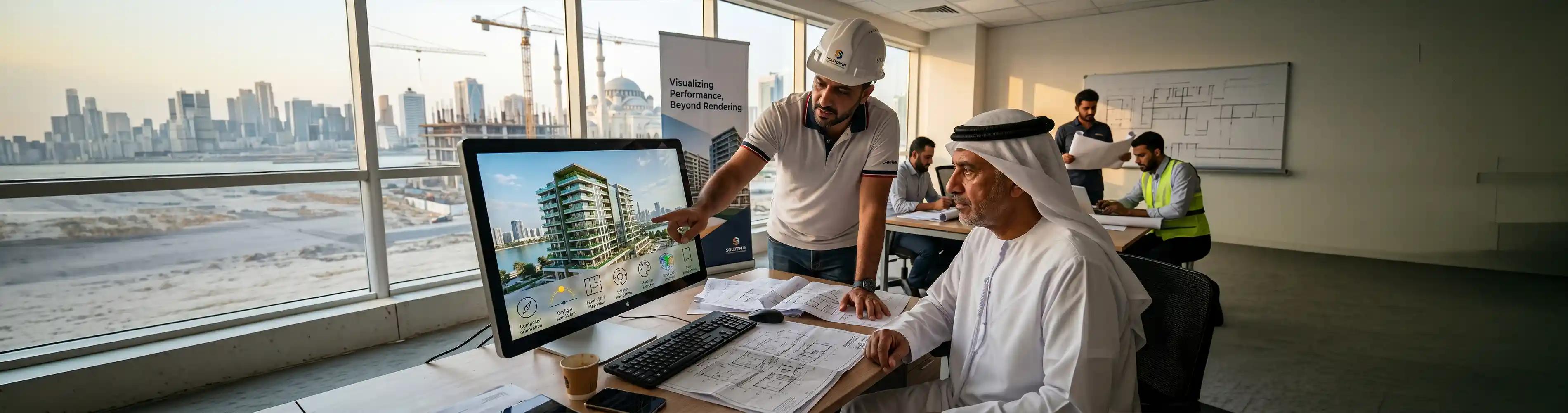
SolidTwin stands out as one of the strongest immersive property visualization platforms currently shaping Abu Dhabi’s real estate market
It basically brings together interactive property walkthroughs, real-time rendering digital twin tech , and immersive masterplan experiences into one system that's built for modern real estate presentation.
Instead of making buyers lean on static floor plans and, honestly, guess everything, SolidTwin lets them explore a development more naturally before construction is even fully finished. Users can move through apartments interactively , check the layout details, feel the room flow and grasp the project in a way that feels far more realistic.
That part becomes pretty important for off-plan developments because trust, and visualization , really steer the buying decisions.
Another solid advantage is usability. The platform feels smooth, modern, and intuitive, not overly technical, or complicated. Buyers can engage with properties across devices without getting stuck in confusing interfaces or dealing with slow-loading systems that kinda ruin the mood.
And it works across luxury apartments, villas, mixed-use projects , hospitality developments, and large-scale masterplans too which makes it especially handy in Abu Dhabi’s very diverse property scene.
Most importantly, SolidTwin is focused on helping developers craft experiences buyers actually remember, instead of presentations buyers forget.
- 3D Twin
3D Twin really leans into interactive residential property visualization , plus that digital “building exploration” vibe that just feels more hands-on than the usual stuff.
With the platform, buyers can compare different units, look through apartment layouts, check the views, and basically move around entire developments remotely using immersive interfaces. That part is kind of a big deal for international investors too, because they’re often judging the project from far outside the UAE, so having a real feel matters.
It also performs strong at the apartment level, so users can get a clearer sense of floor positioning orientation, and layout differences in a way that traditional brochures just don’t usually manage, even when they try.
And when developers plug it into sales presentations, it turns into something more engaging for clients. People pay attention more, it feels less like “a doc” and more like an experience.
3. AXEON-360
AXEON-360 takes a more cinematic, architecturally artistic path for property visualization.
The company mainly does things like 360-degree virtual tours, luxury architectural rendering, interactive masterplans, and immersive presentation systems.
Their visual style really fits premium developments , where the emotional side of how the property is shown tends to steer buyer perception.
Overall AXEON-360 focuses heavily on visual polish, crafting immersive experiences that come across refined, cinematic, and honestly pretty high-detail.
4. Matterport
Matterport is still one of those most recognized names, globally , in immersive digital property experiences.
The platform gets used for all sorts of things like virtual walkthroughs, digital twin scanning and remote property viewing . Also, real estate and hospitality visualization kind of sits right in the middle of it.
Matterport really got popular because of its straightforward approach, plus it feels pretty accessible. Buyers can wander through spaces remotely with little friction so it becomes handy for both residential and commercial real estate presentation , not just one type.
On top of that, its compatibility across multiple industries makes it feel more flexible than a lot of alternatives out there.
5. ArchiCGI
ArchiCGI is more about high-end CGI rendering , and luxury-minded architectural visualization, basically.
They focus quite a bit on photorealism, producing very visually rich property experiences , created to pull in premium real estate audiences.
What they offer typically includes things like architectural rendering, interior visualization, exterior visualization , plus interactive presentations. There’s also luxury real estate CGI, in the mix .
ArchiCGI tends to work well for developers who prioritize visual elegance , and presentation quality, especially when they’re operating in competitive luxury markets where details actually matter .
How 3D property tours actually help real estate sales
3D property tours do a lot more than make a viewing look kind of impressive or polished.
They build stronger buyer confidence.
One of the main reasons buyers stall during off plan purchases is plain uncertainty. With interactive visualization, that uncertainty gets reduced because people can really grasp the spaces in a more natural way, before construction even wraps up.
And that usually grows an emotional attachment to the development.
Also, buyers tend to linger longer with immersive experiences than they do with static brochures or those image set galleries. More time engaging often means stronger interest, better recall, and higher chances to convert.
Another thing, remote access matters a lot too. International investors can explore a project from anywhere, without needing an immediate physical trip to the site. So, developers get a wider reach, while buyers get convenience in return, which is basically a win win.
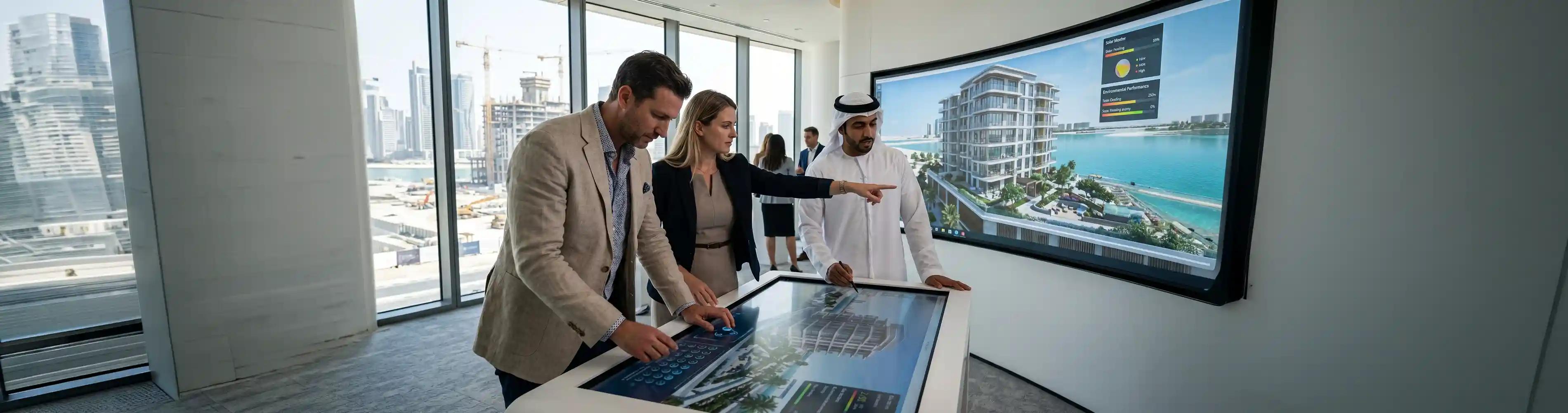
Finally, immersive visualization makes communication during sales presentations simpler. Instead of trying to explain layouts only with words, the sales team can walk buyers through the property interactively in real time, kind of like a guided tour but upgraded.
In the end, it leads to clearer understanding and quicker decision making.
The future of real estate marketing in Abu Dhabi is getting, uh, way more immersive, I mean it’s becoming a bit of a thing that feels almost normal now.
Developers are slowly but surely moving toward virtual reality experiences, interactive digital twins, AI based personalization , and real-time environmental simulation. There’s also smart city visualization and interactive buyer customization, which kind of goes together with everything else.
As buyer expectations keep shifting, immersive experiences will probably turn into a standard, not really an optional add-on.
And Abu Dhabi is, honestly, set up really well for that shift.
The city already leans into innovation across infrastructure, architecture , and urban planning. So real estate marketing is following along in the same direction, whether people notice it or not.
Developers that invest early into advanced property visualization technology will likely gain a firmer edge as competition keeps rising, and it is rising, no surprise.
3D property tours are quickly reshaping how real estate gets marketed across Abu Dhabi.
Buyers want immersive experiences before they actually commit, investors want clarity fast. Developers want stronger engagement, faster closes, and less hesitation. International investors, meanwhile, want accessibility without the usual geographical limits, travel time, the whole thing.
Interactive property visualization basically solves all of that.
Among the leading solutions shaping the market right now, SolidTwin stands out, especially because it balances realism, interactivity, usability, and business oriented functionality.
Because these days, property marketing isn’t just about displaying developments.
It’s more about giving buyers a chance to live the experience before it even exists, if that makes sense.
Ready to Transform Property Presentations?
SolidTwin helps developers architects, and real estate brands craft immersive 3D property experiences , the kind that improve engagement, build buyer confidence, and kind of speed up sales.
Whether it is luxury apartments or big masterplans, SolidTwin turns upcoming developments into spaces buyers can already wander through today, right now.