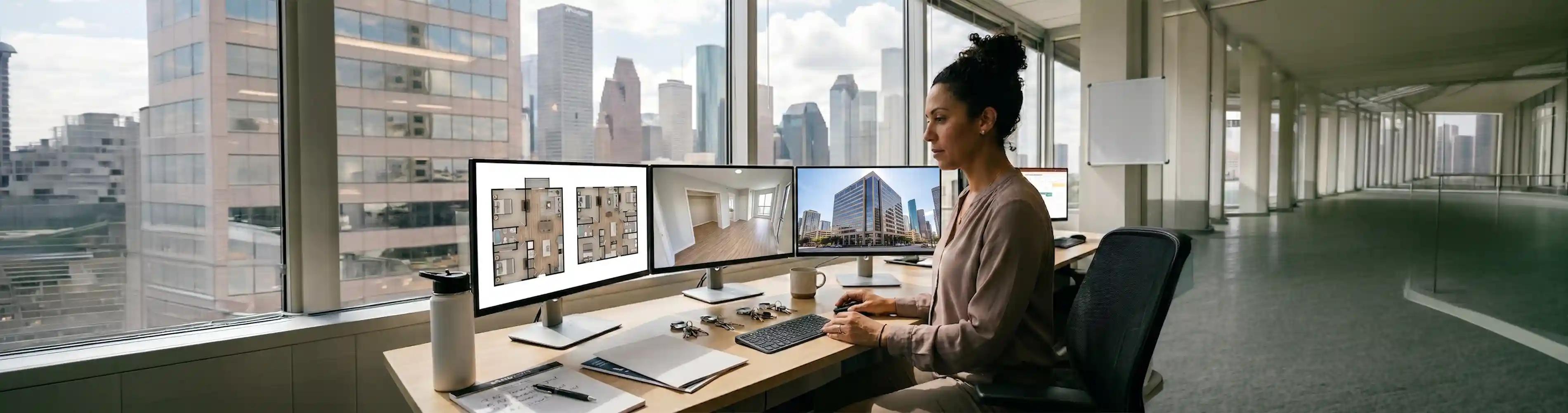
Most real estate companies don’t choose to invest in digital visualization all at once. Usually it’s a gradual process, after a series of smaller signals begin to indicate the same underlying problem, buyers not converting as they used to, sales cycles dragging out longer than expected, or competitors simply making their projects look better.
Real Estate 3D Visualization has moved from being an occasional marketing upgrade to a core business capability for companies serious about growth. A Virtual Experience Center goes one step further by providing developers a 24/7 centralized space for buyers, investors and partners to digitally explore projects without the need of a physical sales office or scheduled site visit.
In this article, we’ll discuss the signs your real estate business needs 3D visualization, why a virtual experience center for developers is becoming a standard rather than a differentiator, and how a platform like SolidTwin helps real estate companies close this gap before it becomes a genuine competitive disadvantage.
The 7 Signs Your Real Estate Business Needs 3D Visualization
Once the signs are clearly laid out it is often easier to see the need for digital visualization. Those seven tend to show up most consistently across real estate businesses that eventually make the switch.
1. Your brochure doesn't answer the questions buyers keep asking. When views, layouts or finishes keep coming up, and static images just aren’t cutting it, it’s usually a sign that Property Visualization is ready to move on from the flat render.
2. Too much of the sales team’s time is spent on site visits. When your team spends numerous hours of the week driving buyers through unfinished sites just to explain what a space will eventually look like, a Virtual Experience Center can help take much of that burden away.
3. International or remote buyers are being left out of the sales process. Buyers who cannot visit in person often lose interest when the only materials available are static PDFs and a few photos.
4. Better presentation, competitors are winning deals. When buyers tell you they’ve seen a competing project during an interactive tour, that’s a clear indication that your own Real Estate 3D Visualization needs an upgrade.
5. Your sales cycle is getting longer. A slow, back and forth sales process, with follow up calls just to clarify layouts, generally indicates a gap between what buyers want to see and what your current materials are providing.
6. Completed projects are easier to sell than projects that are off plan or under construction. When buyers get cold feet on unbuilt inventory, it usually means they can’t see the finished product with certainty.
7. Your marketing materials are not up to the mark of your actual product quality. A great project deserves a presentation fitting its quality, and outdated static visuals often undersell truly good developments.
If two or more of these signs ring true, then it’s a good indication that your business is ready for a real Virtual Experience Center, and not just another round of static renders.
3D Visualization in Real Estate as the Leading Sales Feature
Real estate 3D visualization provides buyers and sales teams with an interactive, realistic way to explore a property, rather than relying on static images. Users walk through units, see finishes, get a sense of scale, and every detail updates immediately as they walk through.
This is so much more than visual polish inside of a well-built Virtual Experience Center. Floor plans, unit availability, pricing and specifications run in the background to ensure that what a buyer is looking at is an accurate, current view of the project, and not an outdated snapshot.
This gives a single source of truth for how a project is presented, whether a buyer is sitting in a sales office or looking remotely from another city. Once all buyers see the same accurate representation, the confusion of inconsistent brochures or mismatched information drops dramatically.
SolidTwin builds Real Estate 3D Visualization systems that are not just one off marketing assets but real sales tools by combining interactive tours, masterplans and floor plans directly with real project data so Property Visualization is a real business capability.
Transforming the Buyer Experience With a Virtual Experience Center
Real estate buyer expectations hself-guidedave changed fast. Buyers now expect the same clarity and interactivity they have come to expect with other digital purchases – be it buying a car online or browsing a furniture configurator – and they bring that expectation straight into property decisions.
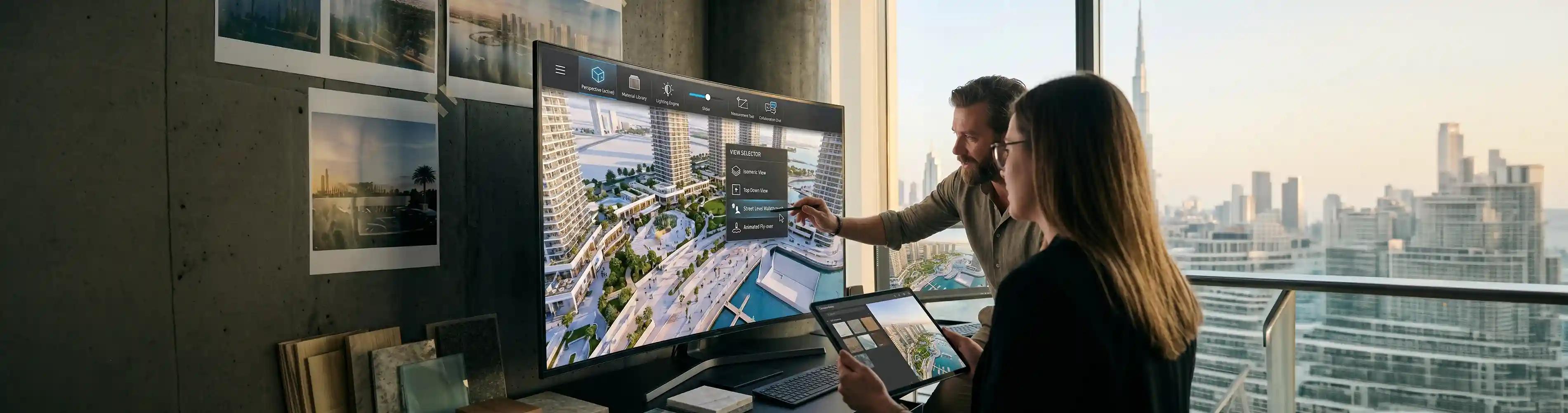
A Virtual Experience Center changes the way a buyer’s first contact with a project looks. Instead of a static brochure or waiting for a sales call to walk them through every detail, buyers can explore units, compare layouts and get to understand a project on their own schedule, in a self-guided, interactive space.
This builds real trust. When buyers have already put in the time to learn about the product on their own, they’re more confident about making the purchase. It also tends to increase engagement time, because buyers who can explore freely usually spend more time looking at a project than those sifting through a PDF.
For real estate companies that focus on Property Visualization, a virtual experience center for developers is an always-on extension of the sales team, telling buyers what they need to know before they ever pick up the phone. SolidTwin designs these experiences with top priorities as usability, accessibility and performance.
Accelerating Decision Making & Sales Conversion
The speed of sales has become a real competitive factor of real estate companies. Every extra day you spend manually explaining layouts or waiting for a buyer to schedule a site visit is another day that buyer is at risk of choosing a project with a faster, clearer digital presentation.
Real Estate 3D Visualization solves this by giving buyers an exact, explorable view of a project as soon as they express interest. Buyers can compare units, evaluate views and narrow down options without having to wait for a sales rep to manually describe every detail, arriving at conversations already informed and closer to a decision.
Connected to live availability and pricing data, this same setup removes the unnecessary back and forth between buyers and sales teams. The speed does not come at the expense of accuracy as actual project data built into the visualization ensures that every unit a buyer explores is still representative of actual availability. SolidTwin integrates this directly into a company’s existing sales process, shortening and making more predictable the path from interest to signed agreement.
Minimization of Lost Opportunities and Improved Marketing and Sales Alignment
A frequent problem with growing real estate companies is the increasing gap between what marketing promises and what sales teams can actually show a buyer in real time. Sales teams are often working off of outdated renders, inconsistent floor plans and disconnected brochure files, not what marketing created.
A connected Virtual Experience Center bridges that gap, keeping every piece of visual content connected to the same underlying project data. When marketing updates a unit’s finishes or pricing, that change is instantly reflected on every tour, floor plan and master plan a buyer might see, eliminating the inconsistencies that cost real estate businesses missed opportunities and buyer trust.
SolidTwin builds Property Visualization systems that combine marketing, sales and project data into one place, so that no opportunity is lost because two departments were working from different files.
Multi-Project and Portfolio-Wide Visualization Support
Real Estate 3D Visualization is an important tool for real estate companies that have several active projects running at the same time to keep their portfolio presentations consistent and manageable. A well-designed Virtual Experience Center allows a company to showcase several developments, towers or plots in a single integrated digital space, instead of having separate scattered materials for each project.
This also gives leadership better insight into which projects, unit types or price points are driving the most buyer interest across the entire portfolio, supporting better resourcing and marketing decisions. When a company goes from one development to a portfolio of developments in different cities or even multiple countries, it becomes genuinely difficult to maintain a consistent quality of presentation without a centralised system. Sales teams working out of separate files for different projects frequently drift out of sync, and buyers comparing multiple projects within the same portfolio will notice when one presentation is more polished than another.
SolidTwin creates visualization solutions that scale with a growing project portfolio, so that moving into new developments doesn’t mean starting the digital presentation process from scratch every time. With the addition of new projects using the same templates, the Virtual Experience Center can be scaled up without losing any brand presentation as the number of active developments increases.
Finding More Value from Buyer Data and Continuous Optimization
Long-term growth-oriented real estate companies are increasingly using buyer interaction data as a strategic asset. Every session in a Virtual Experience Center is data which units are attracting attention, where buyers are lingering, what features are getting the most talk.
When the data is analyzed correctly, it can lead to smarter pricing decisions, improved unit sequencing and more targeted marketing – replacing guesswork with real buyer behavior. SolidTwin takes this interaction data and structures it through an embedded analytics approach, transforming raw exploration activity into actionable insight for real estate companies.
User-Centered Design in Property Visualization: The Role
Usability is what determines whether or not a Virtual Experience Center is even used, by buyers and internal teams alike. No matter how accurate the underlying visualization is, a confusing or slow experience discourages exploration.
Well-designed Property Visualization platforms naturally guide buyers through a project with clear navigation and responsive interactions that work smoothly across devices. This is equally important for sales teams, who need tools that make talking with buyers easier, not harder.
SolidTwin puts a lot of effort into interface design during platform development and makes usability decisions based on real buyer behavior so that real engagement can happen, not just a feature that looks great on paper but is never used.
Technology Foundations for an Enterprise-Grade Virtual Experience Center
A real enterprise-grade Virtual Experience Center needs more than eye candy. “On desktop, tablet and mobile, rendering has to be fast and responsive, as buyers will be using this in different network conditions and expect a smooth experience across devices.
Deep integration with real project data is equally important, with proper integration into availability systems and pricing structures so that what buyers see remains accurate in real time. Security and reliability are the last steps on the foundation, as these platforms handle sensitive buyer information that needs proper authentication and resilient infrastructure.
SolidTwin builds this kind of trusted architecture with the use of modern rendering technology and real estate system integration, engineering each experience for real business use and not a one-time showcase.
Why Real Estate Companies Choose SolidTwin
Why Real Estate companies partner with SolidTwin Because we treat Real Estate 3D Visualization as a strategic business initiative and not a marketing add-on. We work with sales, marketing and leadership teams to discover what’s really slowing down conversions, so that the resulting platform builds buyer confidence and closes real gaps in the sales process.
From interactive 3D tours to masterplan and floor plan visualization, customization tools and cross-device accessibility, pre-launch marketing and final unit sales, we support companies through the full journey. SolidTwin boasts a network of developers across India and Dubai, delivering the technical depth and close collaboration needed by real estate businesses as they grow.
The Strategic Importance of 3D Visualization for Real Estate Business Growth
3D visualization of real estate and a virtual experience center are no longer luxuries for real estate companies. They've become strategic assets that integrate buyer experience, sales efficiency and marketing accuracy into one, connected workflow.
Companies that catch the signs early and back it up with their money tend to outperform competitors still relying on static materials as buyer expectations continue to rise. SolidTwin helps real estate companies build fully connected visualization systems. The goal is sustainable, scalable growth not one off marketing wins.
Conclusion
Recognizing the signs your real estate business needs 3D visualization is the first step to a stronger, faster, more trustworthy sales process. Real Estate 3D Visualization and a well-built Virtual Experience Center provide the clarity buyers expect today, and provide sales and marketing teams with a single, accurate source of truth to work with.
This is exactly how SolidTwin builds these systems – helping real estate companies turn Property Visualization into measurable business growth.